Bevis Marks Synagogue Sets New Standards for Heritage Sites
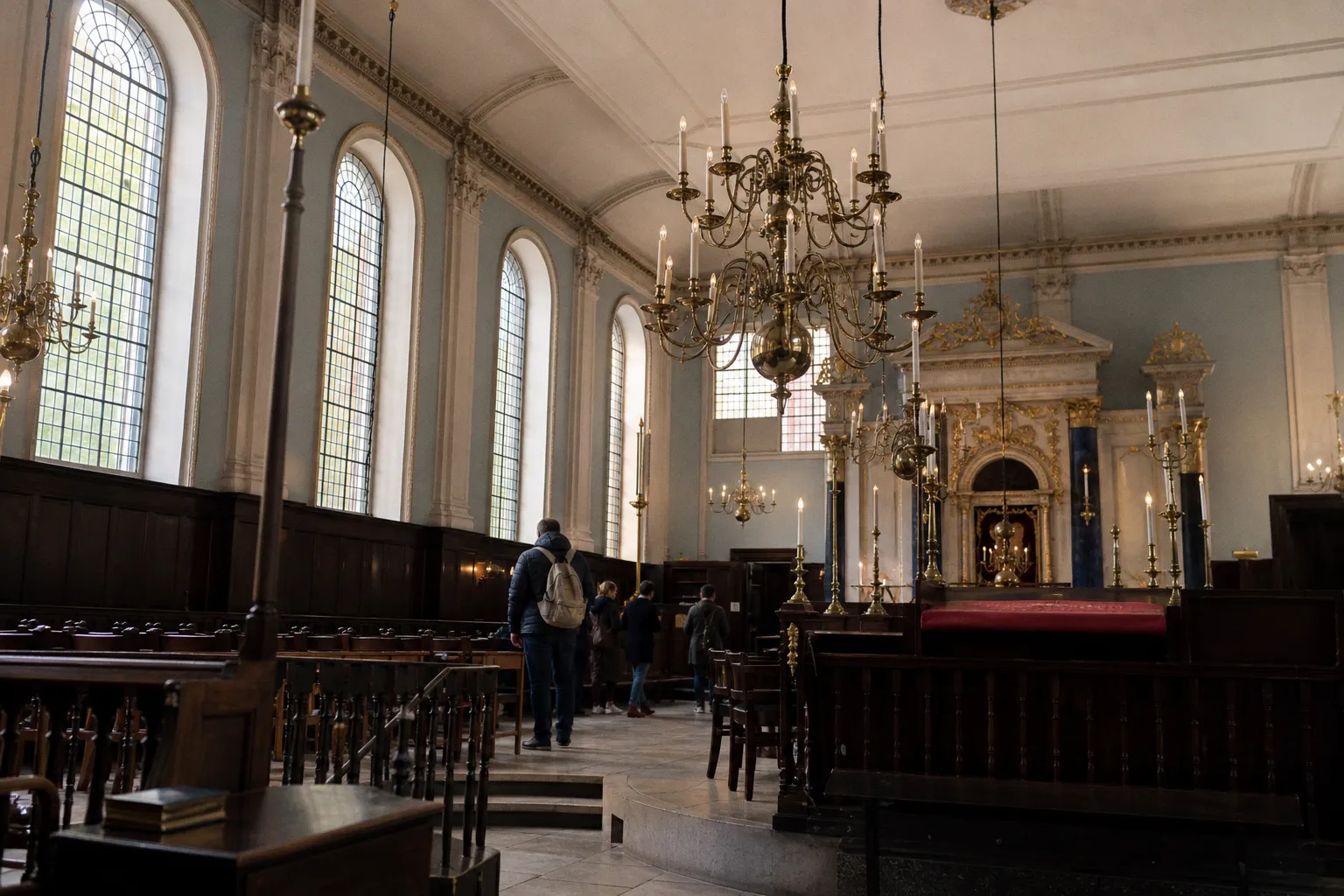
The Grade I-listed Bevis Marks Synagogue, in continuous liturgical use since 1701, has issued a draft planning framework to govern high-rise development in its immediate setting.
Three Constraints, Sequenced
The framework organises developer obligations chronologically rather than retrospectively. Project teams must first establish the exceptional heritage value of Bevis Marks to themselves and to reviewers before schematic design begins. Dialogue with synagogue representatives and conservation specialists is required before any planning submission. Adjacent buildings must, by design, complement rather than compromise the synagogue's envelope.
The mechanism shifts the burden of proof: the heritage asset no longer defends itself after the fact, the developer demonstrates compatibility at the outset. For local planning authorities, the document reads as procedural instrument, not zoning overlay.
The constraints bind because Bevis Marks is a working building. It remains an active synagogue, hosting regular services, community gatherings and educational programmes rather than operating as a museum or hire venue. The dual status raises the cost of any setting compromise, since each encroachment affects both congregation and visitor.
A Liturgical Sightline, Encoded
The technical driver is the practice of Kiddush Levana, in which worshippers recite blessings while viewing the moon directly. Obstruction of that sightline at the relevant lunar phase is treated as interference with religious practice, not an aesthetic concern. The draft proposal translates the requirement into a planning parameter: a defined corridor of sky visible from the synagogue at prescribed intervals.
For visitors tracing Jewish heritage in the City of London, the implication is procedural rather than scenic. This is a working religious constraint, codified into land-use documents, that future towers will need to demonstrate compliance with. The framework's value to heritage travel lies less in what it preserves visually than in how it forces formal review of any change in the site's airshed.
What to Track
The consultation is at draft stage. The variables now are which clauses of the framework are absorbed into local planning policy, whether neighbouring landowners treat pre-application consultation as binding procedure, and how the lunar sightline protection is technically drafted into planning instruments. The outcome will shape what kind of buffer the synagogue retains against London's continuing skyline pressure, and by extension what kind of ground-level experience the surrounding streetscape continues to offer.