Historic 1914 NYC Building Marks Milestone Opening in Over Century
The cupola of New York’s David N. Dinkins Municipal Building, sealed for public access since its 1914 completion, has opened as the Centre360 observatory following a $6 million restoration.
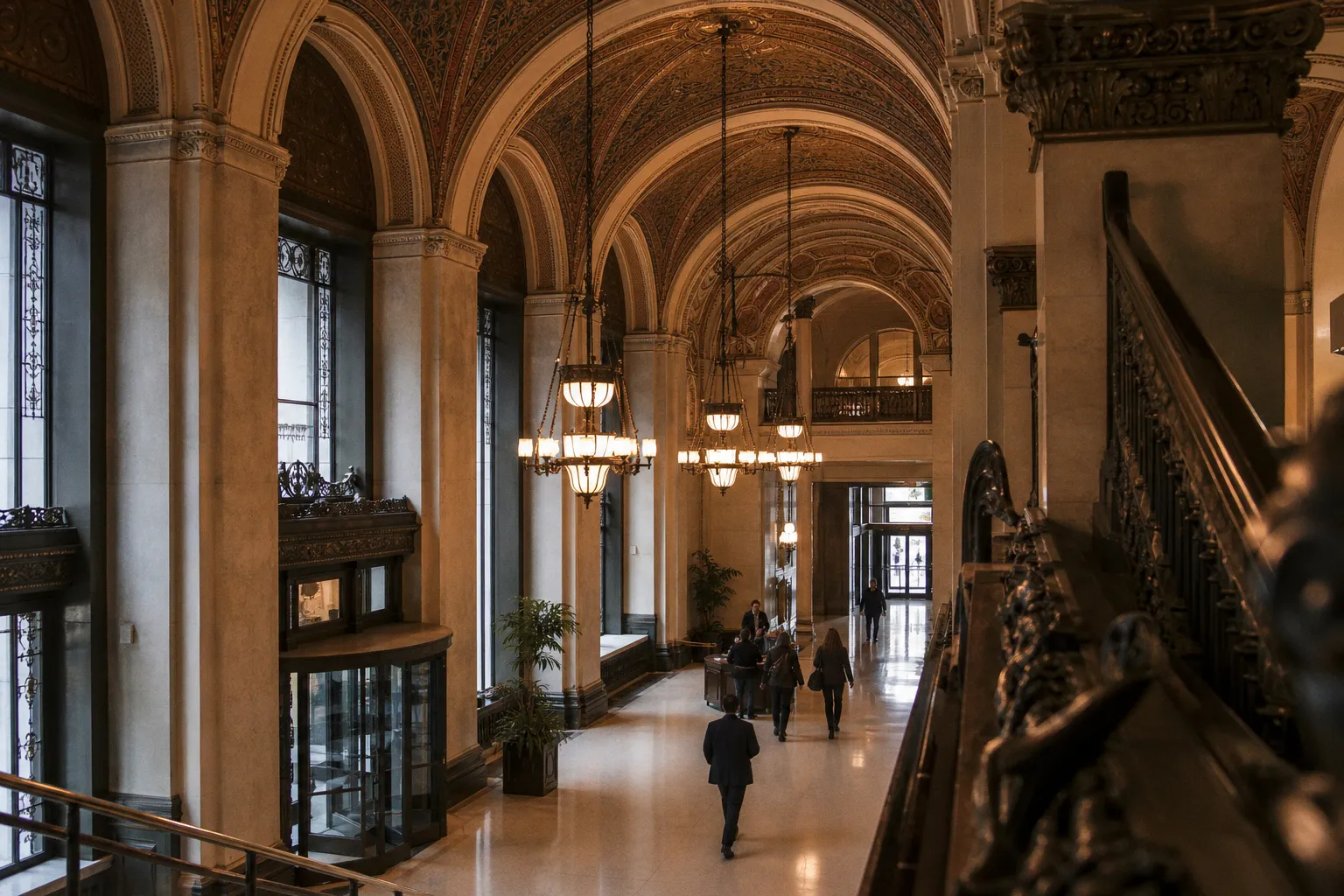
Structural Reuse and Fabric Retention
The 1914 Beaux-Arts building at 1 Centre Street, designed as a municipal office complex, presented a standard preservation challenge: integrating a public amenity into a load-bearing masonry structure without compromising historic fabric. The restoration prioritized material conservation over replacement. Commissioner Yume Kitasei confirmed funding targeted repairs to existing tiles, flooring, and the facade, aiming to protect the cupola’s original elements for the next century. This approach aligns with the principle that retaining embodied carbon in existing structural materials is more sustainable than new construction; the American Institute of Architects estimates reuse can avoid 50 to 75 percent of emissions associated with building new.
Managing an Aging Portfolio
The project is not an isolated event but part of a systemic operational reality for New York City’s Department of Citywide Administrative Services (DCAS). The agency manages a portfolio of 56 buildings averaging 90 years in age. This statistic frames the Dinkins Building restoration as a repeatable model rather than a one-off preservation effort. The key takeaway is the institutional shift toward viewing maintenance and modernization of historic stock as a continuous, funded program, catalyzed in this instance by mayoral support.
National Context of Building Conversion
The opening occurs against a backdrop of accelerating adaptive reuse across the United States. Data cited in the reporting indicates a roughly 50 percent year-over-year increase in apartment conversions nationwide in 2024, with nearly 25,000 units created. This demonstrates a market-driven validation of preserving and repurposing older structures. The Dinkins Building project, while a public-sector example, reflects the same economic and environmental logic that is driving private conversion activity in commercial and residential real estate. The preservation of its spatial hierarchy—converting a service cupola into a public observatory—exemplifies this trend.