Slow Tourism Strategies for Historic Old Town Preservation
Slow tourism is moving from a niche preference to a structural feature of national tourism strategies across Asia and Europe, with Vietnam now grouped alongside Japan, Spain, and France in the shift, according to Travel And Tour World.
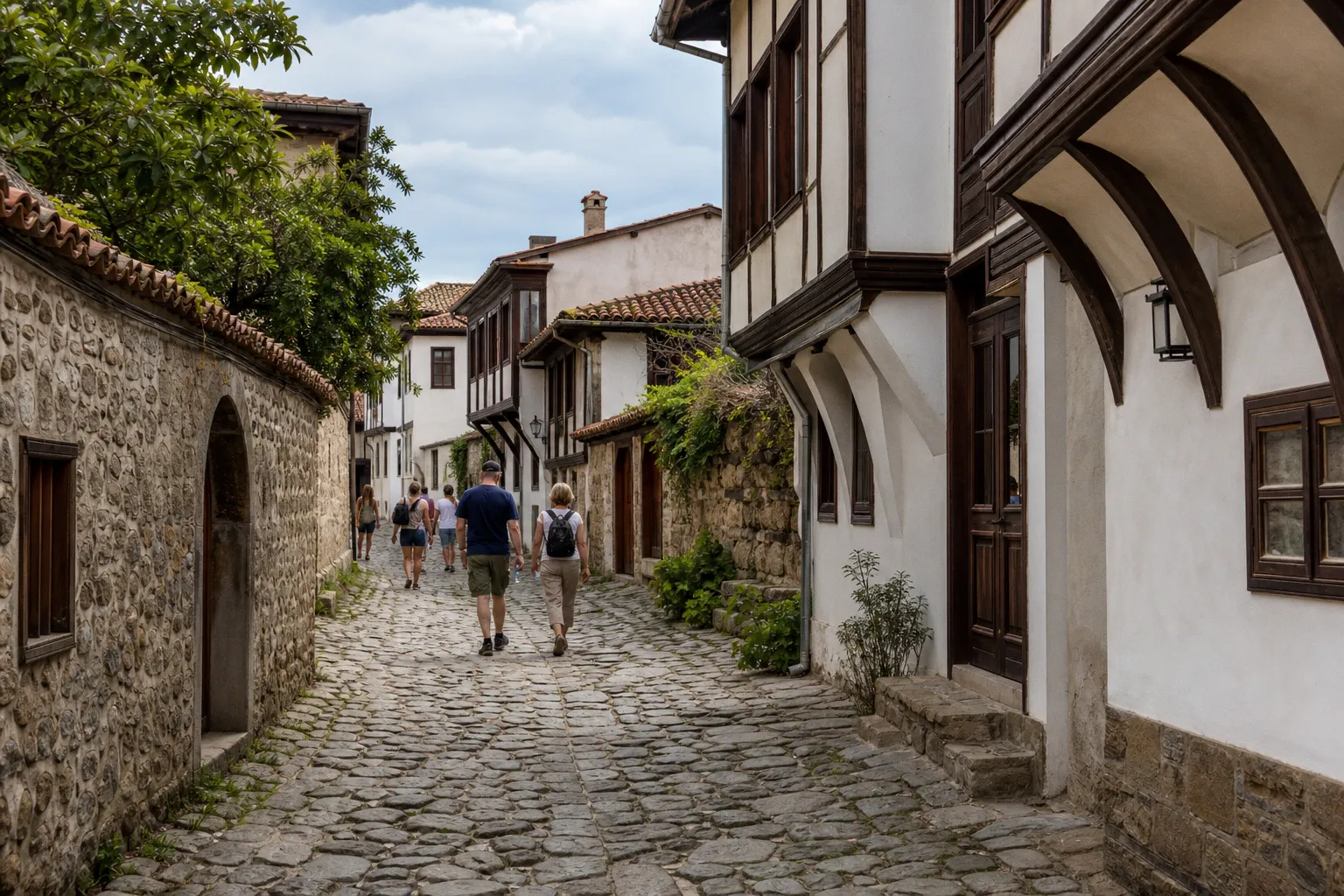
The model and its stated targets
The mechanism described in the coverage rests on extended stays in fewer destinations rather than high-frequency multi-city itineraries. Governments are folding the approach into formal sustainability frameworks, with overtourism mitigation as the primary stated objective. Vietnam's 2026 tourism strategy positions specific zones as eco-friendly destinations under the country's Net Zero 2050 commitment: Ha Long Bay, Ninh Binh, Quang Nam (the province containing the Hoi An heritage zone), Ha Giang, and Phu Quoc. Documented measures include plastic reduction in hospitality and the promotion of village-based experience activities such as traditional craft workshops in Bat Trang. Major cities are additionally integrating AI-driven planning, digital mapping, contactless services, and AR interpretation — relevant to old town visitor management if properly scaled to the historic core rather than layered onto it.
The structural variable is carrying capacity. Historic street grids, load-bearing masonry, and pre-modern spatial hierarchies were not designed for contemporary turnover rates. A model that converts transient two-night stays into week-long occupancy either reduces aggregate circulation through the quarter or compresses the same volume of guests into fewer buildings over longer periods. The source does not specify which outcome governments expect from the shift, and that omission is itself worth noting.
The access constraint
The same coverage identifies a structural contradiction: longer-duration travel correlates with higher per-trip expenditure and demands time flexibility that skews toward higher-income travelers. For heritage travelers, the arithmetic is concrete. A three-week occupation of a heritage property in Quang Nam, or a comparable historic quarter in any of the destinations named in the trend, costs multiples of a four-day circuit. As national strategies increasingly market the slow model as the sustainable default, the affordability gap becomes the principal barrier to the audience the model claims to serve — and a structural risk to the "deeper engagement" rhetoric that supports it.
What to track
The practical question for old town visitors is not whether slow tourism is expanding but how it is being implemented at the level of zoning, conservation levies, and property use. Travelers planning stays should verify location relative to the protected heritage boundary, since restoration obligations, noise restrictions, and regulated sight lines apply unevenly inside and outside the core. They should also check whether the operator participates in any documented conservation mechanism — the coverage references conservation practice improvements at the national level but does not list specific certification systems. The trend will be worth monitoring through concrete policy outputs: revised zoning ordinances, building use restrictions, and conservation funding tied to tourism revenue, rather than through the broader industry narrative around sustainability.