Historic Hotels of America: Essential Selection Criteria
Under the National Trust for Historic Preservation's membership rules for Historic Hotels of America, a property qualifies only when at least part of the original building fabric has stood for fifty years or more.
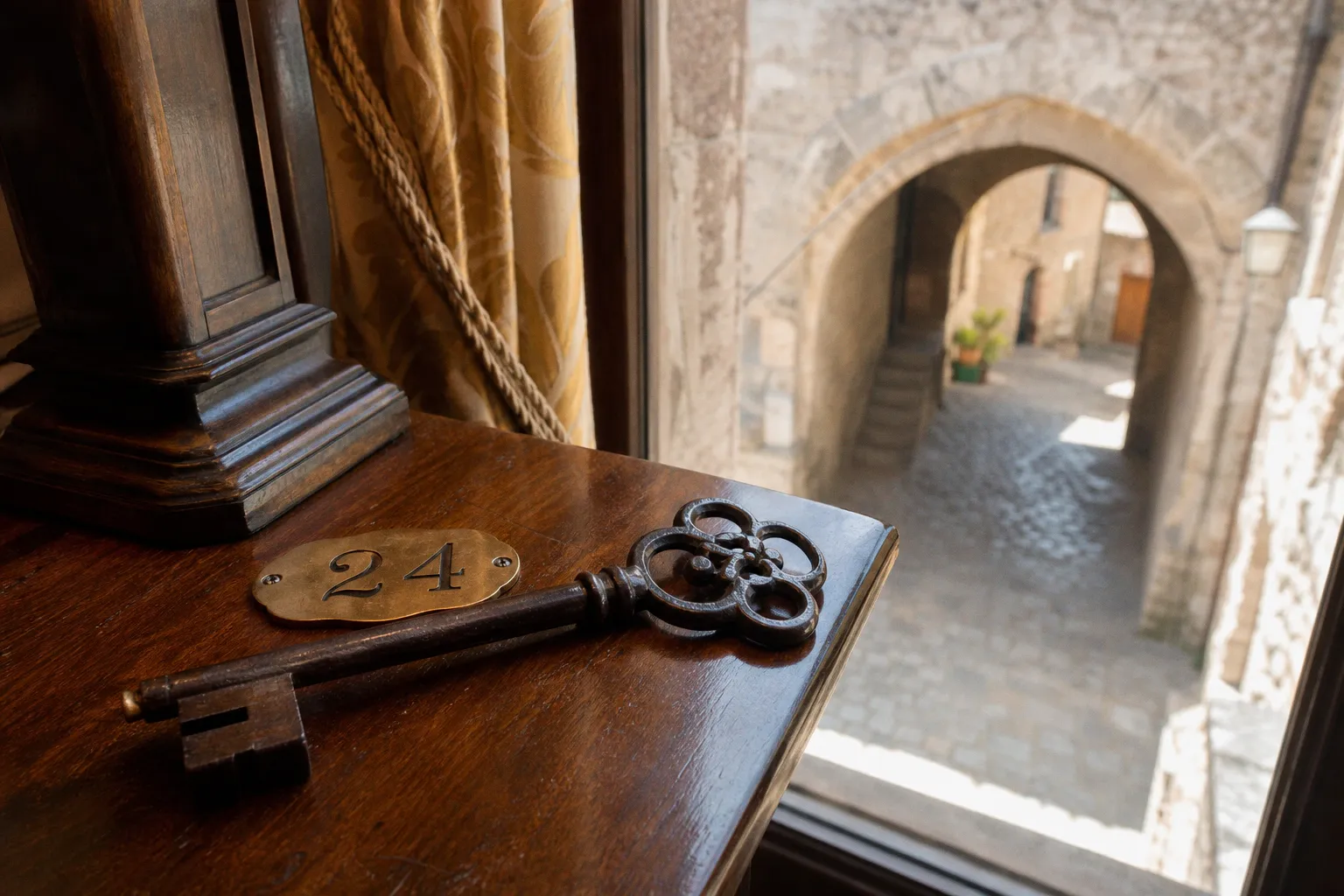
The test is structural, not brand-historical: a hotel company founded in 1965 cannot, on the basis of its corporate age, field a building completed in 2005 for induction. The relevant question is whether the masonry, load-bearing walls, roof framing, or other primary structural assemblies of the candidate structure predate the cutoff by at least half a century.
That single rule separates a recognition program built on architectural substance from one built on hospitality tenure. The rest of the criteria layered on top of it — federal recognition, demonstrated significance, and active preservation stewardship — define what the program is actually evaluating. Each layer narrows the field and ratchets up the documentation required of the operator.
The 50-Year Threshold and Original Building Fabric
The minimum age test is tied to original construction fabric, not to the date a building was licensed, redesigned, or rebranded as a hotel. The nomination form asks whether all or part of the original building is at least fifty years old, and a candidate answers with the structural record rather than with an internal milestone. A 1923 bank vault converted into a 1987 hotel satisfies the test. A 2010 hotel built against a retained 1898 brick party wall satisfies it for the wall and the contiguous portion of the building structurally tied to it. A 2018 purpose-built hotel does not, regardless of how established the surrounding district appears from the street.
The age test is necessary but not sufficient. Age is the first of three federal criteria applied by the National Register of Historic Places, but it is paired with two further requirements — significance and integrity — before any historic recognition can attach to a structure. Historic Hotels of America imports that three-part logic into its own membership rules and adds a fourth, distinctly operational requirement: demonstrated preservation stewardship by current hotel leadership.
For comparison, the National Trust's companion program, Historic Hotels Worldwide, applies a 75-year building-age threshold to its candidates. The two programs are not interchangeable, and the higher number should not be substituted for the Historic Hotels of America standard when reviewing a property's claimed membership tier.
Navigating National Register and Landmark Designations
Federal historic recognition in the United States operates on two distinct tiers, and they are not equivalent.
The National Register of Historic Places is the federal list of historic properties authorized under the National Historic Preservation Act of 1966 and administered by the National Park Service. As of mid-2025, the Register lists more than 100,000 properties. National Register evaluation relies on age, significance, and integrity, where significance can be local, state, or national. A building can qualify on a regional or local basis without meeting any national benchmark.
National Historic Landmark status is a higher and narrower designation than National Register listing. National Historic Landmarks require national significance and a higher degree of integrity; every National Historic Landmark is automatically listed in the National Register, but the reverse is not true.
The Historic Hotels of America nomination form does not require Landmark status. It accepts a property that is listed in, or eligible for listing in, the National Register. According to the program's 2026 fact sheet, more than 160 of the program's roughly 300 member hotels are listed in the National Register. A substantially smaller subset — 32 members — are National Historic Landmarks. The two figures are not interchangeable, and conflating them inflates the share of properties operating at the higher federal tier.
| Designation tier | Federal basis | Significance threshold | Integrity threshold | Reported member share |
|---|---|---|---|---|
| National Register of Historic Places | NPS, under 1966 NHPA | Local, state, or national | Standard | More than 160 members |
| National Historic Landmark | NPS, NHL designation | National | Higher | 32 members |
The distinction matters for travelers evaluating marketing language. A property that is "eligible" for the National Register has not necessarily been formally listed; it has cleared an evaluation under the program's criteria, typically through a State Historic Preservation Office or a consultative process. Eligibility signals consistent standards. Listing indicates that the evaluation has been completed and the property recorded on the federal roster.
Defining Stewardship: Authenticity, Sense of Place, and Architectural Integrity
On January 21, 2026, Historic Hotels of America released language describing membership standards in operational terms. The release stated that hotel leadership must invest in preserving the property's historic authenticity, sense of place, and architectural integrity. The phrasing reframes a recognition criterion as an obligation of current management.
Three terms carry the weight.
- Authenticity refers to materials, construction methods, and spatial sequences that survive from the period of original construction or from documented later campaigns of significance. A restoration that replaces original masonry with new brick faces and substitutes composite trim for carved wood does not meet the authenticity standard, even where the result photographs acceptably — surface appearance does not substitute for the survival of original fabric.
- Sense of place is the cumulative architectural and contextual signature that identifies a property within its specific historical setting. It includes the building's relationship to its district, its setbacks, its original site lines, and the survival of adjacent contributing structures. A hotel severed from its historic context by incompatible surrounding development may retain its own fabric and still lose sense of place.
- Architectural integrity draws directly on the seven federal integrity aspects examined below and refers to the survival of design, materials, and workmanship from the period of significance.
The program's roughly 300 member hotels, inns, and resorts operate under this stewardship expectation. The 2026 fact sheet reports a footprint spanning 44 states, the District of Columbia, Puerto Rico, and the U.S. Virgin Islands. Room counts run from 7 rooms at the 1754 House in Woodbury, Connecticut, to 3,386 rooms at the Hilton Hawaiian Village in Waikiki, Oahu. Stewardship expectations do not scale linearly with room count, and the program does not adjust the integrity bar for property size.
Beyond the Hotel Brand: Evaluating Converted Historic Structures
The nomination form asks a specific shape-of-history question: what was the original building used for, if it was not built as a hotel? That single field opens the program to adaptive-reuse candidates whose original function was something other than lodging.
A converted bank, a former convent, a decommissioned post office, a Civil War-era hospital, a railroad depot, a sugar mill, a private mansion, and a working farm can all enter the candidate pool when their original fabric meets the 50-year test and their significance, integrity, and stewardship clear the remaining screens. The program is not, in other words, a list of purpose-built historic hotels. It is a list of buildings of a certain age and standing that currently operate as hotels.
The technical consequence is that nearly every structural question worth evaluating on a preservation basis — load distribution across new floor penetrations, retrofitting of mechanical systems through original masonry, mortar compatibility in repointing campaigns, the preservation of decorative plaster ceilings against HVAC retrofit — is presented by adaptive reuse rather than avoided by it. The hotel function is overlaid onto the original structural logic; the preservation task is to keep that overlay from erasing the substrate.
This is also why the original-use question belongs on the form. A warehouse converted to a hotel has different preservation vulnerabilities than a purpose-built hotel of the same year: window proportions, floor-to-ceiling heights, bearing-wall locations, and the presence or absence of original stair cores all flow from the original function. The form acknowledges that asymmetry by asking for the prior use directly.
The Seven Aspects of Historic Integrity in Modern Lodging
National Register integrity is defined across seven aspects: location, setting, design, materials, workmanship, feeling, and association. The seven work as a single framework applied to every evaluation, and they scale in intensity: a National Historic Landmark must retain a higher degree of integrity than a property listed at the local level.
For a working hotel, each aspect has specific operational implications.
- Location is the site's physical placement. A building moved to a different parcel, however carefully, has lost integrity of location.
- Setting is the surrounding environment — adjacent buildings, streetscapes, view corridors, and historic landscape features. A hotel that retains its walls but has lost its surrounding context to incompatible mid-rise development has lost setting.
- Design is the composition of the structure: massing, rhythm of openings, roof profile, spatial hierarchy, and circulation patterns. A hotel that has welded an at-scale glass atrium to the front of a historic mansion has compromised design.
- Materials are the physical substances of construction: load-bearing masonry, lime mortar, wood framing, slate roofing, cast iron, and terracotta. Material integrity is lost when original fabric is replaced with superficially similar substitutes that cannot hold up under direct physical examination.
- Workmanship is the evidence of craft — hand-carved joinery, decorative plasterwork, custom ironwork, the texture of troweled stucco. It is the aspect most easily eroded by routine maintenance that prioritizes speed over continuity of craft.
- Feeling is the cumulative impression a property conveys of its period. A building stripped of its original materials but rebuilt to evoke feeling has not preserved feeling; the impression requires the underlying fabric.
- Association is the link to the historic event or person that made the property significant. A hotel linked to a documented historical event must retain the physical features that supported that link.
Integrity of design, materials, and workmanship is what preservation decisions made at the property level most directly affect. The remaining four aspects — location, setting, feeling, and association — are largely settled by the property's history and urban context rather than by routine operational decisions.
The practical sequence for a candidate entering nomination runs as follows: confirm the 50-year fabric test, document the National Register or eligible-for-listing status, establish significance through events, people, architecture, or district context, and demonstrate that current stewardship is preserving rather than eroding the seven integrity aspects. None of the seven is a soft criterion.
What Membership Does and Does Not Certify
The program's standards are architectural and historical. They are not, and should not be read as, hospitality certifications.
Historic Hotels of America is a recognition program administered by the National Trust for Historic Preservation. Its 2026 fact sheet states explicitly that the organization does not own, operate, or manage member hotels. Membership does not certify a uniform room standard, a specific service level, a restaurant tier, a level of accessibility provision, a nightly rate band, or any particular guest-review profile. A property that meets the criteria above can still underperform on operational measures on any given night, and the membership framework provides no mechanism — and is not designed to provide one — for adjudicating that performance.
The program also does not publish a point-based scoring system, a public evaluation rubric, or a guaranteed path from nomination to acceptance within a defined timetable. Evaluation relies on documentary evidence submitted through the nomination form and on the assessment of the program's reviewers against the criteria described above. Travelers and travel professionals should treat membership as a credible signal on architectural and historical standing, and treat it as silent on operational matters that membership was never designed to address.