How 5GA and AI are reshaping heritage tourism
We have been watching the Langhe-Roero and Monferrato hills for some time — a UNESCO-listed landscape where Barolo and Barbaresco vines cling to slopes worked by hand for centuries.
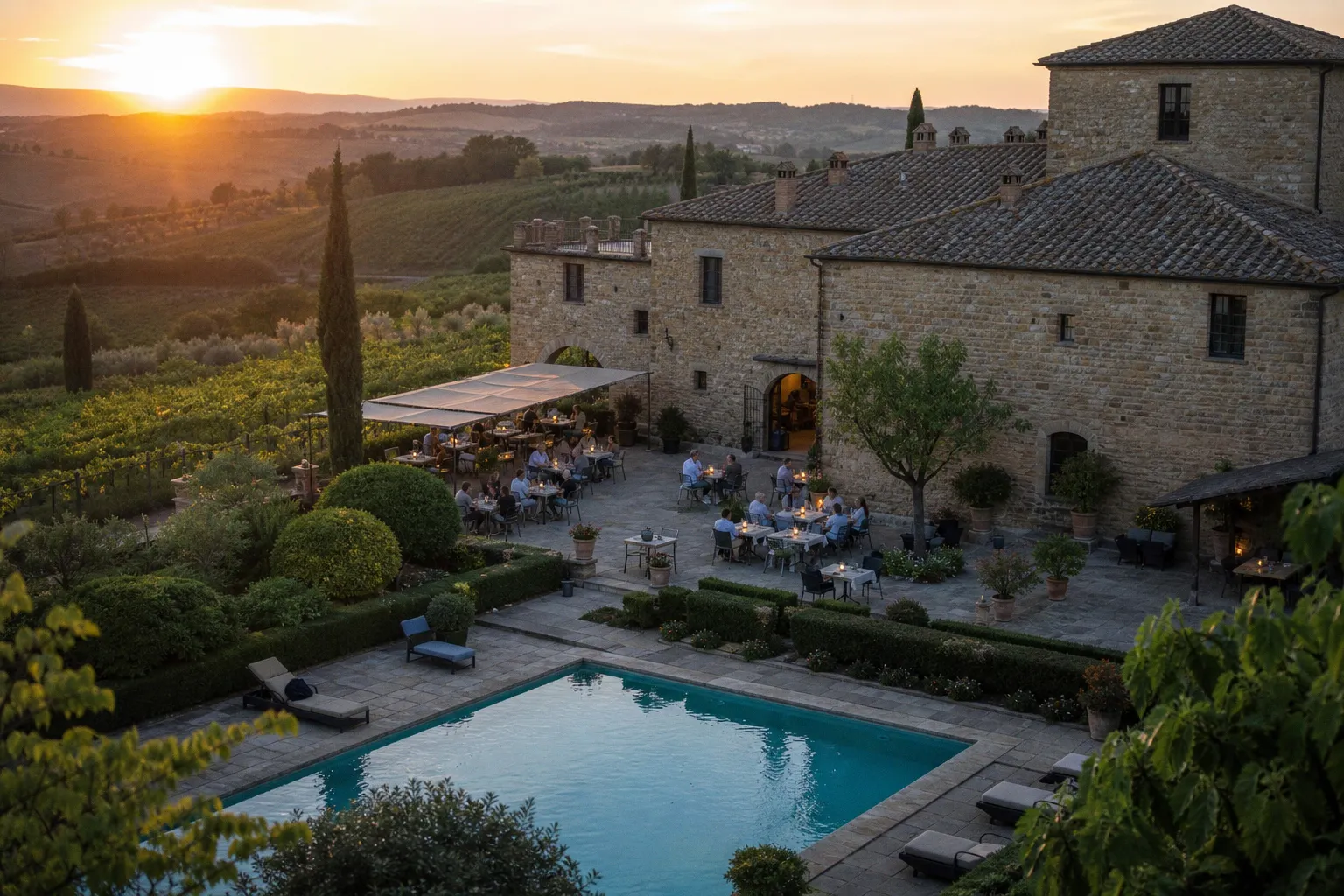
A monastery, brought back into use
The building is a former eighteenth-century monastery, underused before restoration began. The redevelopment programme, as described in the official project announcement, held the original materials, architectural features and overall identity in place while introducing contemporary interiors, guest rooms and wellness spaces. It is the kind of adaptive reuse we tend to favor in these pages — not a tear-down dressed in old clothes, but a structural conversation with what was already there. Borgo Monchiero becomes the second property within the Heritage by Atmosphere collection, a brand whose stated premise is restoring historically significant buildings rather than constructing new resorts, and Atmosphere Core's first operating hotel in Europe after building its reputation through luxury resort operations in destinations such as the Maldives.
What the guest encounters
Inside that monastic shell, the offering rests on three pillars: Michelin-led dining, wellness retreats, and cultural experiences anchored in the surrounding landscape. The setting itself is the principal draw — vineyard-covered hills, medieval castles, and the gastronomy of a region internationally recognized for Barolo and Barbaresco. For travelers who come to Langhe-Roero and Monferrato for its agricultural and culinary traditions rather than for proximity to a major city, a restored monastery that anchors the experience from within the landscape marks a meaningful shift in how the region absorbs high-end visitors, and how it monetizes an inscription awarded in 2014 specifically for the long-established relationship between people and the land.
What we are watching
We will be watching how the dining program treats the surrounding agriculture. The region was inscribed on the UNESCO World Heritage List in 2014 specifically for that vineyard tradition and the human labor behind it — a relationship that runs through the cellars and the kitchens that depend on them. A monastery restoration that honors the building but sources carelessly from those same fields would be a familiar disappointment. We will also be watching whether the Heritage by Atmosphere model travels to other European old towns where underused religious and civic buildings sit waiting for investors willing to work within the original fabric.
The financial backdrop for such projects is rarely straightforward. Large-scale adaptive reuse depends on capital shaped by monetary conditions — including the kind of policy friction now visible in the Czech premier's rate-hike standoff with the central bank.