Unesco reviewing controversial 'black cube' project in Florence amid outrage
Florence's former Teatro Comunale site has drawn formal scrutiny from the UNESCO World Heritage Centre.
Structural Intervention Behind the Façade
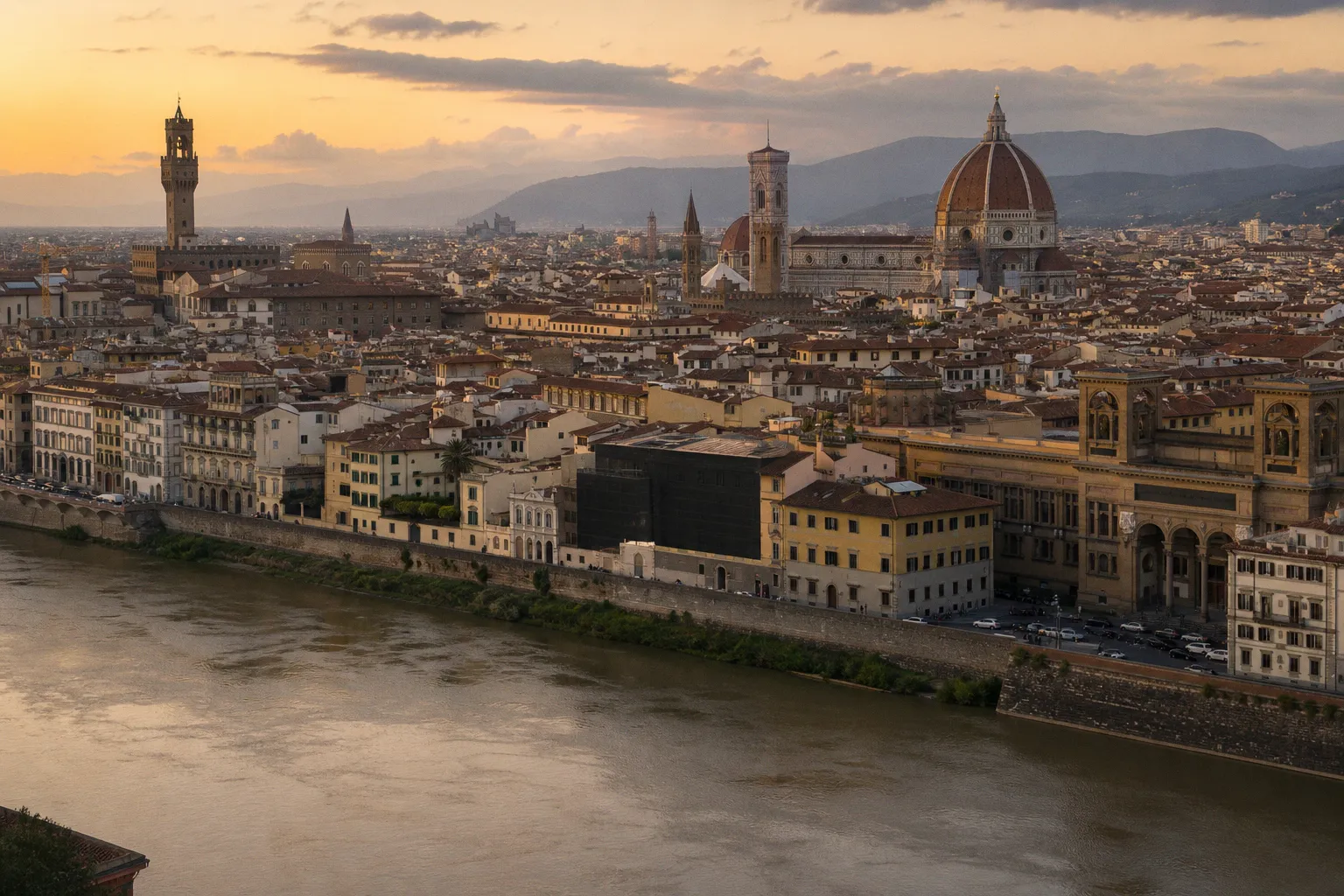
Most of the former opera house was demolished in 2021 after years of disuse, retaining only the cream-coloured façade wall. In its place, Milan-based architect Vittorio Grassi developed a luxury residential scheme that includes a nearly 30-metre-high dark-coloured structure rising directly behind the retained frontage, flanked by two white residential blocks topped by black upper storeys. Images of the dark monolith — widely dubbed the "black cube" — circulating online became the catalyst for organised demonstrations last December, where protesters carried flares and constructed piles of cardboard black cubes outside the site.
The spatial hierarchy is what makes this contentious from a preservation standpoint: a load-bearing Neo-Classical shell now fronts a massing that exceeds its proportions by a significant margin. In heritage-sensitive urban fabric, the relationship between retained façade and new volume is the critical parameter. Here, the new structure does not defer to the surviving element — it dominates it.
UNESCO's Regulatory Framework
A UNESCO spokesperson stated that the project is under review "in close consultation with the Advisory Bodies to the World Heritage Committee." The organisation's operational guidelines require that any planned intervention at a World Heritage site must not cause irreversible impact on the attributes that justified inscription. The procedural escalation path is well-defined: in-depth dialogue with national authorities, possible inscription on the List of World Heritage in Danger, and — as a measure of last resort — removal from the list entirely.
Eike Schmidt, former director of the Uffizi and now directing Naples's Museo di Capodimonte while leading Florence's opposition councillors, told The Art Newspaper that formal complaint was unnecessary given the project's media visibility. "Unesco per their own by-laws is required to monitor," Schmidt noted, suggesting the review was effectively inevitable once the construction became publicly visible.
What This Signals for the Historic Centre
Florence has not faced a serious threat to its World Heritage status in the four decades since inscription. The "black cube" episode tests whether retrofitting and infill development at protected sites can be executed without triggering the mechanisms UNESCO reserves for genuine endangerment. The outcome — whether the review results in corrective measures, dialogue, or more formal action — will set a precedent for how contemporary massing behind historic façades is evaluated within the World Heritage framework.
For visitors planning itineraries through the historic centre, the site near the former Teatro Comunale remains accessible, though the surrounding area is likely to attract continued protest activity. The broader question for the preservation community is whether Italy's national authorities will engage proactively with UNESCO's assessment or allow the matter to escalate through the formal endangerment process.