Unveiling Kenya’s New Sh150m Abakhayo Cultural Centre: A Must-Visit Hub for Authentic Heritage Tourism
A Sh150 million cultural facility is being proposed for Busia County, with Nambale positioned as the likely heritage node for the Abakhayo community.
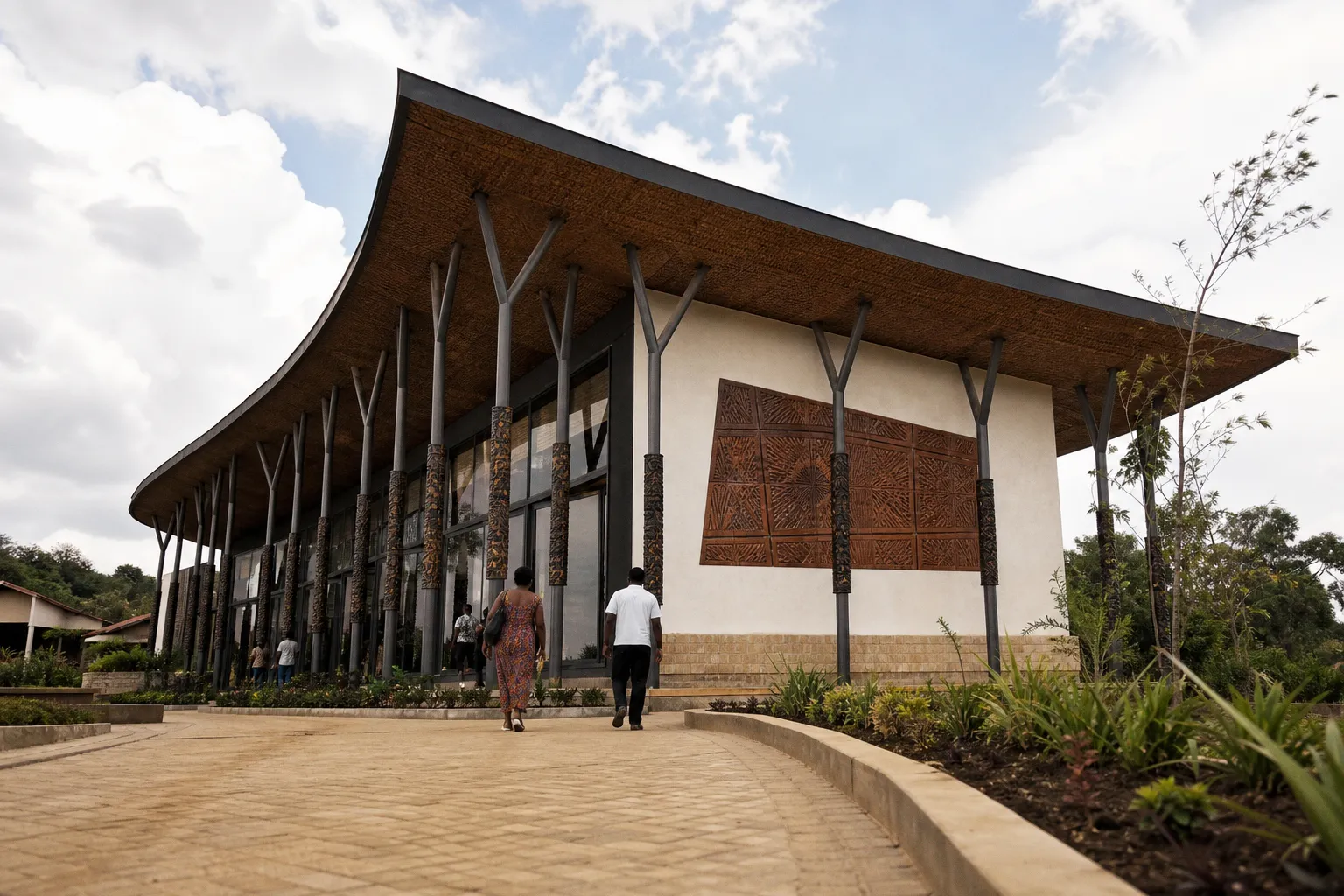
A fixed institution for a mobile heritage system
The Abakhayo Cultural Centre is described as a government-backed project intended to preserve the cultural heritage of the Abakhayo community in Western Kenya. Its proposed functions are specific: traditional practices, oral storytelling, local artistry, and structured engagement with younger generations.
That matters because the material problem is not masonry decay or roof failure, as in an old-town conservation file. The threatened structure here is social and spatial. Oral knowledge needs rooms, schedules, custodians, and repeat use. A centre can supply that framework, but only if its internal hierarchy is clear: performance space, teaching space, archive or repository functions, craft areas, and visitor circulation cannot be treated as the same room with different labels.
The report presents the centre as a response to cultural erosion associated with modernisation and urbanisation. That is a common preservation claim, and it should be read with care. A building does not automatically preserve a language, a proverb system, or clan history. It can, however, create a repeatable setting in which those practices are taught, recorded, displayed, and contested by the community itself.
What this changes for heritage travel in Western Kenya
The project is also being presented as a tourism intervention. Western Kenya is described in the report as less prominent in Kenya’s tourism economy than wildlife-focused destinations and coastal resorts. The proposed centre is therefore being positioned as a way to give Nambale a clearer role in heritage tourism rather than leaving it as a minor transit point.
For travellers who plan routes around cultural history rather than scenery alone, the practical question is sequencing. A visit to a new cultural centre is most useful when it is tied to local guides, markets, craft production, and community-led interpretation. A single-purpose exhibition hall rarely sustains a full itinerary. A centre that coordinates storytelling, workshops, performances, and local artisanship can.
The reported emphasis on “slow travel” is relevant but not sufficient. Slow travel becomes credible only when visitors have time to understand social structure, material practice, and the limits of what may be shown publicly. Heritage tourism fails when every ritual is flattened into performance. It works when the visitor route respects the difference between demonstration, instruction, and internal community use.
Points to verify before planning around it
The current reporting gives the allocation figure and the intended preservation role, but it does not supply the construction timetable, operator model, architectural design, site plan, or opening date. Those omissions are not minor. They determine whether this is a usable destination, a construction promise, or an institution still being defined.
Travellers and tour planners should watch for several concrete details: the managing authority, the role of Abakhayo cultural custodians, whether workshops will be regular or occasional, and whether local hospitality capacity near Nambale is being developed alongside the centre. A cultural building without transport logic, guide training, and maintenance funding can remain administratively complete but functionally thin.
There is also a documentation question. Cultural centres increasingly face pressure to digitise collections, oral histories, and interpretive material. That raises governance issues: who records, who labels, who has access, and how community knowledge is protected from being reduced to searchable content. These questions now sit beside wider institutional debates on technology and cultural authority, including discussions such as the Vatican commission on AI meeting for the first time.
For now, the Abakhayo project should be treated as a significant preservation proposal with tourism implications, not yet as a completed destination. Its value will be measured by use: whether elders, youth, artisans, guides, and visitors occupy the same institution without collapsing its cultural hierarchy into a simple tourist display.