Book a San Juan old town walking tour with local historians
A “historic” walk in Old San Juan can mean two very different products at the same price point: a brisk promenade past painted façades with a few dates attached, or a properly argued route through a fortified colonial city founded in 1521.
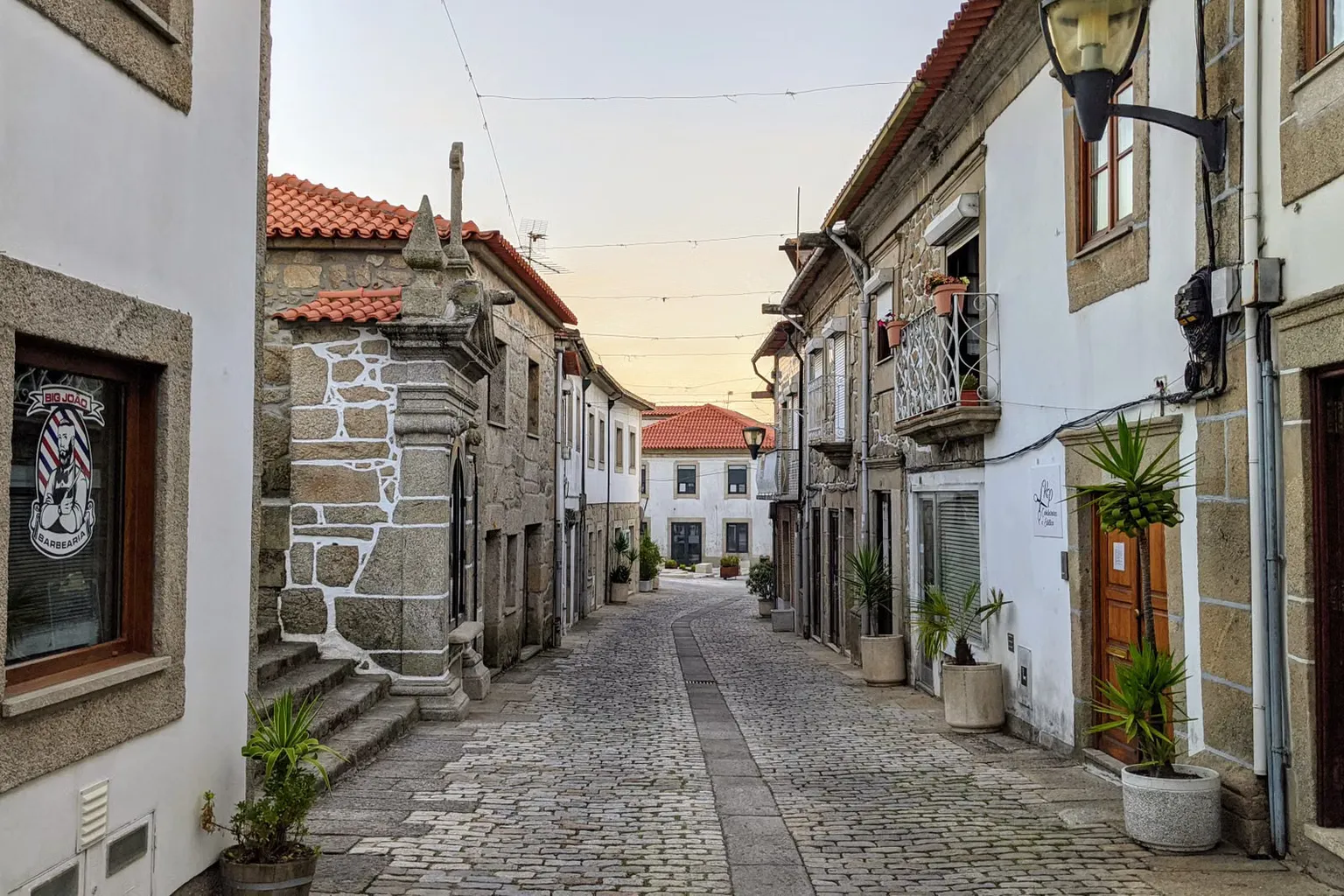
I have trailed enough guides through walled quarters to know the difference within fifteen minutes. In Old San Juan, that difference matters because the city is compact but dense: roughly seven blocks by seven blocks, more than 400 restored Spanish colonial buildings, two major forts, plazas, gates, churches, government buildings, and those blue-grey adoquines that look charming in photographs and rather less charming under weak ankles. A San Juan old town walking tour is not hard to find. A serious one, led by someone who can connect masonry, empire, urban planning and present-day Puerto Rico without flattening the place into a cruise-port anecdote, takes more scrutiny.
The heritage walk has grown up, but not every operator has noticed
Old San Juan has always been an easy sell. It is visually generous: balconies, pastel walls, sea air, fortress silhouettes, a street grid scaled for walking rather than windshield tourism. That makes it vulnerable to a familiar hospitality trick. Put “heritage,” “authentic,” or “local expert” on the brochure, keep the occupancy high, and hope nobody asks whether the guide is interpreting history or merely narrating scenery.
The better tours have moved beyond that. They treat Old San Juan not as a postcard quarter but as a 500-year urban document. Founded in 1521, it is the oldest city under United States jurisdiction, and since 1983 its major fortifications have sat within the UNESCO World Heritage framework. That status is not decorative trim. It points to the military and colonial architecture that shaped the city’s footprint: the defensive wall system, the ocean-facing forts, the landward gates, the tight civic spaces and the long relationship between port, crown, church and trade.
A thin tour says: “This is El Morro, a famous fort.”
A worthwhile tour asks: why here, why this scale, why this sightline, who paid for it, who laboured on it, who was kept out, and how did a fortress city become a heritage neighbourhood with cafés tucked into its old shell?
That is the retrofit I want: not new plumbing hidden behind old plaster, but a modern interpretive structure placed honestly over historic fabric. The good local historian or trained heritage guide does not drown the walk in dates. They use dates sparingly, as anchors. 1521 matters. 1983 matters. The rest should help you read stone, street, and power.
Old San Juan is small enough to cross in an afternoon and layered enough to misunderstand in ten minutes.
The generic sightseeing model persists because it is convenient. Typical walking tours last between 90 minutes and three hours, which fits the cruise schedule, the hotel concierge script, and the visitor who wants a tidy “old town” experience before lunch. There is nothing inherently wrong with that. A brisk orientation can be useful. However, if the claim is “historian-led,” I expect more than theatrical certainty and a clean polo shirt.
The 7-by-7 grid is not a theme park map
The first physical truth of Old San Juan is that the map looks manageable. The second is that the city works vertically, defensively, and unevenly. The walled city occupies a compact peninsula, but its edges rise dramatically above the water. The historic walls reach up to about 150 feet above sea level, and the route between plazas, gates and forts is not a neutral hotel corridor. It is sun, slope, stone, traffic pinch-points and exposure.
A competent San Juan old town walking tour uses that compactness intelligently. It does not simply stack landmarks until the itinerary looks substantial. The city rewards sequencing.
The San Juan National Historic Site includes Castillo San Felipe del Morro — El Morro — and Castillo San Cristóbal. They are connected by a historic walking trail along the city walls, and this is one of the clearest ways to understand the old defensive logic. El Morro looks outward to the Atlantic and the harbour approach; San Cristóbal was built to strengthen landward defence. Walk between them and the city stops being a cluster of attractions. It becomes a military machine wrapped around a civilian town.
Inside the walls, the architecture shifts register. The more than 400 restored 16th- and 17th-century Spanish colonial buildings are not equal in condition or interpretive value. “Restored” is one of those words I inspect with professional suspicion. Restoration can mean careful conservation, compatible materials, measured intervention. It can also mean a photogenic façade over a tired interior, the heritage equivalent of putting bespoke stationery in a lobby with damp corners.
On foot, you begin to see the differences:
- Balconies and timberwork reveal how much restoration has been cosmetic and how much has respected older proportions and materials.
- Courtyards and thresholds show the Spanish colonial house as a climate machine, not merely a pretty envelope.
- Church and civic buildings mark the old hierarchy of authority: spiritual, military, administrative, commercial.
- Plazas operate as urban relief valves in a dense grid, not just places to photograph pigeons and buy a cold drink.
- Street surfaces expose the trade-off between preserved character and modern accessibility; the adoquines are historic fabric, not a smooth museum floor.
The common stops — Plaza de Armas, Cathedral of San Juan Bautista, the old city gates, El Morro, San Cristóbal — are not the problem. The problem is how they are handled. A weak guide treats them as beads on a string. A strong guide uses them to build an argument.
A route that actually makes historical sense
If I were booking a first serious heritage walk, I would look for a route that does not try to do everything. Old San Juan’s footprint invites overpacking. Resist it.
A coherent half-day structure might run like this:
1. Begin at Plaza de Armas or a nearby civic point. This grounds the walk in administration, public life and the planned city, rather than opening with fortress spectacle. The plaza gives the guide a chance to explain the grid, the political centre, and the relationship between public space and colonial control.
2. Move toward the Cathedral of San Juan Bautista. The cathedral is not merely a devotional stop. It places religion inside the civic and imperial framework. A good guide will connect it to settlement, burial, power and continuity without turning the visit into pious brochure copy.
3. Use the city gate as a hinge. The old gates help visitors understand what a walled city means in practical terms: movement controlled, arrivals staged, security designed into daily life. If the guide cannot explain gates beyond “people entered here,” the tour’s interpretive occupancy is already low.
4. Follow the wall logic toward El Morro. This is where the scenic route and the military route overlap. The ocean views are not a bonus feature; they explain the fort’s purpose.
5. If time and stamina allow, connect toward Castillo San Cristóbal. The wall trail between El Morro and San Cristóbal is one of the clearest teaching tools in the city. It also tests whether the tour’s advertised duration is realistic or merely optimistic.
This route does not require theatrical “hidden gems.” Old San Juan is not short of visible history. What it lacks, in some tours, is disciplined interpretation.
“Local historian” is a claim, not a credential
The phrase “local historian” has become the boutique-hotel lobby candle of heritage tourism: pleasant, overused, and rarely examined. I do not dismiss local expertise. Quite the opposite. The best guides are often those who know the streets socially as well as academically — where a restoration has changed ownership, which façade conceals an older footprint, how a festival route uses historic space, why one plaza feels civic and another commercial.
However, not every local guide is a historian, and not every historian is a good walking guide. These are overlapping skills, not identical ones.
When assessing a San Juan old town walking tour, I separate the brochure claims into practical categories:
| What the tour claims | What I look for before booking | What usually disappoints |
|---|---|---|
| “Historian-led” | Named guide, stated background, clear subject focus: colonial military history, architecture, urban history, Puerto Rican cultural history | Anonymous “expert guide” language with no evidence |
| “Small group” | Actual maximum group size, not just “intimate” phrasing | A group of 25 following one umbrella through narrow streets |
| “Architectural tour” | Specific mention of Spanish colonial buildings, restoration, courtyards, façades, fortifications | Generic landmark route with decorative building comments |
| “UNESCO experience” | Explanation of the San Juan National Historic Site and why the fortifications matter | Using UNESCO as a luxury adjective |
| “Accessible route” | Honest notes on cobblestones, slopes, heat, rest stops and pace | Smooth claims that ignore historic paving entirely |
| “Authentic local stories” | Balance between oral history, documented history and present-day context | Anecdote soup: entertaining, unverifiable, and structurally thin |
The finest guide I would trust in Old San Juan is not necessarily the one with the grandest title. I would rather have a careful interpreter who says “we know this from records” and “this is a local tradition” than a performer who sands every uncertainty into certainty. Heritage work has enough manufactured polish already.
I also look for tours that acknowledge colonial violence, military strategy, slavery, trade, religion and modern Puerto Rican identity without collapsing the walk into either sentimental nostalgia or a grievance recital. Old San Juan can bear complexity. Visitors can too.
There is, of course, a market for themed lodging, cinematic fantasy and the soft-focus afterlife of pop culture travel — anyone weighing that kind of performative stay might recognise the instinct from coverage of the Twilight Swan House Airbnb in Oregon — but Old San Juan deserves a more demanding standard than set-dressing tourism. Its streets were not built to provide a backdrop for our self-improvement captions.
If a guide cannot tell the difference between a restored façade and a restored story, I keep my expectations modest.
The tour length tells you more than the adjectives
A 90-minute tour can be excellent if it is honest about its limits. It can orient you to the grid, introduce the wall system, explain one or two plazas, and leave you with a route to continue independently. What it cannot do, despite some florid booking pages, is provide a full architectural, military, social and culinary history of Old San Juan with meaningful depth. That is not interpretation. That is compression with a booking engine.
Most guided walks in Old San Juan fall into the 1.5-to-3-hour range. The question is not simply how long the tour lasts, but where the time is spent.
For visitors trying to choose, I would divide the options this way:
The 90-minute orientation walk
This is useful for first-time visitors with limited time or poor heat tolerance. It should cover a tight central area, introduce the founding date, explain the old grid and touch on a few major sites. I would not pay a premium for “deep history” at this length unless the guide has a very focused theme.
Best for: cruise passengers, families with limited stamina, travellers who want bearings before exploring alone.
Weakness: often becomes a pleasant skim, especially when group size creeps upward.
The two-hour architectural and civic walk
This is the sweet spot if the guide is competent. Two hours allows a plausible movement from plaza to cathedral to gate to wall, with enough pauses for interpretation. It can handle urban form, building types and colonial institutions without exhausting everyone.
Best for: heritage travellers, first-time visitors staying in the old town, architecture-minded guests.
Weakness: can still be overstuffed if it promises both forts in detail.
The three-hour fortifications and city walls route
This should be chosen deliberately, not because the word “complete” looks reassuring. A three-hour walk can connect El Morro and San Cristóbal through the wall system and give the defensive architecture room to breathe. It also demands more from shoes, hydration and attention span.
Best for: military history readers, UNESCO-site collectors with substance, urban walkers.
Weakness: sun exposure and uneven surfaces become more consequential.
The private specialist walk
Private tours vary too widely in pricing and availability to generalise neatly. Some are genuinely bespoke: architecture, photography, diaspora history, food markets, religious history, conservation. Others are the same group tour with a higher margin and fewer strangers. I ask specific questions before paying the private-tour premium.
The questions are not complicated. Who leads it? What is their background? Which sites are included? How much time is spent inside or near the forts? Is admission handled separately? What happens in heavy rain? How large is the “private” party allowed to become before it stops being private in any meaningful sense?
Hospitality language loves elasticity. I prefer measurements.
How I would book without being seduced by the paintwork
Old San Juan’s visual charm can make even thin products seem credible. A booking page needs only one balcony, one fort wall and one sunset to suggest depth. This is where the inspector’s reflex is useful: ignore the mood board and read the operational details.
Before booking, I would examine five things.
1. Guide identity and interpretive competence.
A named guide is not a guarantee, but anonymity is a warning light. Look for specific background rather than inflated adjectives. “Local historian specializing in colonial San Juan’s fortifications” tells me more than “passionate storyteller.”
2. Route discipline.
The itinerary should show a logical sequence. Plaza de Armas, Cathedral of San Juan Bautista, city gates, El Morro and San Cristóbal are common anchors, but a serious route explains why those stops are paired. If the description is just a landmark inventory, expect a landmark inventory.
3. Group size and audio reality.
Narrow streets, traffic edges and public plazas are not lecture halls. A group that is too large changes the product. You hear less, ask fewer questions, and spend more time being herded into shade. “Small group” should have a number attached.
4. Treatment of accessibility and pace.
The historic adoquines are beautiful and uneven. Slopes exist. Heat is not a theoretical inconvenience. Any operator who sells Old San Juan as effortlessly accessible without caveat is polishing the facts. That does not mean the route is impossible for visitors with mobility concerns, but it does mean details matter: meeting point, distance, rest stops, surfaces, and whether alternative routes are available.
5. Intellectual honesty.
I value guides who can distinguish documented history from legend, restoration from reconstruction, and local memory from archival record. The visitor should leave with sharper questions, not merely a fuller camera roll.
The best booking descriptions tend to be less flamboyant. They mention duration, meeting point, terrain, themes and limits. They do not promise to “unlock the soul” of a city in ninety minutes, which is merciful, since souls are hard to unlock and harder to refund.
What the forts change about the walk
It is tempting to treat El Morro and San Cristóbal as scenic endpoints. That is a mistake. The fortifications are the spine of Old San Juan’s historic identity as a strategic colonial port. Without them, the old town becomes a pretty grid of restored buildings. With them, the city’s reason for being comes into focus.
El Morro’s presence is almost cinematic, and therefore at risk of being misunderstood. Visitors see the vast lawn, the sea, the monumental walls. A casual guide lets the view do all the work. A good guide explains the harbour approach, lines of sight, layered defences and the long process by which military architecture adapts to threat.
San Cristóbal often receives less romantic attention, which is precisely why I listen carefully when it appears in a tour description. If an operator treats it as an optional add-on, they may be selling scenery. If they frame it as a landward defensive counterweight to El Morro, we are in better hands.
The walking trail along the city walls between the forts is not merely an attractive connector. It is a teaching route. It clarifies the relationship between sea, wall, city and military planning. It also reveals the old town’s physical exposure: wind, light, height and distance. I would rather spend twenty well-interpreted minutes on that relationship than forty minutes hearing generic legends in front of a painted doorway.
This is where historian-led guiding earns its fee. Military architecture can easily become either dry engineering or heroic myth. The better interpretation avoids both. It explains function, labour, fear, ambition and the daily presence of defence in an inhabited city.
The cobblestones are not a minor footnote
Every old town sells walkability. Old San Juan mostly delivers it, but not in the frictionless way modern travel platforms imply. The city’s compact size makes it accessible for pedestrian exploration, yet the historic street surfaces and slopes make the experience uneven in the literal sense.
Those blue cobblestones — often called adoquines — are part of the city’s character. They also complicate wheelchairs, walkers, small rolling luggage, flimsy sandals and the romantic idea that one can dress for brunch and accidentally complete a heritage trail. I have seen enough guests arrive in smooth-soled shoes to know that old towns punish optimism.
Operators should not oversell accessibility. Nor should they dramatise difficulty. The honest middle ground is this: many visitors can walk Old San Juan comfortably with decent footwear, water, sun protection and realistic pacing; some travellers with mobility limitations will need a carefully adapted route; nobody should assume the entire old city behaves like a level shopping district.
A practical packing and planning note, without the usual travel-blog sermon:
- Wear shoes with grip; the historic surface can be uneven and slick after rain.
- Choose morning or late afternoon where possible; heat changes attention span and tolerance.
- Ask where the tour begins and ends; a route that finishes far from your hotel may add an unadvertised final climb.
- Confirm whether the forts are entered or viewed externally; the interpretive value and timing differ.
- Bring water, but do not plan the walk around constant café stops unless it is explicitly a food-and-history route.
- If mobility is a concern, ask about slopes and cobblestones in plain language, not just “is it accessible?”
This is not fussiness. It is the difference between engaging with a UNESCO-listed historic quarter and enduring it with a blister while someone recites dates.
Self-guided or guided: the honest trade-off
A self-guided heritage trail through Old San Juan can be rewarding. The grid is compact, the major landmarks are legible, and the wall-and-fort relationship can be followed with a decent map and prior reading. For independent walkers, this is one of the Caribbean’s more satisfying historic quarters to navigate without constant supervision.
However, self-guided walking has a ceiling. You can identify buildings; you may not understand their sequence. You can admire restored façades; you may not distinguish conservation from commercial polish. You can stand before a fort; you may not grasp how it worked within a wider imperial network. The city remains visible, but not always readable.
The decision is less about guided versus independent than about sequence. I would book a strong two-hour historian-led walk early in the stay, then return alone. That order improves everything. You start to notice wall alignments, balcony forms, institutional buildings, street gradients and restoration choices. The old town stops being an attractive maze and becomes an argument you can revisit.
For travellers with only one day, I would choose guided interpretation over a random wander. For those staying several nights, I would combine both: guided civic-and-fortifications walk first, independent early-morning or evening exploration later. Old San Juan rewards repetition, especially when the tour has given you a proper lens rather than a souvenir script.
Where food, markets and hotels fit — and where they do not
Old San Juan is not only stone and strategy. It is a lived quarter with restaurants, bars, shops, hotels and residential buildings inside the heritage envelope. A good walking tour may touch on local foodways, markets and hospitality, but it should not use them as filler unless that is the advertised theme.
I am wary of hybrid tours that promise “history, architecture, culture, cocktails and hidden gems” in two hours. That is not a tour; it is a buffet plate. The result is often shallow history interrupted by consumption stops. There are excellent food walks and there are excellent history walks. The combined version needs a disciplined guide to avoid becoming neither.
Hotels in restored buildings add another layer. Some are thoughtful adaptations of colonial structures; others are heritage veneers with modern amenities squeezed into old footprints. Plumbing, air-conditioning, acoustic insulation and circulation all reveal how respectfully — or aggressively — a building has been converted. A walking tour need not become a hospitality audit, though I admit I am hard to restrain on the subject. Still, when a guide can explain how contemporary use pressures historic fabric, the visitor gains a more honest view of preservation.
Old towns survive by being used. The question is whether use clarifies or erases the past.
My verdict on booking a San Juan old town walking tour
I would book a San Juan old town walking tour, but I would not book the first one wearing the word “historic” like a fresh coat of paint. Old San Juan is too important, too compact and too legible to waste on generic narration. Its value lies in the relationship between the 1521 foundation, the Spanish colonial grid, the restored buildings, the cathedral and plazas, and the formidable defensive system now recognised through the San Juan National Historic Site.
The strongest choice for most heritage travellers is a two- to three-hour walk led by a named local expert or historian, with a clear route through civic space, religious architecture, gates, walls and at least one major fortification. The tour should be candid about cobblestones, heat and group size. It should use UNESCO status as context, not perfume.
Old San Juan does not need exaggeration. The city has walls, height, history and a dense urban fabric that still performs. What it needs is interpretation sturdy enough to match the masonry. If the guide can provide that, the fee is not for being shown where to walk. It is for learning how to see.