Rome food tours: the rise of culinary heritage tourism
A food tour in Rome is no longer just a procession of small plates between monuments.
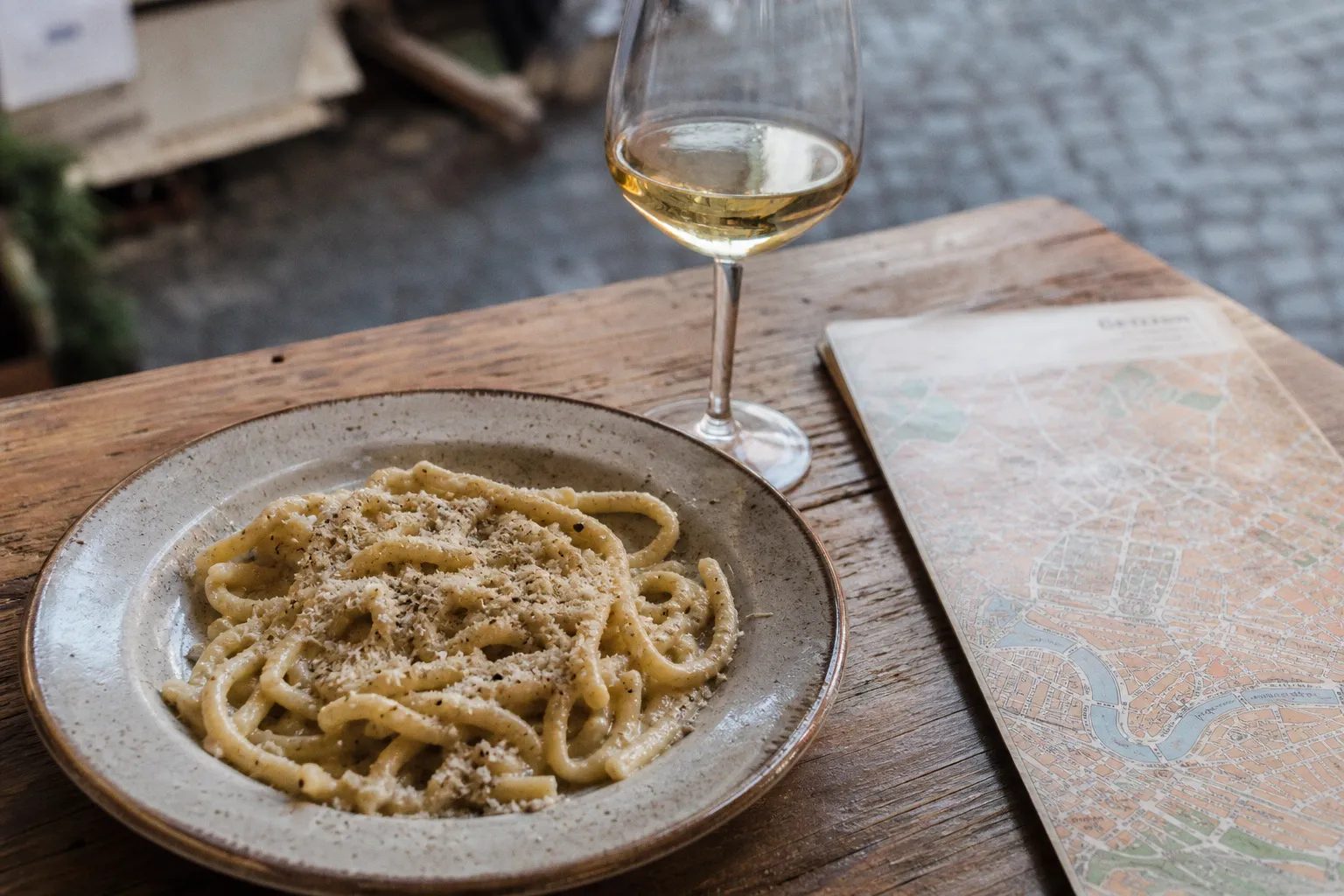
The appetite for a Rome culinary history tour has grown because many travellers have become wary of a too-polished version of local food. They want carbonara, certainly, and they want supplì still hot from the fryer. But increasingly they also want to know why Roman cooking is so frugal, why offal sits at the centre of its identity, why a tomato stall in a historic square may tell a more complicated story than a trattoria menu, and why “authentic” is not a garnish that can be sprinkled over any guided food walk in Rome.
The market city behind the guided food walk
Rome’s old food geography is not neat. It is layered, practical, and sometimes inconvenient to the romantic image visitors bring with them. The city’s food was shaped by papal estates, seasonal migration, Jewish-Roman techniques, rural Lazio yields, river trade, abattoir labour, monastic fasting rules, wartime scarcity, and the ordinary work of women stretching pasta, stale bread, legumes, chicory, and secondary cuts into meals that could hold a family through the day.
Campo de’ Fiori is often placed at the start of this story because it is visually legible: a square, umbrellas, crates, flowers, fruit, knives flashing at the produce stalls. Its official life as a public market dates to 1869, though the commercial use of the area reaches further back into the medieval city. That continuity is real. So is the fact that the square today is heavily shaped by tourism, short-stay apartments, and the daily economy of visitors. We should not pretend it remains a market serving primarily local households in the old sense. It has become a place where heritage is displayed, traded, compressed, and sometimes thinned out.
Testaccio works differently. The old slaughterhouse district was not built for postcard appetite. It was built around work: blood, hides, cold dawns, carts, pay packets, and the tough distribution of value between the owners of animals and the people who processed them. The market’s relocation to its current modern facility in 2012 did not erase that inheritance. If anything, the new building makes the contrast sharper. A contemporary stall selling sandwiches, vegetables, fresh pasta, or fried food stands within a district whose culinary grammar was written by butchers, porters, and families who knew exactly which cuts they could afford.
For visitors, the distinction matters. A food tour Rome itinerary that treats Campo de’ Fiori and Testaccio as interchangeable “market stops” misses the point. One is a historic market square now under intense visitor pressure; the other is a district where the infrastructure of meat labour shaped taste itself. The food may be excellent in both places, but the historical questions are not the same.
Roman food is not poor because it lacks imagination; it is ingenious because poverty, labour, and seasonality left no room for waste.
The market, in this sense, is not a backdrop. It is the supply chain in public view. We see the seasonal yield in puntarelle and artichokes, the economics of cured pork in guanciale, the persistence of sheep’s milk in pecorino romano, the wheat and water logic behind pizza al taglio, and the speed with which a fried rice ball can move from leftover management to urban icon.
Campo de’ Fiori and Testaccio: two different forms of food memory
A useful Rome food walk does not ask us to choose one market as “real” and dismiss the other as spoiled. That is too easy, and not quite honest. Cities survive by changing their customers. Markets do too. What we can do is read each place with the right lens.
Campo de’ Fiori helps explain how Rome’s historic centre transformed food selling into urban theatre. It remains important because it preserves the daily image of open-air exchange in the old city: crates of produce, prepared vegetables, spices, pasta, oil, flowers, and the choreography of vendors addressing a passing public. Yet its present economy is not the same as its 19th-century one. The market that became official in 1869 now operates in a district where visitors often outnumber the regular household shoppers who once gave such spaces their rhythm.
Testaccio, by contrast, is strongest when read through production and labour. Its old slaughterhouse, active in the memory of the district, underpins the cooking that tour operators now call “heritage.” The modern market building opened in 2012, but the district’s older appetite persists in the stall logic: practical lunches, butcher’s knowledge, seasonal vegetables, bread, frying, pasta, and the ready conversion of inexpensive ingredients into satisfying food.
| Market or district | What it helps us understand | What a serious tour should not pretend |
|---|---|---|
| Campo de’ Fiori | The public market tradition of the historic centre, officially established as a market in 1869, with older medieval commercial roots | That it is still mainly a neighbourhood provisioning market untouched by tourism |
| Testaccio Market | The legacy of the slaughterhouse district, working-class foodways, and the modern continuation of market culture after the 2012 relocation | That the new facility is an old-world stage set; its value is continuity, not antique scenery |
| Trastevere food stops | Jewish-Roman influence, tavern culture, bakeries, fried foods, and the movement of recipes across the river | That every popular stop is necessarily ancient or artisanal |
| Historic bakeries and pizza counters | Grain, ovens, labour schedules, and the Roman habit of eating by weight and by slice | That pizza al taglio is a museum piece rather than a living urban format |
This is where culinary heritage tourism becomes more exacting. It asks guides, vendors, and visitors to slow down long enough to distinguish age from continuity, continuity from branding, and branding from preservation. A recipe can be old and badly made. A market can be modern and historically meaningful. A street food can be relatively recent in form and still express a deep Roman instinct for thrift, heat, salt, and speed.
Quinto Quarto: the fifth quarter and the cost of Roman flavour
No phrase is more frequently invoked on a Testaccio food tour history route than Quinto Quarto, the “fifth quarter.” It refers to the offal and secondary cuts of the animal: the parts left after the prime quarters had gone elsewhere. In Roman culinary memory, especially in Testaccio, these cuts are tied to slaughterhouse workers and the wages or informal compensation that placed the less prestigious parts of the animal into working-class kitchens.
It is easy to turn this into a tidy anecdote: poor workers received unwanted cuts, Roman cooks made them delicious, everyone wins. But the truth is heavier. Quinto Quarto cooking required skill because the ingredients were difficult. Tripe needed cleaning and long cooking; tail needed slow braising until collagen softened; pajata, coratella, tongue, sweetbreads, and other parts demanded not just courage from the eater but technical competence from the cook. These dishes were not born from abundance. They came from the need to draw nourishment and satisfaction from what the market hierarchy had already judged inferior.
This is why the best Roman food guides do not treat offal as a dare. A plate of coda alla vaccinara, when prepared with patience, is not a theatrical stunt for visitors who want to prove seriousness. It is a record of labour: the butcher’s cut, the household’s fuel, the hours of simmering, the sauce enriched by bone and connective tissue. Trippa alla romana, with tomato, mint, and pecorino, speaks the same language. It softens a tough ingredient through repeated washing, simmering, seasoning, and the careful use of cheese and herb to lift what might otherwise feel heavy.
Quinto Quarto also explains why Roman cuisine can be so direct. It rarely hides behind elaborate sauces. It salts, cures, braises, fries, grates, and dresses. It knows the value of fat because fat was energy; it knows bitterness because field greens and chicory were part of the seasonal table; it knows sharp cheese because sheep farming and preservation shaped the regional pantry. The Roman kitchen did not become famous by wasting softness on already tender ingredients. It became famous by making the stubborn edible.
There is a modern tension here. Offal has been revalued by chefs, culinary schools, and visitors seeking “authentic” experiences. Prices and availability shift when once-humble cuts become fashionable. A heritage food tour that does not discuss that shift risks turning working poverty into a tasting note. The point is not to shame appetite, but to place appetite in its proper economy.
To eat Quinto Quarto well is to acknowledge that tradition was not invented for leisure; it was often a disciplined answer to exclusion.
The four Roman pastas and the myth of simplicity
A good food tour Rome route almost inevitably meets at least one of the four canonical Roman pastas: carbonara, amatriciana, cacio e pepe, and gricia. They are now global dishes, repeated in restaurants far from Lazio, often with cream, garlic, smoked bacon, or soft compromises that would trouble a Roman cook. Their fame can make them seem obvious. They are not.
The four dishes show how Roman food builds force from a narrow pantry. Guanciale, pecorino romano, black pepper, pasta water, eggs, tomato, and rendered fat do most of the work. Their apparent simplicity is technical, not casual. Cacio e pepe fails if heat, starch, and grated cheese are mishandled; carbonara turns heavy if the egg is scrambled or diluted into cream; gricia depends on the rendered fat of guanciale and the sharpness of pecorino; amatriciana, associated with the town of Amatrice and absorbed into Roman identity, requires the tomato to meet cured pork without becoming sweet or flabby.
These dishes are central to culinary tours because they are familiar enough to attract travellers and exact enough to teach them something. They also allow a guide to talk about pastoral economies, cured pork, sheep’s milk cheese, dried pasta, urban appetite, and the postwar spread of dishes that now feel timeless. Their ingredients are not ornamental. Pecorino romano is a preserving cheese, salty and assertive; guanciale is cured pork jowl, not a vague strip of bacon; black pepper points toward trade and cost as much as flavour.
One of the more useful things a guide can do is resist the performance of certainty when history is contested or complex. Carbonara, for instance, attracts many origin stories, some more plausible than others. Rather than flattening that debate into legend, a serious Rome culinary history tour can show why the dish’s modern fame belongs to the 20th century while still connecting it to older habits of pasta, pork fat, cheese, and egg. Heritage does not require every dish to be ancient. It requires honesty about how dishes enter public memory.
Supplì, pizza al taglio, and the urban intelligence of street food
Roman street food heritage is often presented as a cheerful category: quick, affordable, easy to photograph, easy to eat while walking. But the best street foods are not merely convenient. They are engineered answers to the city’s working tempo.
Supplì are the clearest example. These fried rice balls, classically filled with tomato-seasoned rice and mozzarella, are often described through their stringing cheese. More historically interesting is their thrift. Supplì have been associated with the use of leftover risotto or cooked rice, shaped, filled, breaded, and fried into a second life. Frying here is not excess for its own sake. It is preservation by heat and transformation by texture: yesterday’s starch becomes today’s snack, sealed under a crisp coat, rich enough to stand alone.
Pizza al taglio, sold by the slice or by weight, tells another supply-chain story. It belongs to ovens, flour, fermentation, counter service, and the habits of workers and students who need food that can be portioned without ceremony. Its doughs vary, and so do toppings, but its form is urban: cut, weighed, folded, carried. It suits Rome because Rome eats in layers — at a bar, at a market, near an office, outside a school, after a church visit, between errands.
Not every modern variation is old. Some toppings are recent; some formats have been adapted to visitor demand; some shops are better at social media than fermentation. That does not make the whole category false. It simply means we should learn to ask better questions.
A more discerning guided food walk in Rome might consider:
1. What problem did the food originally solve? Supplì make sense when we think about leftovers, frying oil, and portable calories; pizza al taglio makes sense when we think about ovens, portioning, and fast urban meals.
2. Which ingredient carries the local identity? In Roman street food, that may be pecorino, guanciale, artichoke, chicory, tomato, or simply the flour and fermentation behind the bread base.
3. How much labour is hidden by the speed of service? A supplì eaten in three minutes may have required cooling, shaping, filling, breading, and careful frying; a slice of pizza depends on dough management long before the counter opens.
4. Has tourism changed the form? Larger portions, exaggerated fillings, novelty toppings, and English-language menus do not automatically spoil a food, but they do change its economic target.
5. Does the vendor preserve a technique or merely quote it? There is a difference between frying properly and reheating; between seasonal vegetables and decorative toppings; between long fermentation and a heavy base disguised under abundance.
Street food is where culinary heritage tourism can be most democratic, if handled well. It allows visitors to taste without the cost and theatre of a full restaurant meal. It also allows guides to talk about rice, flour, oil, leftover management, and the small economies that sustained dense neighbourhoods before food became content.
Slow Food principles and the pressure on artisans
The rise of culinary heritage tourism in Italy has moved alongside a broader interest in Slow Food principles: biodiversity, traditional methods, responsible sourcing, and the protection of artisanal production. In Rome, these ideas are not abstract. They touch cheese, cured meats, bread, seasonal vegetables, olive oil, wine, and the survival of small producers who cannot always compete with cheaper industrial supply.
The challenge is that tourism can both support and distort preservation. A tour group that pays fairly for a tasting, listens to a baker explain fermentation, or buys directly from a market vendor can help sustain craft. A tour that demands constant availability of “typical” bites regardless of season can push the opposite way. Heritage food is often seasonal, inconvenient, and limited. Artichokes, puntarelle, fava beans, figs, and certain greens belong to particular windows of the agricultural year. When a visitor expects the same Roman menu in every month, the supply chain is forced either into substitution or performance.
Artisans also face a problem of visibility. The person curing pork, aging cheese, baking at dawn, or selecting produce from growers may not have the time or language to turn that labour into a visitor experience. Tour operators become translators. When they are careful, they can explain why a loaf costs more, why a cheese changes with milk and season, why a market stall cannot offer the same abundance in August as in spring. When they are careless, they reduce the artisan to a backdrop and keep the value elsewhere.
This is especially delicate in historic districts where rents are high and everyday food shops are being replaced by businesses aimed almost entirely at visitors. A food tour can bring money into a quarter, but it can also participate in the conversion of ordinary provisioning into spectacle. Campo de’ Fiori is the cautionary example: it still carries market history, but its present pressures are visible. The task is not to freeze it in a past that no longer exists. The task is to read it honestly, spend intelligently, and avoid confusing convenience with continuity.
How culinary heritage tourism is changing the Roman itinerary
The older model of a Rome food tour often leaned on abundance: many stops, generous portions, famous dishes, quick stories. The newer and more interesting model is more investigative. It asks where the ingredient came from, why the recipe took shape, who could afford it, who cooked it, and what has changed now that visitors are paying to encounter it.
That shift has altered the map. Testaccio has become central because its food history is legible through labour. Jewish-Roman foodways receive more attention because they reveal preservation, frying, vegetables, and religious history as part of the city’s edible archive. Historic markets are treated less as shopping scenery and more as civic infrastructure. Even a simple pasta tasting can become a discussion of pastoralism, cured pork, trade routes, and the price of authenticity.
For the visitor, this means the best tour is not always the one with the longest menu. It is the one that can connect the bite to the field, the stall, the workshop, the abattoir, the oven, the family economy, and the modern city. A guide should be able to explain why Quinto Quarto mattered in Testaccio, why Campo de’ Fiori is historically significant but tourist-heavy today, why supplì are linked to thrift as well as pleasure, and why the four Roman pastas are technical achievements rather than simple bowls of nostalgia.
There is also room for modesty. Not every stop has to be centuries old. Not every vendor has to be a guardian of endangered craft. Rome is a living city, not an archive under glass. But claims should match evidence. If a tour calls itself historic, it should know dates such as 1869 for Campo de’ Fiori’s official market status and 2012 for the relocation of Testaccio Market. If it invokes the fifth quarter, it should explain the labour economy behind it. If it celebrates Slow Food values, it should show how sourcing, seasonality, and artisanal method affect the food in front of us.
What we should expect from a serious food tour in Rome
Culinary heritage tourism works best when it respects both appetite and context. We should be able to enjoy a hot supplì without pretending it descended unchanged from antiquity. We should be able to admire a market stall without ignoring the rent pressure around it. We should be able to taste offal without turning working-class necessity into a novelty act.
Rome’s food has always been a negotiation with supply: grain from fields and trade, cheese from sheep, pork preserved through salt and time, vegetables pulled from seasonal cycles, rice and leftovers reshaped through frying, animal parts divided by class and value. The city’s historic quarters make that negotiation visible if we are willing to look past the first plate.
The rise of the food tour Rome market is therefore not automatically good or bad. It is a tool. In careful hands, it can preserve memory, direct money toward skilled producers, and teach visitors that Roman cuisine was built as much by scarcity as by celebration. In careless hands, it becomes a walking buffet with old words attached. The difference is usually in the questions asked before the tasting begins: who made this, from what, under which conditions, and why did this food become necessary here?
That is where Rome remains generous but unsentimental. Its culinary heritage does not ask to be admired from a distance. It asks to be traced — through markets, cuts, ovens, frying pans, trade routes, and the hands that kept cooking when the best pieces had already gone elsewhere.