Compare Venice Food Tours: Avoid Tourist Traps in Rialto
The Rialto district is not difficult because Venice is confusing. It is difficult because the food economy here runs on two parallel tracks: one built around the market, the counter, the lagoon, and…
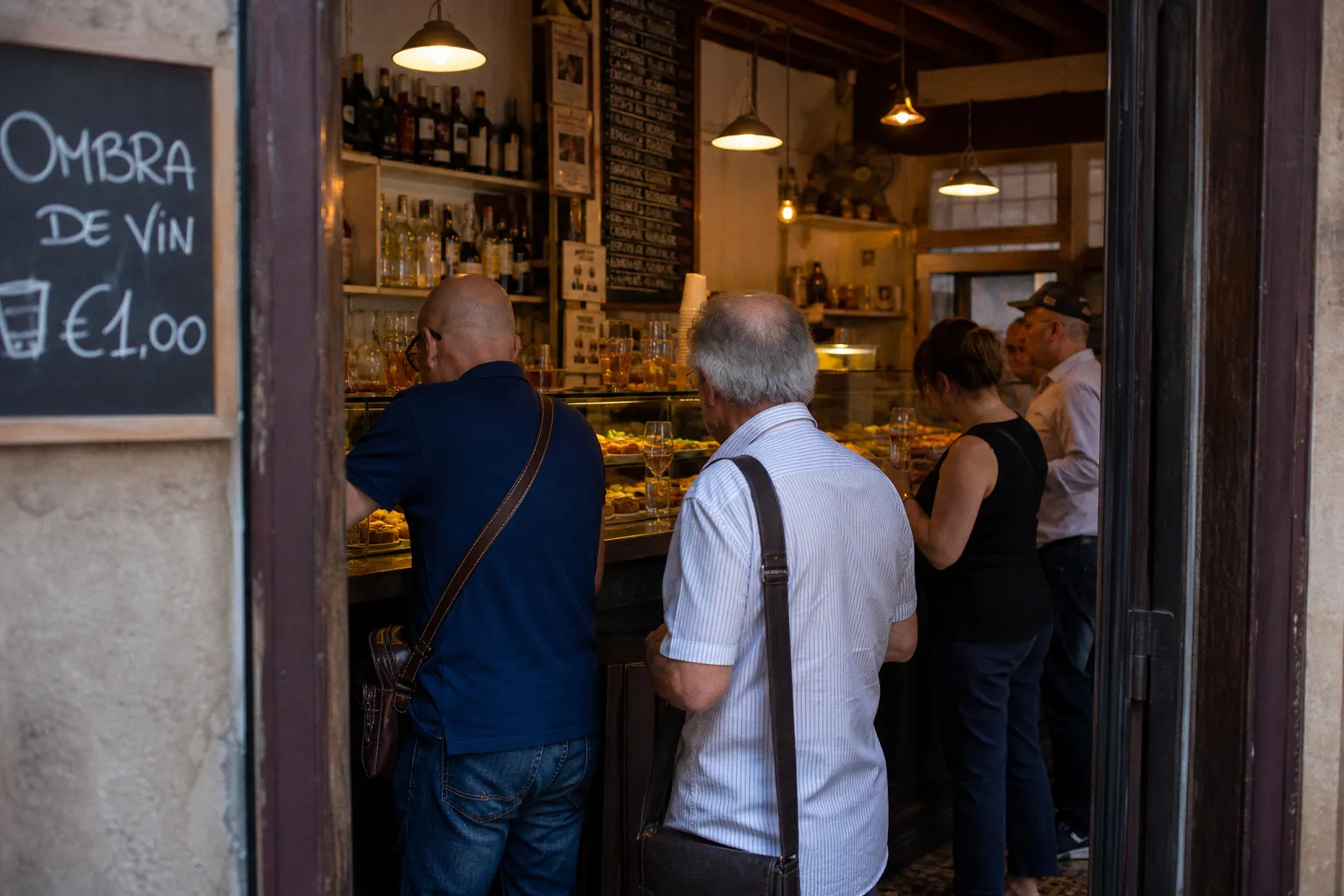
The Rialto district is not difficult because Venice is confusing. It is difficult because the food economy here runs on two parallel tracks: one built around the market, the counter, the lagoon, and repeat local trade; the other built around footfall, photo menus, and the visitor who will not return tomorrow. Your task is not to “discover” food in Rialto. Your task is to sort the signal from the noise before lunch traffic blocks the lane.
If you want to know how to check avoid tourist traps in Rialto, start with the axis that matters: Rialto Bridge, Rialto Market, the bacari around the commercial core, and the side streets that drain visitors toward fixed-price menus. This is a compact zone. That helps you. You can compare food tours, taverns, and bacari fast if you use the right tests in the right order.
The 1097 Legacy: Why the Rialto Market Defines Venetian Authenticity
Begin at the market, not at the bridge. The bridge is the bottleneck. The market is the reason the district has culinary weight.
For related context, see Fix Ruffle Emulator CORS Errors for Local Flash Files.
For related context, see Ministry of Tourism, Google India partner to strengthen digital tourism ecosystem.
The Rialto Market has been Venice’s commercial heart since 1097. That date is not decorative background. It explains the operating logic of serious eating in this part of the old town. For centuries, this was where fresh produce and seafood entered the daily routine of kitchens, inns, taverns, and households. If a food tour cannot explain the market’s role before pointing you toward a plate, its route is likely built for convenience rather than heritage.
Use the market as your first control point. You are checking proximity, seasonality, and behavior.
A credible Rialto food tour should do at least three things:
1. Anchor the route at the market before the eating begins. Not every stop must sit inside the market area, but the guide should connect dishes to the supply chain: fish from the lagoon, vegetables in season, and the rhythm of morning trade.
2. Explain what is actually seasonal. In Venetian cooking, “local” is not a mood. It is a constraint. Castraure, the tender artichokes associated with Sant’Erasmo, are not an all-year garnish to be placed wherever a kitchen needs a heritage signal.
3. Move away from the heaviest bridge traffic before ordering. The immediate bridge axis is expensive real estate and high-volume pedestrian terrain. That does not make every establishment there bad. It does mean you should apply a tighter filter.
In Rialto, authenticity starts upstream. If the route cannot trace the plate back to the market, it is probably tracing it back to a sales script.
Food tours that treat Rialto as a backdrop usually reveal themselves quickly. They stop where the group can fit, not where the food case is strongest. They explain “Venetian tapas” because it is an easy shorthand, then flatten cicchetti into a snack crawl with wine. That is not enough. A useful tour should make the district legible: where the market worked, why the bacaro counter matters, how locals eat standing, and why the best stop may have less seating than confidence.
Decoding the Bacaro: Genuine Cicchetti Culture vs. Staged Displays
A bacaro is not just a small bar with old walls. In Venice, the real test is operational. Look at the counter first. Authentic bacari typically serve cicchetti — small snacks — displayed on the counter. The selection may be narrow. It may shift through the day. It may look less polished than a restaurant menu designed for a camera. That is not a defect. It is the format.
Your route through Rialto should favor places where the food is visible, the turnover is steady, and local customers order without studying a laminated book. A strong guide will direct your attention to the counter and tell you what is moving. A weak one will recite a script while the group waits for pre-arranged plates that could be served anywhere.
Compare the formats before you commit:
| Parameter | Authentic bacaro pattern | Tourist-facing food stop |
|---|---|---|
| Food display | Cicchetti visible at the counter, often limited and changing | Printed menu dominates; food may be represented by photos |
| Ordering rhythm | Fast, counter-led, often standing | Seated, slow, structured around set courses |
| Drink format | Ombra, a small glass of house wine, ordered simply | Upsold bottles, cocktails, or “Venice experience” pairings |
| Seating | Limited; counter space matters | Large seating area designed for group turnover |
| Language signals | Staff may switch languages, but the place is not built entirely around translation | Multi-language boards and fixed tourist offers at the entrance |
| Heritage value | Food connected to local supply and Venetian habits | Heritage language used as decoration |
This is where many visitors misread comfort as quality. A bacaro with limited seating can feel abrupt if you arrive expecting restaurant service. Adjust. You are not being dismissed; you are entering a different traffic system. Locals may stand at the counter, take an ombra, eat two or three cicchetti, and move on. The stop is brief by design.
If you are comparing tours, ask a direct question before booking or before following the group into the first stop: “Will we order at bacari counters, or are all tastings pre-set?” Pre-set tastings are not automatically bad. They can help with timing and group control. But if every stop is pre-set, seated, and identical, you are buying logistics with a Venetian label attached.
Red Flags in the Rialto: Tourist Menus and Visual Traps
Now apply the fast screen. You are near one of the most visited points in Venice. Do not negotiate with obvious warning signs.
The common Rialto tourist trap is not subtle. It stands outside the door and tells you what it is. The classic marker is the Menù Turistico — a fixed-price tourist menu — often paired with photos of dishes. Add a multilingual board trying to catch every passing visitor, and the probability shifts hard in the wrong direction.
You do not need to condemn every restaurant near the Rialto Bridge. Some historic establishments operate in the immediate area, and location alone is not proof of failure. But the burden of proof changes near the bottleneck. The closer you are to the main pedestrian flow, the more you should require evidence of actual food culture.
Use this order of inspection:
1. Doorway first. If the entrance is dominated by a fixed “Tourist Menu,” keep moving unless you have a specific reason to enter.
2. Menu second. A long menu with photographs across many cuisines is a poor sign. Venetian food does not need a catalogue.
3. Counter third. In a bacaro, check whether cicchetti are physically present and turning over. Empty display, tired display, or purely decorative display: downgrade the stop.
4. Customer mix fourth. Locals at the counter are not a guarantee, but they are evidence. A room filled only with visitors studying identical menus is also evidence.
5. Guide behavior last. A good guide explains why this stop works. A weak guide points to “famous,” “typical,” or “traditional” and moves quickly past the details.
The trap is visual certainty. Photos reduce friction for visitors who do not know the dishes. Fixed menus reduce decision stress. Broad translations reduce anxiety. All of that is useful for mass tourism. It is also how you lose contact with the food system that made Rialto important in the first place.
A serious food tour should help you resist that frictionless path. It should not simply replace the restaurant tout with a licensed explanation and a tasting token.
The Zero-Kilometer Standard: Seasonal Ingredients and Local Sourcing
Venetian culinary tradition places real weight on chilometro zero — the zero-kilometer idea of local, sustainable sourcing. Treat this as a practical filter, not a slogan. The stronger the claim, the more concrete the explanation should be.
Seafood from the lagoon is central. So are seasonal vegetables, including produce associated with islands such as Sant’Erasmo. A tour that says “fresh local ingredients” and stops there has given you almost nothing. A tour that explains what is available now, what is traditionally used, and how the dish changes with the season is doing useful work.
You should listen for nouns, not adjectives. “Fresh,” “authentic,” and “best” are cheap. Names of fish, islands, market routines, seasonal constraints, and preparation methods are better.
This is also where broader old-town knowledge helps. Architecture and food both depend on material logic: what is local, what can be transported, what survives humidity, salt, trade pressure, and repair. If you want a parallel lens on how built environments are read through material choices, this concise resource on architecture, renovation, and building materials is useful background. In Venice, apply the same discipline to the plate. Ask what the kitchen is built from.
A tight Rialto culinary route should distinguish between:
- Lagoon identity: seafood and preparations tied to the Venetian environment, not generic Mediterranean plating.
- Market dependency: ingredients that plausibly pass through the Rialto supply system or its modern equivalents.
- Seasonal discipline: dishes that change because the calendar changes.
- Counter economy: cicchetti made for quick consumption, not theatrical tasting portions plated for group photography.
- Local repeat trade: establishments that can survive more than one wave of tourists because residents and workers return.
“Local” in Rialto is not a decorative word. It is a route: lagoon, island, market, counter, glass, exit.
Do not overcorrect into purity theatre. Venice is a historic trading city, not a sealed village. Spices, preserved ingredients, and maritime exchange are part of the story. The problem is not that a dish has outside influence. The problem is when a place uses Venetian language to sell a generic product to a trapped audience.
How to Compare Venice Food Tours Before You Book
Most food tours sell the same emotional promise: eat like a local, discover hidden gems, avoid tourist traps. Ignore the adjectives. Compare routes by structure.
You are buying three things: access, interpretation, and sequencing. Access gets you into suitable stops. Interpretation explains why they matter. Sequencing prevents you from wasting time, doubling back, or hitting the wrong place at the wrong hour.
A good Rialto food tour should look like a controlled route, not a wandering appetite.
The route test
Before booking, check the tour description for the district logic. Does it name Rialto Market? Does it mention bacari? Does it distinguish cicchetti from a full restaurant meal? Does it address seasonality? If the description only says “Venetian food and wine near Rialto,” you do not have enough information.
Strong route language usually includes:
- a morning or early-day market component when relevant;
- multiple short stops rather than one long seated meal;
- cicchetti and ombra as part of the format, not as an afterthought;
- explanation of Venetian food customs, not just samples;
- movement away from the densest bridge flow.
Weak route language leans on:
- “secret” without naming the logic;
- “traditional” without food specifics;
- “best” without explaining criteria;
- large-group convenience;
- fixed tastings that could be served in any Italian city.
The group-size test
Large groups create drag in Venice. Narrow lanes, small counters, and limited seating turn a food tour into a moving obstruction. In Rialto, the problem compounds near bridge approaches and market lanes.
Smaller groups can enter bacari without forcing the establishment to stage-manage the visit. They can stand, order, listen, and exit. Larger groups often need pre-arranged seating, simplified tasting plates, and stops selected for capacity rather than quality. That does not automatically ruin the tour, but it shifts the product away from real bacaro rhythm.
If the tour does not state group size, ask. You are not being difficult. You are solving the route.
The timing test
Rialto is not equally useful all day. Market logic is strongest when the market is active. Bacari have their own rhythm. A late-afternoon route can still work, but it should not pretend to be a market immersion if the market function has already drained away.
Timing also affects crowd pressure. A midday route near the bridge may spend too much time navigating congestion. A smarter route uses the bridge axis only when necessary, then bypasses into tighter local circuits.
The interpretation test
The guide should be able to explain why a place is not a tourist trap without relying on “I know the owner.” Personal relationships can help, but they are not the evidence. You need observable criteria: menu structure, sourcing, counter culture, customer mix, seasonality, and how the establishment fits the old town’s food history.
If a guide cannot explain the difference between a bacaro counter and a restaurant menu, downgrade the tour.
The Rialto Field Manual: How to Move and Order
Once you are on the ground, keep the route tight. Do not drift from sign to sign. Rialto punishes indecision.
Start on the market side if your timing allows. Use it to calibrate the day’s ingredients. Then move toward bacari on side lanes rather than letting the bridge crowd pull you into the most visible dining strip. Think in short lateral moves: market to counter, counter to second stop, second stop to exit lane. Do not loop back through the same congestion unless there is a clear reason.
At the bacaro, order like the format expects you to order.
1. Scan the counter before asking for recommendations. Identify what is abundant, what is moving, and what looks freshly assembled.
2. Order a small set, not a full meal. Two or three cicchetti are enough for a first stop. You are comparing, not settling in.
3. Take an ombra if you drink wine. The small glass of house wine belongs to the format. It keeps the stop brief and local in scale.
4. Stand if standing is the norm. Do not treat the lack of seating as a service failure.
5. Exit cleanly. Pay, clear space, and move. Bacari work because the counter keeps turning.
This is the difference between using Rialto and being used by Rialto. The district is compact, but the visitor economy is efficient. It will absorb your hesitation. Your countermeasure is sequence.
What Not to Overvalue
You will hear bad advice framed as sophistication. Discard it.
Do not assume that a higher price proves authenticity. Venice is expensive in ways that have nothing to do with quality: rent, scarcity, logistics, and sheer demand all distort the signal. A costly plate near Rialto may be excellent. It may also be ordinary food with a premium view of passing traffic.
Do not assume that all restaurants close to the Rialto Bridge are traps. That claim is lazy. The bridge area has historic gravity and commercial pressure at the same time. Your job is to inspect the operation, not condemn the map.
Do not assume that English-speaking staff make a place inauthentic. Venice receives international visitors; competent hospitality often requires languages. The red flag is not translation. The red flag is when the entire exterior pitch is engineered for the uncommitted passerby: photos, tourist menu, broad promises, and no visible food logic.
Do not assume that a food tour is better because it avoids famous areas completely. Rialto matters. Avoiding it can be a route failure if the subject is Venetian culinary heritage. The correct move is not avoidance. It is controlled entry.
A Strict Verdict for Choosing
If you are comparing Venice food tours around Rialto, choose the one that treats the district as a working food system, not a scenic dining corridor. The route should begin from the market logic established in 1097, read bacari through their counters, explain cicchetti and ombra without flattening them into “tapas and wine,” and use zero-kilometer sourcing as a concrete standard rather than a marketing phrase.
Reject the tour that cannot name its method. Reject the stop with the photo menu doing the selling. Reject the guide who uses “traditional” as a shield against questions.
Your optimal Rialto plan is simple: market first when possible, bridge pressure minimized, bacari selected by counter evidence, ingredients tested against season and place, and each stop kept short enough to preserve the rhythm. Move with purpose. Eat in sequence. Leave before the bottleneck closes around you.