From Dubrovnik to traditional recipes: Croatia's protected heritage grows
Croatia's national Register of Cultural Goods reached 8,992 entries as of 1 July 2026, according to Ministry of Culture and Media figures reported by Croatia Week.
The Composition of the Register
Of the 8,992 listed cultural goods, 8,651 carry permanent protection and 341 hold temporary status. More than 70 percent of all entries are classified as immovable heritage—a category that includes load-bearing masonry structures, fortified ensembles, and archaeological substrates rather than movable objects or archival collections. Ministry data places Croatia at approximately 235 protected cultural goods per 100,000 inhabitants, given a population of roughly 3.8 million.
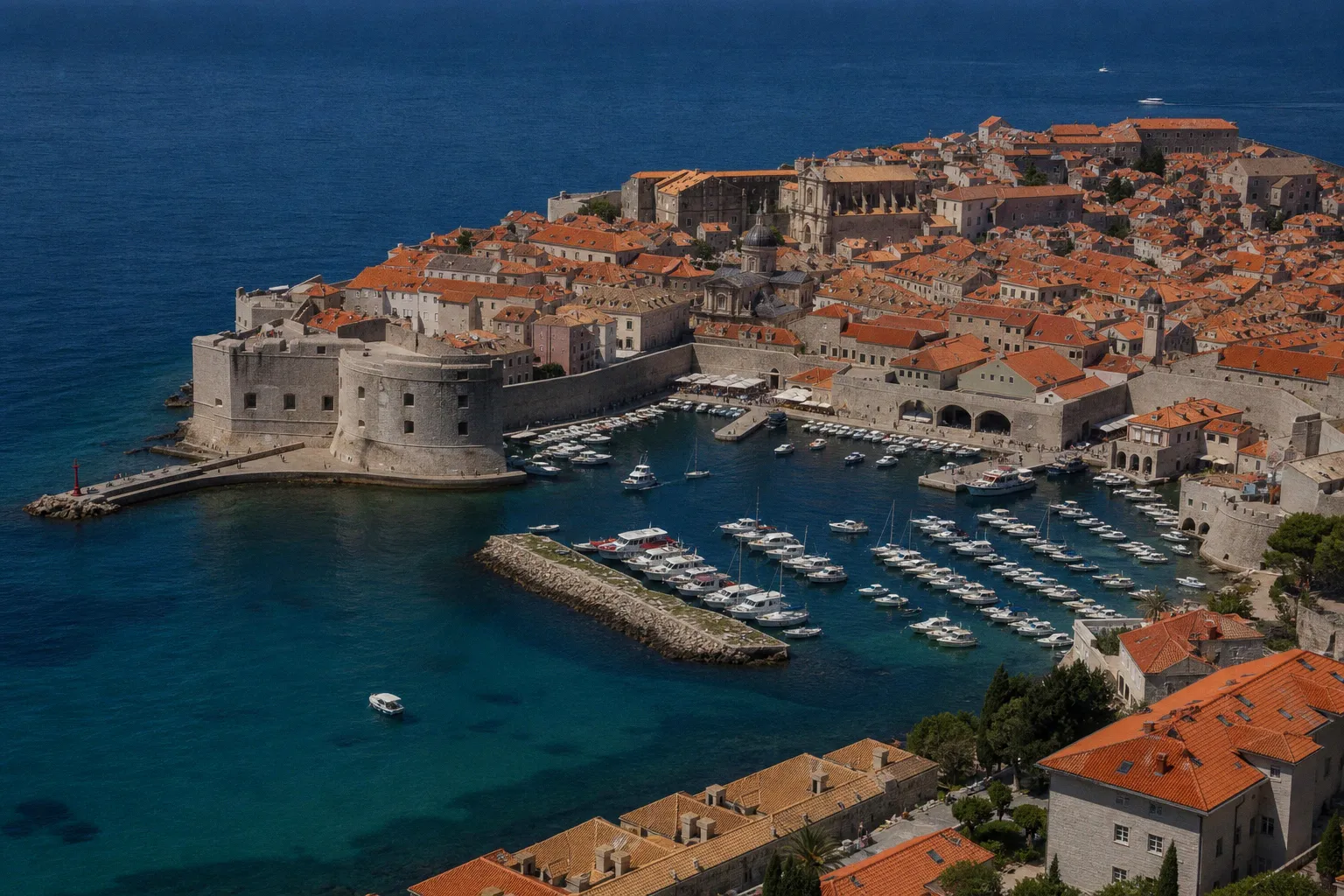
Around 400 urban and rural historic ensembles—including Dubrovnik, Split, and the village of Krapje—are each registered as a single entry regardless of the number of individual buildings they contain. This aggregation method compresses spatial data: a registered ensemble may contain dozens of structurally distinct parcels, each with its own conservation history, but it appears once in the index. Spatial information on immovable heritage is, however, available separately through Croatia's Geoportal, where maps and conservation records are published.
Recent Additions and Their Structural Profile
In the week preceding the July update, permanent protection was extended to three assets: the Zamagna-Kisić summer residence in Dubrovnik, the Podremanac-Vrapče sweet wedding bread-making tradition, and the Crematorium Memorial Complex in Zagreb. Temporary protection was granted to the Godinjak-Jug and Brđani-Jug archaeological sites in Brod-Posavina County, Rapicio Palace in Pazin, and the Parish Church of St Vitus in Grožnjan.
The cluster illustrates how the register distributes across typologies. Zamagna-Kisić represents residential aristocratic architecture requiring monitoring of mortar joints and interior spatial hierarchy. Rapicio Palace and the Parish Church of St Vitus fall under ecclesiastical and palatial typologies subject to retrofitting constraints tied to original construction techniques. The archaeological sites in Brod-Posavina add a stratigraphic layer, registering subsurface heritage where structural intervention is minimal but excavation protocols apply. The Crematorium Memorial Complex in Zagreb brings 20th-century funerary architecture into the permanent inventory—a notable inclusion given how rarely postwar commemorative structures reach top-level protection in regional registers.
UNESCO Context and Public Access
Croatia holds 31 entries across UNESCO's cultural heritage lists: eight World Heritage sites and 23 elements of intangible cultural heritage, with a further four nominations in the Memory of the World Programme for documentary heritage. The World Heritage roster includes Diocletian's Palace in Split, Dubrovnik's Old Town, the Old Town of Trogir, and St James Cathedral in Šibenik—each a distinct structural case, from Roman imperial concrete and peristyle masonry to medieval curtain walls and Renaissance-Baroque stonework.
The national register is updated daily as new assets are added, statuses shift, or temporary protections expire. Detailed records—legal status, location, classification, historical background, photographs, and conservation measures—are accessible through the ministry's online register. For travelers and researchers planning itineraries through Croatia's historic cores, the Geoportal layer offers the most granular practical tool: mapped conservation data tied to specific building footprints, useful for verifying whether a given structure is under active restoration or open to interior access during a visit.