Castle hotels in Ireland: luxury resorts vs authentic keeps
The first decision is not which castle hotel to book. It is what, precisely, you expect the word “castle” to mean.
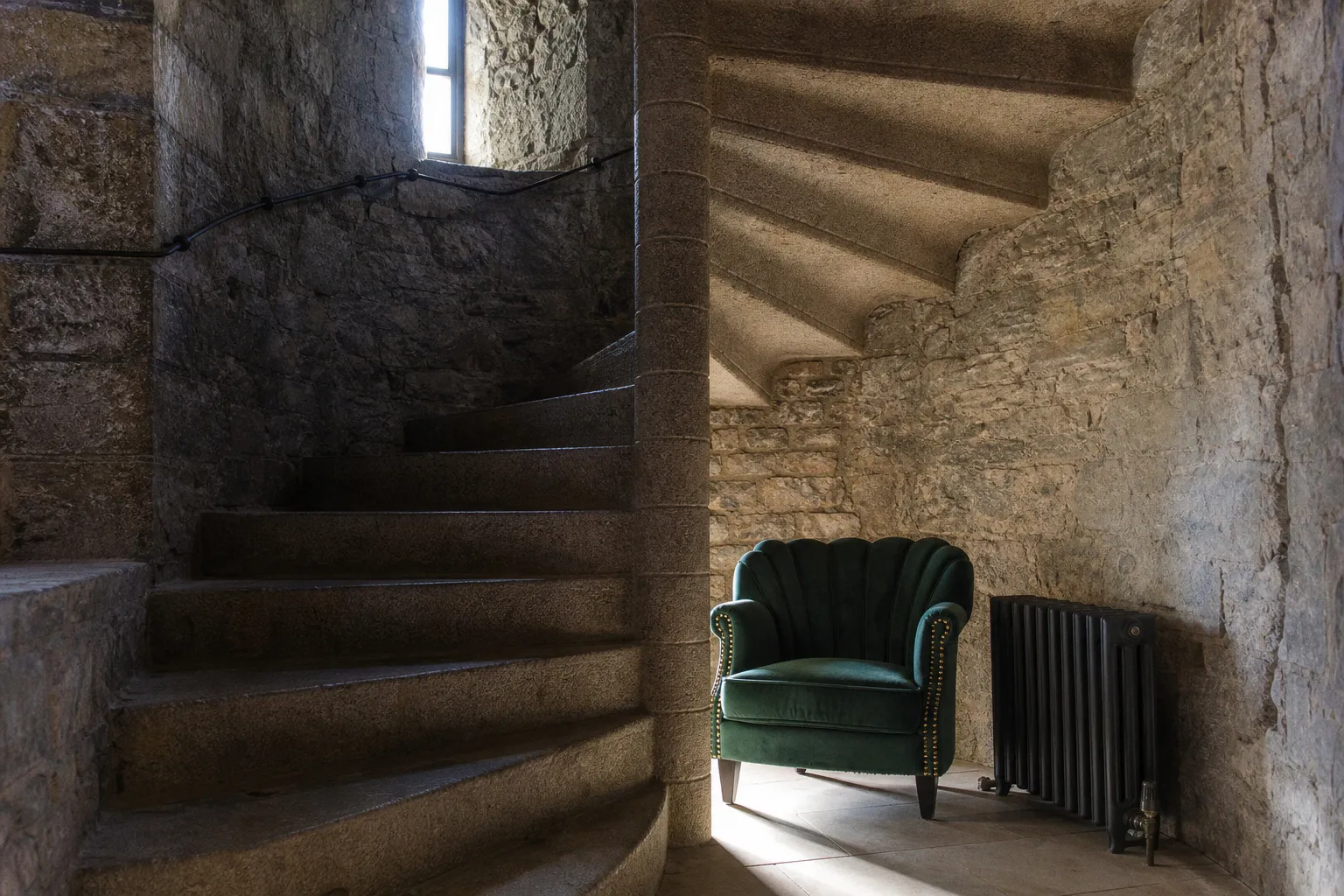
In Ireland, that label covers three very different operations: a large country-estate resort built around a historic seat; a medieval-origin property where only part of the inventory lies in the old castle; and a later Gothic rebuilding that retains fragments of an earlier fortification. All can deliver formal rooms, parkland, golf, polished service and a strong historical address. They do not deliver the same degree of architectural immersion.
This matters at booking stage. A traveller seeking authentic Irish castle accommodation can easily reserve a handsome lodge, courtyard room or modern suite rather than a bedroom inside the historic structure. That is not a failure of the hotel. It is a failure to map the inventory before committing.
A castle hotel is an estate, a building and a room category. Treat those as three separate questions.
The useful comparison is not “real castle” versus “fake castle.” Ireland’s historic properties have been rebuilt, extended, converted and adapted over centuries. The operational question is sharper: how much of your stay takes place inside historic fabric, and how much of it takes place within a modern resort system built around that fabric?
Star ratings do not measure medieval authenticity
Fáilte Ireland classifies hotels from two to five stars. The scheme assesses hotel standards and service criteria. It does not certify that a building is medieval, that a bedroom sits inside an original keep, or that a property has preserved a specific proportion of historic fabric.
This is the first bottleneck in searching for castle hotels in Ireland. A high star rating can tell you something useful about the hotel operation: expected facilities, service level and accommodation standards. It cannot settle the heritage question.
A five-star castle resort may occupy a nineteenth-century Gothic rebuilding on much older land. A lower-key historic stay may offer fewer facilities but place you closer to the oldest surviving walls. Neither is inherently superior. They serve different routes.
Use the hotel’s historical narrative, room categories and site plan together. If those three descriptions line up, you know what you are booking. If the history page stresses a twelfth-century foundation but the reservation page offers “courtyard,” “lodge,” “estate” and “castle” rooms side by side, stop there and separate them.
The distinction is especially relevant for travellers using the phrases “medieval castle hotels Ireland” or “authentic Irish castle accommodation.” Those search terms suggest a building-age guarantee that the market does not provide. Ireland has no nationwide official category for an “authentic keep” hotel.
Resort-scale estates: Dromoland and Kilkea
Dromoland Castle and Kilkea Castle are not small, self-contained medieval-house experiences. They are estate operations. That changes the scale, the movement pattern and the type of stay.
Dromoland’s current principal building was rebuilt in Gothic style between 1800 and 1836. The site carries earlier history: a sixteenth-century tower house stood there before being demolished in 1730. The castle became a luxury resort hotel in 1962. Today the property lists 96 rooms and suites across a 500-acre estate, with an 18-hole golf course and spa. Its Queen Anne Court alone contains 29 guest rooms.
Kilkea traces its history to 1180 and identifies the site as a medieval stronghold of the FitzGeralds, Earls of Kildare. Yet the contemporary offer is plainly resort-scale: 140 bedrooms on 180 acres, plus an 18-hole championship golf course. Accommodation is divided between rooms in the historic twelfth-century castle, Castle Courtyard Rooms and lodges.
That division is not a minor detail. It is the entire booking axis.
| Parameter | Dromoland Castle | Kilkea Castle |
|---|---|---|
| Present main building | Gothic rebuilding of 1800–1836 | Medieval-origin castle site dating its history to 1180 |
| Current accommodation scale | 96 rooms and suites | 140-bedroom resort |
| Estate scale | 500 acres | 180 acres |
| Additional lodging geography | Queen Anne Court includes 29 guest rooms | Castle bedrooms, courtyard rooms and lodges |
| Resort infrastructure | Golf course and spa | Championship golf course |
| Best fit | Full-service luxury estate stay | Flexible estate stay with several accommodation formats |
For a family, this can be an advantage rather than dilution. Best castle hotels for families are often not the properties with the fewest rooms or oldest-looking towers. They are the ones with enough spatial capacity to prevent friction: multiple room formats, open estate grounds, clear parking, dining that can absorb varied schedules, and activities that do not require a daily drive.
At Dromoland, the estate is the experience. You are booking a large operational perimeter, not merely a historic façade. Golf, spa time, formal dining and grounds all sit on one managed axis. This works when the hotel itself is your destination for at least two nights.
At Kilkea, the practical advantage is choice. A couple focused on the castle can target the historic building’s room category. A group that needs more space or a different price structure can look at courtyard rooms or lodges without leaving the estate. The mistake is assuming those options provide identical historical proximity.
The resort calculation
Choose a resort-scale castle estate if your priorities run in this order:
1. Operational ease over architectural intimacy. You want on-site dining, recreation and a contained itinerary rather than a room in the oldest available fabric.
2. Multiple generations or mixed travel needs. Different accommodation categories give families and groups more workable options than a small historic house with a fixed room stock.
3. A two- or three-night base. Large estates justify time on site. A one-night transit stop rarely extracts their value.
4. Predictable service rhythm. A larger resort has more formal systems: reception, restaurants, leisure facilities and programmed activities.
5. A countryside route with low daily mileage. Build the estate into the itinerary as a pause, not a decorative detour between distant towns.
Do not choose on the word “castle” alone if your real objective is a compact, old-building stay. A 140-bedroom resort is not pretending to be a monastery cell. It is offering a broad estate product. Book it on those terms.
Waterford Castle: the island is part of the accommodation decision
Waterford Castle requires a different reading. Its strongest logistical feature is not simply the building. It is access.
The hotel occupies a 310-acre private island reached by the resort’s own car ferry. That crossing creates a deliberate threshold between Waterford city and the hotel grounds. It also creates a timing constraint. Your arrival, restaurant plans and excursions must work around an access point rather than an open road.
The accommodation stock is split sharply: 19 bedrooms in the castle hotel and 45 self-catering lodges with three or four bedrooms. The distinction is immediate. If you book a lodge, you are on the island estate but not necessarily sleeping in the castle building. For families or groups, the lodges may be the optimal format. For travellers pursuing the atmosphere of a small castle stay, the 19 hotel bedrooms are the inventory to target.
Waterford also corrects a common assumption about visual age. The National Inventory of Architectural Heritage identifies the present principal building as a Gothic-style house built in 1895. It incorporates fabric from an earlier house and, in the entrance tower, elements of a medieval castle dating from before 1645. The history is real. The main architectural reading is layered rather than uniformly medieval.
This is not a technicality. It changes what you should notice on arrival. Do not look for an untouched defensive fortress. Look for the junctions: the later Gothic composition, the inherited masonry, the entrance tower carrying the oldest material, and the estate’s transformation into a hotel.
The older the claim, the more specific your question should become: which part of the property, which room type, which surviving fabric?
Waterford’s island geography also makes it less interchangeable with a mainland manor house. A manor may offer historic interiors and grounds; an island castle hotel adds a controlled arrival sequence and physical separation. In return, it demands more itinerary discipline.
Run the Waterford stay in the right order
For a stay at Waterford Castle, keep the sequence tight:
- Confirm whether your reservation is in the castle or in a lodge. The two options suit different stays. Castle bedrooms prioritise hotel atmosphere; lodges prioritise space and self-catering flexibility.
- Set your arrival window before planning the day. The ferry is part of the route, not a background detail. Do not treat a late return from an off-site excursion as frictionless.
- Use the island as a base, not a corridor. With a par-72, 18-hole golf course and extensive grounds, the estate can carry a full day. Trying to combine it with a rushed city itinerary weakens both.
- Separate building history from hotel luxury. The nineteenth-century Gothic principal house and earlier medieval fabric coexist. That layered story is more accurate, and more interesting, than calling the entire structure a medieval castle.
- Book dining and transport decisions as one plan. Island stays reward a settled evening. They are less suited to improvised movement back and forth across the city.
Room location is the decisive detail
Historic hotels regularly use a single brand name for several buildings. That is commercially sensible and historically confusing. The booking page may show one heroic exterior while offering rooms distributed across a castle, stable block, courtyard, lodge village or newer wing.
The correct approach is spatial, not sentimental. Ask where you will sleep, where you will eat and how far those two points sit from the oldest structure. Then decide whether that geography matters to you.
At Kilkea, the hotel explicitly distinguishes historic castle rooms from Castle Courtyard Rooms and lodges. At Waterford, the divide is between 19 castle bedrooms and 45 self-catering lodges. At Dromoland, the room and suite inventory extends beyond the central castle building, including the Queen Anne Court.
These are not warnings against booking the alternative categories. They are a way to match the room to the trip.
| Your priority | Optimal accommodation type | Trade-off to accept |
|---|---|---|
| Maximum connection to the historic building | A clearly named castle bedroom or room in the principal house | Fewer rooms; less flexibility in layout and availability |
| Family space and independent routines | Lodge, apartment-style unit or larger estate accommodation | You may be outside the principal historic structure |
| Formal luxury weekend | Main-house suite or high-service resort room | The building may be a later rebuilding rather than medieval fabric |
| Self-catering and longer stays | Estate lodge or courtyard accommodation | Less of the “sleeping in a castle” feeling |
| Quiet, small-scale hotel atmosphere | Property with a limited number of castle bedrooms | Fewer facilities and less choice if plans change |
There is a second distinction: room location and room character are not the same thing. A castle bedroom can have a thoroughly modern bathroom, contemporary climate systems and hospitality-led interiors. That is usually necessary for a functioning hotel. Conversely, a room outside the oldest structure may have more usable space and a better fit for children, luggage or a multi-night stay.
The practical question is therefore not whether modernisation exists. It must. The question is whether the hotel is transparent about where modernisation sits in relation to the historic building.
Castle hotels versus manor houses: draw the line carefully
The phrase “castle hotels vs manor houses” is useful only if it does not become a false hierarchy.
A castle generally implies a defensive or fortress-associated lineage: towers, battlements, fortified fabric, a strategic site or a documented medieval predecessor. A manor house is usually tied to landed residence and estate life rather than military architecture. But the present guest experience can overlap heavily. Both may offer formal dining, grounds, country pursuits and period interiors. Both may have been rebuilt repeatedly.
Dromoland demonstrates the point. Its estate history reaches back beyond the present Gothic building, but today’s main structure was rebuilt in the early nineteenth century. Waterford’s entrance tower retains pre-1645 medieval fabric, while the principal Gothic-style house dates to 1895. Kilkea brings a medieval-origin claim and a genuine castle component, yet operates with the accommodation breadth of a contemporary resort.
The label is useful as a starting coordinate, not a final verdict.
When evaluating heritage authenticity, prioritise these signals:
- A precise building timeline. A credible property distinguishes between a site’s founding, an earlier castle, a later rebuilding and the current hotel conversion.
- Named historic elements. “Medieval fabric in the entrance tower” tells you more than an undated claim of ancient grandeur.
- Clear room-category geography. You should be able to identify whether your room is in the castle, courtyard, lodge or ancillary building before payment.
- A stated conversion history. Dromoland’s reopening as a luxury resort in 1962 is part of the property’s modern story, not something to obscure.
- No dependence on star rating as heritage proof. Hotel classification and architectural authenticity are separate systems.
- An estate that makes sense operationally. Golf, spa, lodges and large grounds indicate a destination resort. They do not negate history; they define the current use of the site.
Avoid a simplistic test such as “medieval equals authentic, Gothic equals inauthentic.” Gothic revival architecture is itself historic and can be architecturally serious. A hotel is more trustworthy when it explains the sequence of change rather than compressing centuries into one vague adjective.
Build the booking around your actual route
A castle hotel is often placed in a rural setting, which creates a transport choice. Make that choice before falling for the room photographs.
If you are driving, an estate stay can be an efficient buffer between old-town stops: arrive before dark, settle in, use the restaurant and grounds, then depart on a clean morning axis. The hotel works as a reset point in the route.
If you are relying on public transport, the equation changes. Large estates are not automatically difficult, but their final approach may require a taxi transfer and tighter arrival planning. Waterford’s island ferry adds one more controlled stage. That is manageable; it is not incidental.
For a short heritage itinerary, assign each property a role:
- Dromoland: a full-service country-estate stop where the resort infrastructure is central to the value.
- Kilkea: a flexible castle-and-estate base, provided you select the accommodation category deliberately.
- Waterford: an island stay where a small castle-hotel inventory and a larger lodge operation coexist, with the ferry defining the rhythm.
Do not attempt to use a major castle resort as a late-night sleeping stop between two long driving days. That is poor deployment. The check-in, grounds, meal and departure sequence deserve time. One night can work, but only if you arrive early enough to use the property rather than merely pass through it.
The strict rule: book the room, not the legend
Ireland’s castle hotels are strongest when their layers are read accurately. Dromoland is a grand Gothic-rebuilt estate with a mature luxury-resort operation. Kilkea is a medieval-origin castle site with a broad, 140-bedroom accommodation system. Waterford is an island hotel where 19 castle bedrooms sit alongside 45 self-catering lodges, and where the principal house is a nineteenth-century Gothic building incorporating earlier fabric.
That is not a downgrade from the brochure version. It is the usable version.
If you want luxury castle stays in Ireland, choose the estate whose facilities, scale and location fit your itinerary. If you want the closest possible connection to historic masonry, target the explicitly named castle-room inventory and accept its constraints. If you need room for children, golf, self-catering or a longer pause in the route, use the lodges and courtyard categories without pretending they are something else.
Book on building date, room location and estate scale. Everything else is decoration.