Chiang Mai’s Lanna Heritage Moves to UNESCO Assessment Stage
According to Travel And Tour World, Thailand has moved Chiang Mai’s historic Lanna cultural landscape into the international assessment stage of a UNESCO World Heritage nomination.
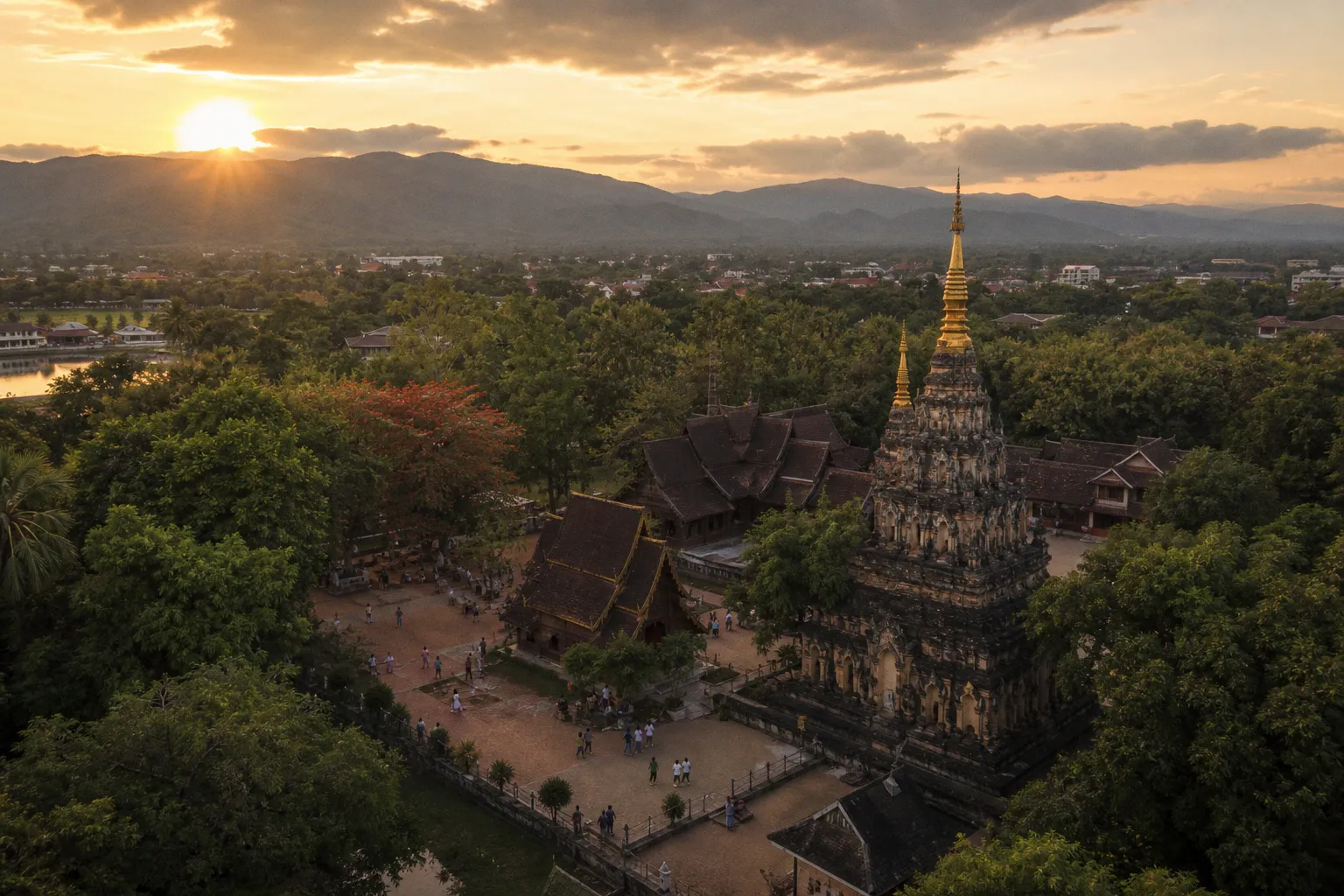
The immediate point is procedural rather than ceremonial: ICOMOS technical experts are scheduled to evaluate the proposed property before the World Heritage Committee considers the application. For visitors to the old city, this is a preservation process in progress, not evidence that UNESCO status has already been granted.
The nomination is being tested at the level of management
The reported submission of a nomination dossier earlier this year begins the consequential part of the review. ICOMOS is expected to examine conservation standards, management systems, authenticity, integrity, visitor-management strategies and legal protection mechanisms.
That framework matters more than the promotional language around “global appeal”. A World Heritage nomination does not assess a collection of isolated monuments. It assesses whether the nominated urban fabric can be defined, protected and managed as a coherent property. In Chiang Mai, the stated case combines defensive walls, gateways, moats, temples, monasteries and ceremonial spaces with the historic spatial order of the former Lanna capital.
The technical question is therefore not whether the city contains old structures. It is whether its surviving masonry, religious compounds, circulation routes and water-defence system retain sufficient legibility and protection to demonstrate the claimed heritage value.
A Lanna landscape, not a single landmark
Travel And Tour World describes the proposed nomination as extending beyond monument preservation. It includes living traditions, Buddhist influence, historic urban planning and architectural development. Such framing places Chiang Mai’s heritage in the relationship between built form and continuing use.
The city served for centuries as the capital of the Lanna Kingdom and developed as a political, religious and cultural centre in mainland Southeast Asia, according to the report. Its historic layout is said to retain walls, gateways and moats alongside temple and monastic precincts. These elements form a spatial hierarchy: fortification and access points establish the perimeter; religious sites and ceremonial spaces organise significant interior zones.
The nomination also foregrounds Buddhism’s influence on governance, education, architecture and planning. That is a broader claim than the preservation of a façade or an individual wat. It requires the assessment to consider how the urban system, its component parts and their historical functions are documented and conserved.
What visitors should not assume
A pending nomination does not alter the status of Chiang Mai overnight. It should not be treated as a guarantee of inscription, nor as a substitute for checking the conditions of individual sites and neighbourhoods.
For travellers interested in the old town, the useful distinction is between the existing historic fabric and the prospective UNESCO label. The walls, gates, moat and religious complexes are already the relevant material record. The ICOMOS review will determine how convincingly Thailand’s proposed boundaries, conservation arrangements, authenticity and visitor-management provisions support their recognition as a World Heritage property.
The next point to monitor is the technical evaluation and the recommendation that follows it. Until the World Heritage Committee considers the application, Chiang Mai remains a nominated historic landscape under assessment.