Preserving George Town’s Culinary Soul Through the New Lost Recipes Map
As reported by The Star, the initiative targets what preservation frameworks term intangible cultural heritage — the practices embedded in a UNESCO-listed urban fabric that exist outside the…
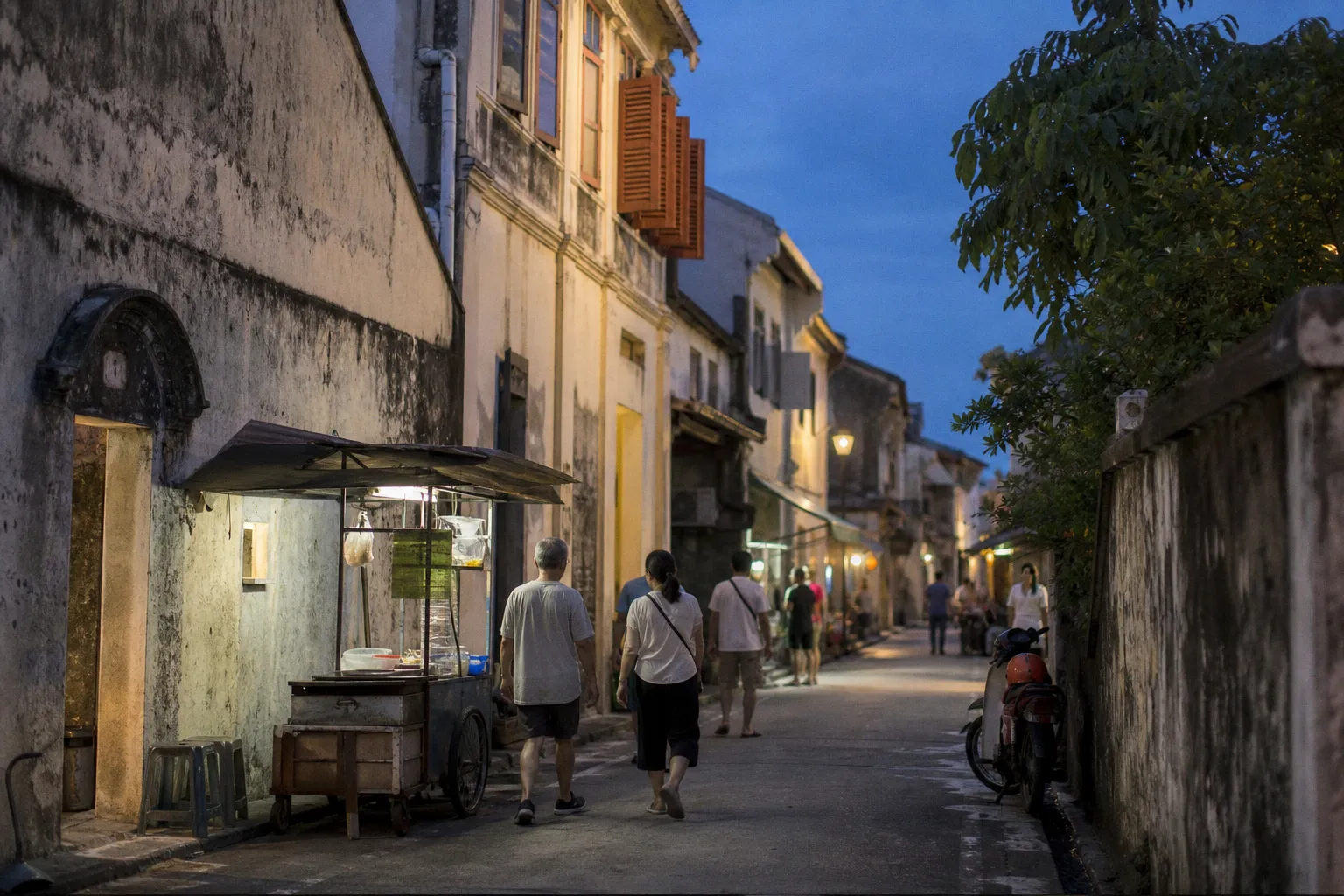
The Penang Heritage Trust has released a culinary map identifying twenty street food stalls and family-run eateries across George Town that maintain pre-war cooking techniques and ingredients. As reported by The Star, the initiative targets what preservation frameworks term intangible cultural heritage — the practices embedded in a UNESCO-listed urban fabric that exist outside the load-bearing walls and shophouse facades typically subject to conservation orders.
Intangible Heritage as Structural Category
George Town's 2008 inscription covered a 259-hectare buffer zone of colonial-era trading port architecture — the Anglo-Indian bungalows, the five-foot ways, the spatial hierarchy of shophouse typologies. What the Penang Heritage Trust is now attempting is a mapping exercise that extends the preservation framework beyond masonry and mortar. The twenty identified establishments represent a dataset: locations where pre-war culinary methodologies persist without interruption. The map functions less as a tourist guide and more as an inventory — a cadastral survey of food practices tied to specific structures, many of which face retrofitting pressure from rising commercial rents and heritage-incompatible renovations.
The distinction matters. Architectural preservation can secure a building envelope while its occupant function is entirely replaced. A restored shophouse selling specialty coffee is not the same heritage artifact as the same structure housing a third-generation hawker stall using the same wok configuration since the 1930s. The Trust's initiative implicitly acknowledges that UNESCO's Outstanding Universal Value criteria for George Town depend on both spatial and performative layers.
The Economics Behind Preservation Viability
Twenty stalls is a finite number, and the documentation itself raises questions about attrition rates. Family-run eateries operating in pre-war structures face compounding pressures: structural maintenance costs on aging masonry, competition from commercial tenants offering landlords higher yields, and the demographic challenge of generational succession in manual food preparation techniques. For the practitioners themselves — many of whom are women sustaining multi-generational family operations — the financial sustainability of heritage enterprises is a concrete problem, not a nostalgic abstraction. Building financial resilience through informed planning is as relevant to a hawker stall operator in George Town as it is to any small business owner managing long-term viability against structural economic shifts.
What the Map Signals for Heritage Districts
The Penang initiative reflects a broader pattern in how preservation bodies are recalibrating their inventories. Recent UNESCO deliberations at the 48th session of the World Heritage Committee added several Eastern European urban centers to the List, citing medieval street layouts and vernacular architecture. The emphasis on vernacular — architecture produced without formal design, by inhabitants themselves — mirrors the logic behind documenting street food practices as heritage objects. Neither is authored; both emerge from spatial necessity and iterative adaptation over decades.
For George Town specifically, the culinary map creates a reference layer that future development applications will need to address. If a mapped stall's host building is proposed for conversion, the intangible heritage status of its tenant practice becomes a material consideration in planning review. Whether local enforcement mechanisms are equipped to act on such documentation remains an open variable — one that will determine whether the map functions as a regulatory instrument or merely an archival one.