Savannah Heritage Travel: Exploring Historic Squares
Savannah’s historic squares are again being treated as the city’s strongest tourism ingredient: not decoration, but the stock from which the whole visitor economy is simmered.
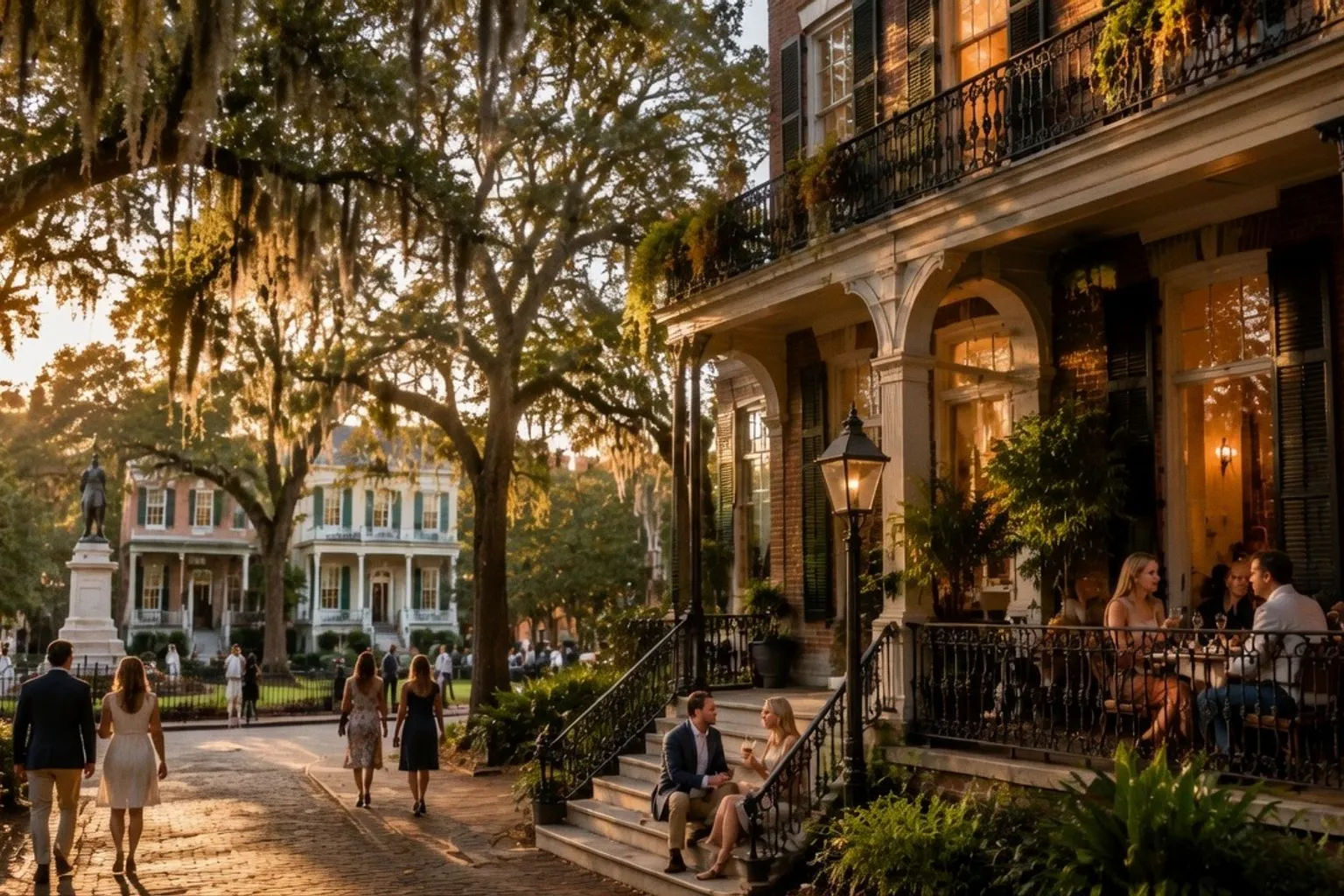
Crawford Square becomes part of the hospitality argument
The report places Crawford Square inside Savannah’s wider system of public green spaces, the planned pattern that gives the Historic District its particular rhythm: square, street, façade, shade, and then another square. According to the source, official tourism information from Visit Savannah highlights historic districts, cultural attractions and architectural heritage among the city’s main draws for visitors.
That matters because the square is not being presented as a single monument to tick off. It is part of a network — a civic design where architecture, planting and public gathering space were meant to work together. For travellers who read old towns through their feet, this is the essential distinction: Savannah’s appeal lies less in isolated attractions than in the continuity between buildings, streets and squares.
The same report says the City of Savannah continues to prioritise preservation of historic character while keeping historic areas active and accessible. That balance is where visitors should look carefully. A preserved district can nourish local memory, much as a long-fermented recipe carries the work of earlier hands; but if hospitality moves too quickly toward polish alone, the texture that made the place worth travelling for can thin out.
Luxury lodging is leaning on “sense of place”
Travel And Tour World also points to a broader hospitality trend: travellers are increasingly seeking accommodation that offers a connection to local history rather than standard modern lodging. Historic hotels and inns, the report says, give guests architecture, design elements and traditions tied to the destination, while still meeting contemporary expectations.
This is not a small shift for an old town. In food terms, it is the difference between serving a dish with its farm, season and curing time intact, and serving only a tidy replica. A restored property near a square may deepen a stay if it keeps the grain of the building visible and treats the surrounding neighbourhood as more than a backdrop. But the source does not provide hotel names, room rates, ownership details or specific restoration standards, so travellers should not read “historic” or “luxury” as proof of careful preservation.
Before booking, we would check how a property describes its building, what has been restored, whether public spaces nearby remain genuinely accessible, and whether the location supports walking rather than sealing the guest inside a private bubble. Savannah’s preserved urban landscape is the asset; the best hospitality should help us enter it slowly, not consume it from behind glass.
Food travel is part of the same heritage test
A separate Morningstar-distributed announcement says Travel And Tour World has released its Top 50 Food Destinations Around the World for 2026, assessing culinary heritage, regional diversity, street food, fine dining, local ingredients, beverage traditions, sustainability, authenticity and overall visitor experience. The ranking places Mexico first, followed by Italy and Spain, and also notes the United States for its mix of regional traditions, immigrant influences and modern innovation.
That wider food-tourism lens is useful for reading Savannah, even though the available source material here does not rank the city or give details on its markets, producers or kitchens. Culinary heritage and architectural heritage are often fed by the same supply chain of labour: growers, fishers, cooks, port routes, market sellers, builders, plasterers, carpenters, preservation crews. When a destination sells “authenticity,” we should ask who is still doing the work and whether the visitor economy leaves room for them.
The comparison also reminds us to be cautious with global heritage branding. From Savannah’s squares to European food regions covered in English-language France news, the strongest destinations are rarely the ones that merely package the past. They are the ones where old techniques, buildings and public habits are still maintained with enough care to be useful in the present.
For now, the Savannah story is one to watch rather than overstate. The confirmed picture is clear: preservation, historic architecture, public squares and luxury hospitality are increasingly being linked in the city’s tourism revival. The unanswered questions are the ones serious heritage travellers should carry with them: who benefits from the revival, how much of the old urban grain remains public, and whether the hospitality being built around Crawford Square seasons the district carefully — or simply extracts its flavour.