Nostalgic pre-war streets uncovered in Polish town
The act of uncovering is a fundamental operation in preservation work, revealing layers of a town’s spatial history.
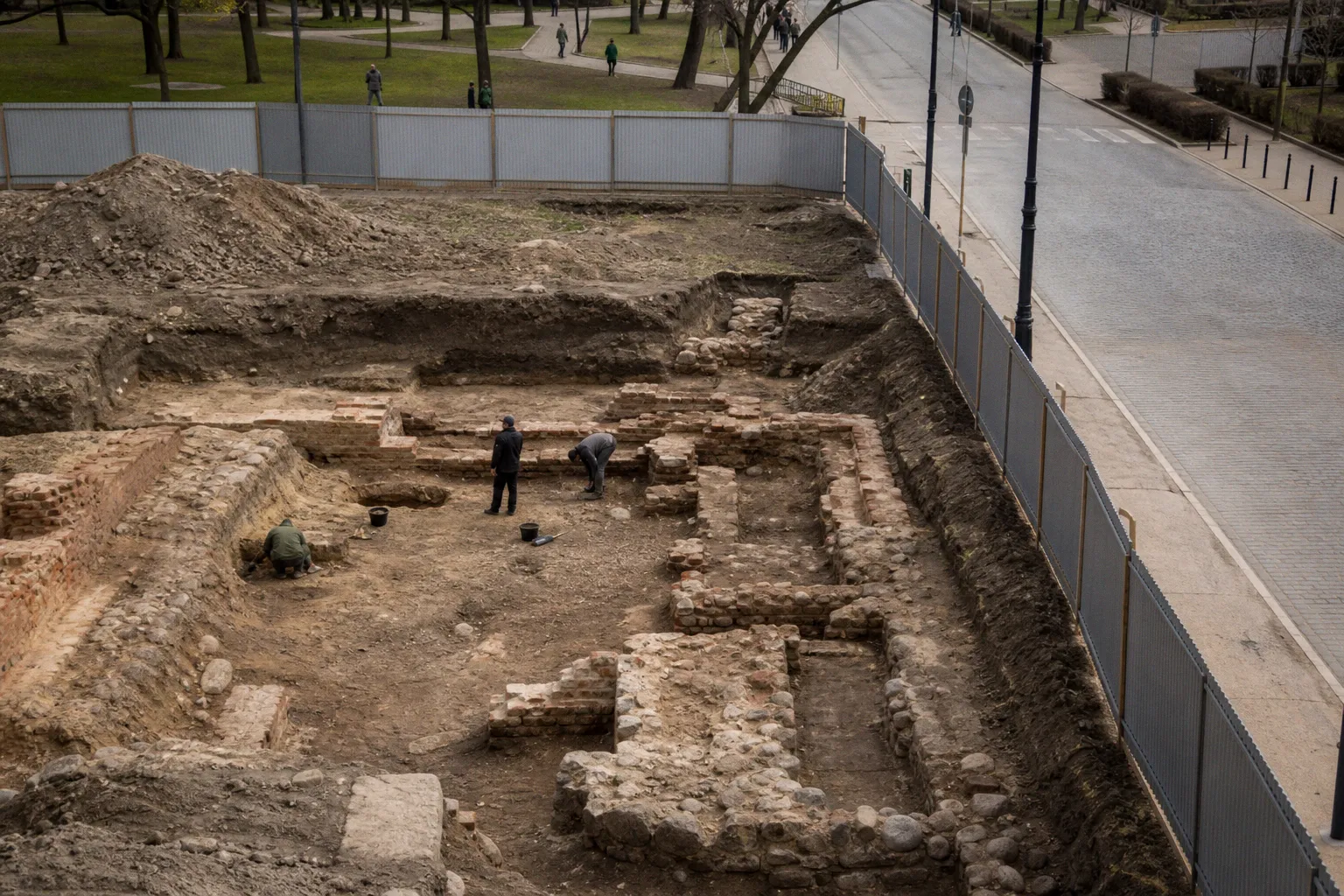
The Significance of Subsurface Discovery
The unearthing of a pre-war street network is not a romantic excavation. It is a forensic exercise in urban archaeology. Streets dictate pedestrian flow, sightlines, and plot boundaries—the fundamental spatial hierarchy of a place. A pre-war layout often reflects planning codes, construction materials, and economic pressures different from those of the postwar period. Its exposure provides tangible data on circulation patterns predating 20th-century destruction and reconstruction, offering a blueprint for understanding the original logic of the urban grid.
Implications for the Heritage Itinerary
For visitors, such a discovery recalibrates the understanding of a town’s timeline. A tour that previously focused on postwar reconstruction or later additions may now need to account for a more foundational layer. This does not mean accessing the site; the preservation status and safety of the exposed structures are unknown. It means the narrative shifts. The town is no longer solely a product of one era’s rebuilding but a composite, with its oldest accessible component now a set of infrastructure surfaces. This affects how one reads the architectural promenade.
Monitoring Preservation Outcomes
The critical follow-up is not the discovery itself but the treatment protocol. Will the streets be backfilled for protection, conserved in situ, or integrated into the public realm? Each outcome presents different preservation challenges. Backfilling is a loss of access but a gain in material conservation. Integration requires significant retrofitting to ensure load-bearing capacity and prevent degradation from modern traffic. The decisions made here will serve as a precedent for similar finds in Central European towns. Heritage travel professionals should track the municipal conservation board’s directives for this site.