European Tourism Grants for Historic Infrastructure Growth
Tourism funding is being directed at the load-bearing layer of European destinations: access, public assets, digital systems and conservation work.
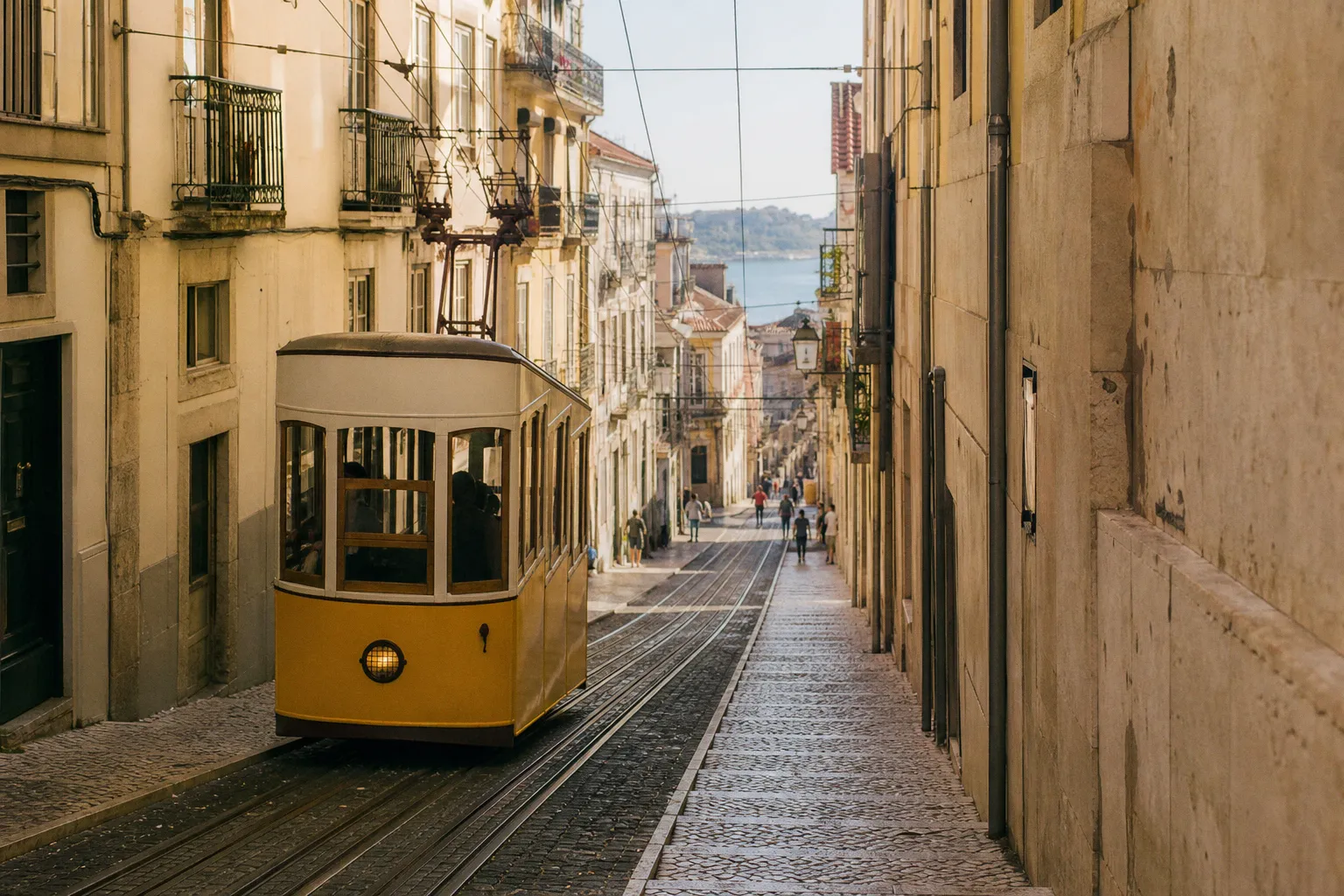
Portugal puts money into the visitor infrastructure, not only promotion
According to the report, Portugal has allocated €30 million through the Growing with Tourism Support Program, introduced in mid-2026. The support is described as available to public entities, non-profit organisations and small and medium-sized enterprises across mainland Portugal, Madeira and the Azores.
The stated priorities are specific enough to matter for old-town travel. The programme is aimed at strengthening tourism infrastructure and accelerating digital transformation in the visitor economy. It also gives weight to sustainability, including projects that improve regional accessibility, reduce environmental impacts and create long-term economic opportunities for local communities.
This is the less visible part of preservation. A medieval street plan or an early-modern harbour quarter does not function as a destination because façades have been photographed well. It functions when access routes, public assets, visitor management and local services are maintained without forcing the historic core into a single-use tourism shell. The Portuguese programme, as reported, sits in that practical category.
For travellers planning heritage routes, the immediate conclusion is modest. Do not assume every funded town will become easier to navigate at once. But where public entities and local operators are eligible for support, the places worth watching are those using funds for access, maintenance and low-impact services rather than short-cycle spectacle.
Czechia frames former industrial regions as cultural destinations
Czechia is reported to have secured €67.2 million in July 2026 through the European Union’s Public Sector Loan Facility and the Just Transition Fund. The money is described as divided among eight major development projects intended to reshape former industrial regions into cultural tourism destinations.
The terms used in the report are urban renewal, digital innovation and public infrastructure improvements. Climate neutrality is also identified as a key objective. Local communities are to be supported through projects intended to create more accessible public spaces while preserving cultural identity.
For preservation analysis, that combination is structurally important. Former industrial districts usually carry a different conservation problem from compact medieval centres. Their value often lies in scale, masonry envelopes, transport alignments, workshops, warehouses and spatial hierarchy rather than in decorative street scenery. Reuse can protect those assets, but only if conversion does not erase the industrial grammar that made the sites legible.
The useful test will be architectural, not promotional. Are existing structures retained where possible? Are public routes improved without flattening historic fabric? Are digital systems serving interpretation and access, or merely branding? The available reporting does not answer those questions. It does indicate that Czechia is placing tourism within a broader redevelopment and transition framework, which is where serious adaptive reuse usually has to sit.
A wider shift, with uneven evidence
The same report places Portugal and Czechia within a wider European funding pattern involving Greece, Germany and Slovakia. It says public authorities, SMEs, non-profits and regional communities are among the intended beneficiaries, with broader European frameworks continuing to support cross-border cultural cooperation, heritage conservation and environmentally responsible tourism.
Other recent travel reporting points in the same general direction, though with different levels of detail. Nomad Lawyer describes Finland’s tourism positioning around wellness, slow travel, nature, sauna culture, rural communities and the Sustainable Travel Finland programme. Croatia Week, in a separate item, frames one Croatian village’s use of strudel as a driver of sustainable rural development. Those examples should not be treated as equivalent funding cases, but they show how “sustainable tourism” is being attached to both infrastructure policy and local cultural production.
For old-town visitors, the practical reading is conservative. Funding announcements are not finished conservation work. They are early signals. Before building an itinerary around a newly promoted destination, check whether the investment concerns public access, conservation, transport, interpretation or local enterprise. Those categories affect the integrity of a historic quarter more than campaign language does.
The strongest destinations will be the ones that treat tourism as a maintenance system for inhabited places. The weakest will use the same vocabulary to repackage fragile streets and buildings without improving their carrying capacity. Current reporting confirms the allocation trend. It does not yet confirm the quality of execution.