Macao's cultural heritage can drive sustainable tourism
The 13th APEC Tourism Ministerial Meeting convened in Macao in late June, marking the first time in 12 years the event was held in the Special Administrative Region.
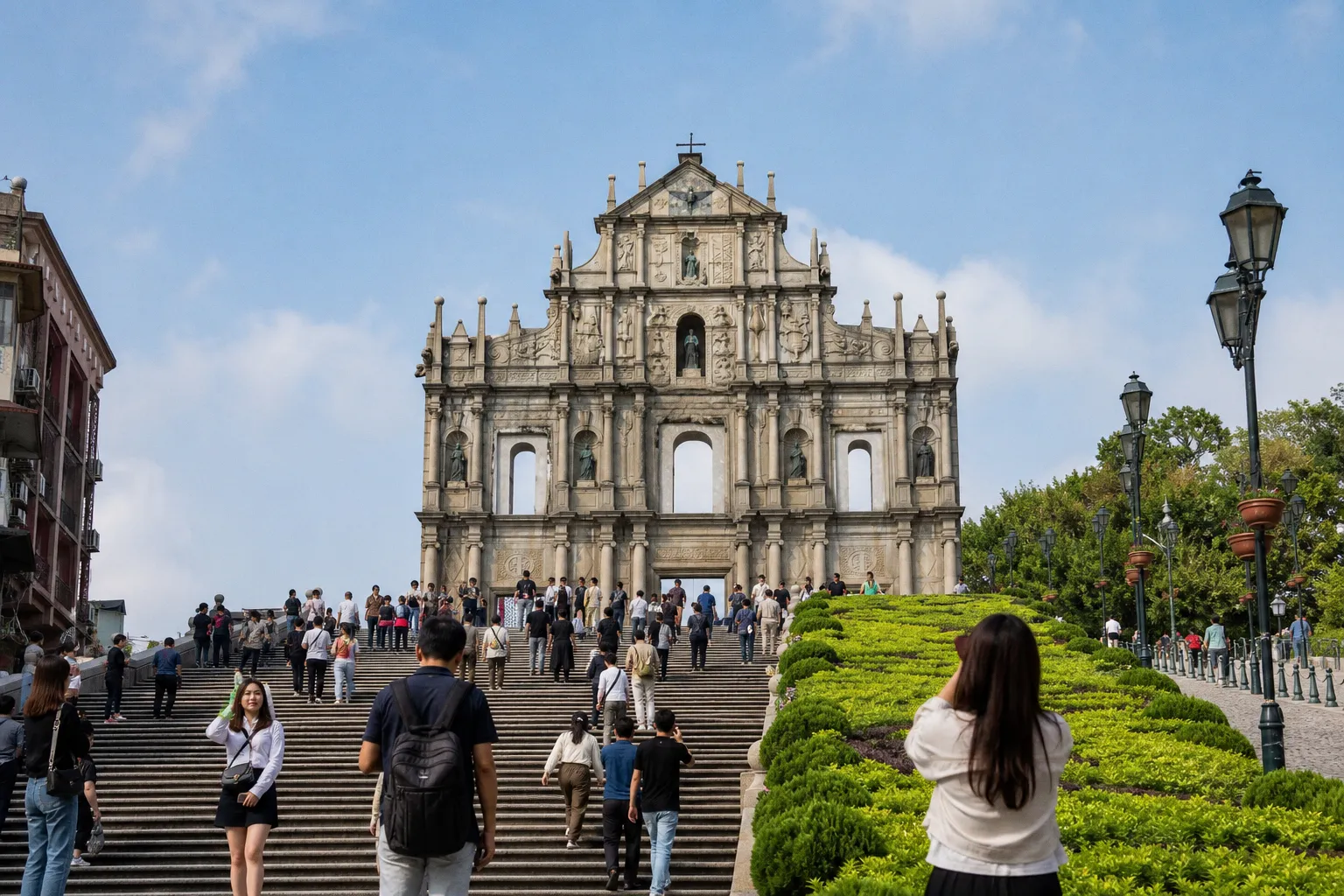
Structural Composition of the Core Attraction
Macao’s appeal is built on a specific, catalogued inventory of tangible and intangible assets. The tangible framework includes the UNESCO World Heritage-listed Historic Centre of Macao, the A-Ma Statue, and the Maritime Museum. These are complemented by large-scale integrated resorts like The Venetian Macao. The intangible layer consists of cultural processions such as the Catholic Procession of Our Lady of Fátima and the Taoist Na Tcha Float Parade, alongside the distinct Macanese cuisine. This combination is presented not as a static museum but as an operational system for generating visitor expenditure.
Historical Zoning and Economic Trajectory
The city’s function as a tourism zone is not recent; its spatial hierarchy was shaped by commercial flows centuries ago. In the 18th and 19th centuries, European traders used Macao as a seasonal retreat from Guangzhou, embedding a hospitality function into its urban DNA. This latent function was formally activated in 1961 when Macao was designated a “tourism zone.” A critical rezoning and economic policy shift occurred in 2002 with the central government’s positioning of Macao as a “World Centre of Tourism and Leisure.” This policy directive, under the “one country, two systems” framework, allowed for the high-growth phase currently being measured.
Operational Metrics and Visitor Demographics
The operational load on this compact urban fabric is substantial. In the first five months of 2026, Macao welcomed 18.1 million visitors, an 11.1% year-on-year increase. Daily arrival rates in May averaged 112,515, a figure representing 16.6% of the local population. The city’s 147 hotels, which include 44 budget options, accommodated 6 million guests in the same period. A significant demographic shift is noted: visitors from mainland China now constitute 70% of total arrivals, a stark change from the 1980s when the primary catchment area was Hong Kong and Japan. This data underscores the city’s deep integration into mainland economic circuits. The recent APEC meeting’s focus on digital innovation signals the next phase of managing these visitor flows and sustaining the model.