Palestine Expands UNESCO Tentative List with 12 Historic Sites
Palestine’s Ministry of Tourism and Antiquities has registered twelve new sites, including Sebastia and the Ibrahimi Mosque in Hebron, on UNESCO’s World Heritage Tentative List.
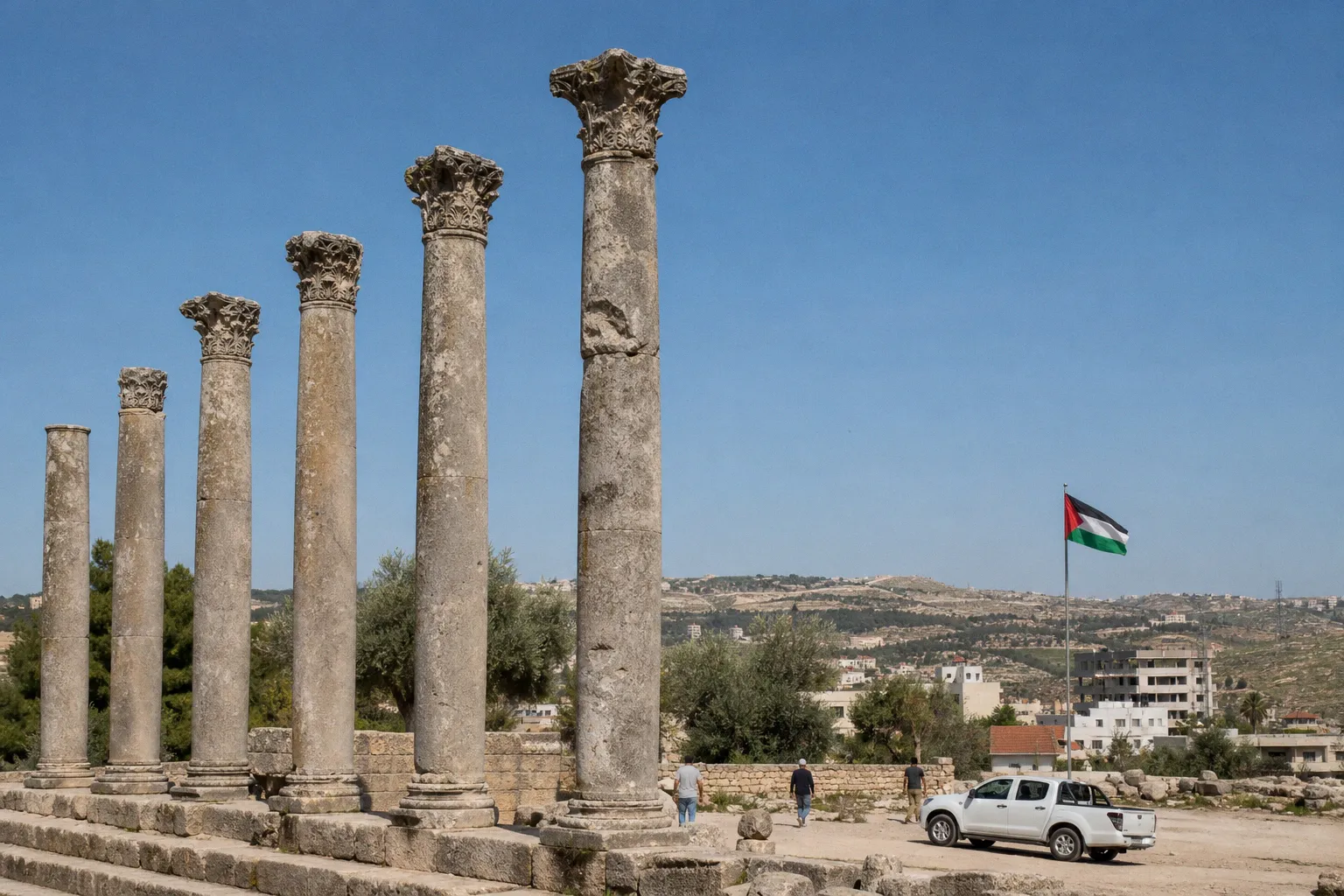
This formal step is a direct procedural move to seek international recognition and bolstered protection for these culturally significant locations, a process of immediate relevance to observers tracking the preservation status of historic urban and religious sites in contested territories.
Structural and Historical Significance of the New Nominations
The inclusion of Sebastia, the ancient Samarian capital, underscores the layered spatial hierarchy of a site featuring Roman-era colonnades, a Crusader cathedral, and Ottoman-era structures. Its nomination highlights the challenge of preserving a multi-period archaeological complex. The Ibrahimi Mosque, a 14th-century Mamluk-era structure built over a Herodian enclosure, represents a case where medieval load-bearing masonry and vaulting exist within a continuously venerated space. These registrations are not an inscription on the main World Heritage List but the first formal step in a multi-year evaluation process.
International Context and Procedural Timing
This announcement coincides with the 46th session of the UNESCO World Heritage Committee, convening in Busan, South Korea, from July 19 to 29 to consider new inscriptions and assess endangered sites. While the newly listed Palestinian sites are on the Tentative List and not on the agenda for this session, the timing situates the move within the broader framework of the annual cycle of heritage evaluation and diplomatic engagement. The Tentative List is a prerequisite for any state party seeking to nominate properties for the World Heritage List, indicating a long-term strategic filing.
Parallel Developments in Heritage Diplomacy
The move occurs alongside other international agreements focused on technical heritage preservation. A new 2026–2028 Cooperation Programme between Greece and Uzbekistan, for instance, explicitly targets archaeological research, monument conservation, and museum management. Such bilateral frameworks facilitate the exchange of expertise in areas like mortar analysis and structural retrofitting, which are directly applicable to managing ancient sites. This parallel activity illustrates a contemporary model where heritage protection is increasingly facilitated through structured, cross-border technical partnerships rather than solely through multilateral inscription processes.
The twelve sites now enter a formal assessment pipeline. The next observable stage will be the submission of a full nomination dossier, which requires detailed architectural documentation, conservation management plans, and proof of outstanding universal value—a process measured in years, not months. For heritage travelers and researchers, these registrations signal sites of heightened preservation interest and future potential access, pending successful evaluation and any necessary on-site stabilization work.