Transforming Vietnam's Historic Districts into Sustainable Economic Assets
Vietnam's state news agency TTXVN has placed the country's heritage conversation under a new frame — one that treats preserved old towns not as static museum pieces but as assets with measurable economic return.
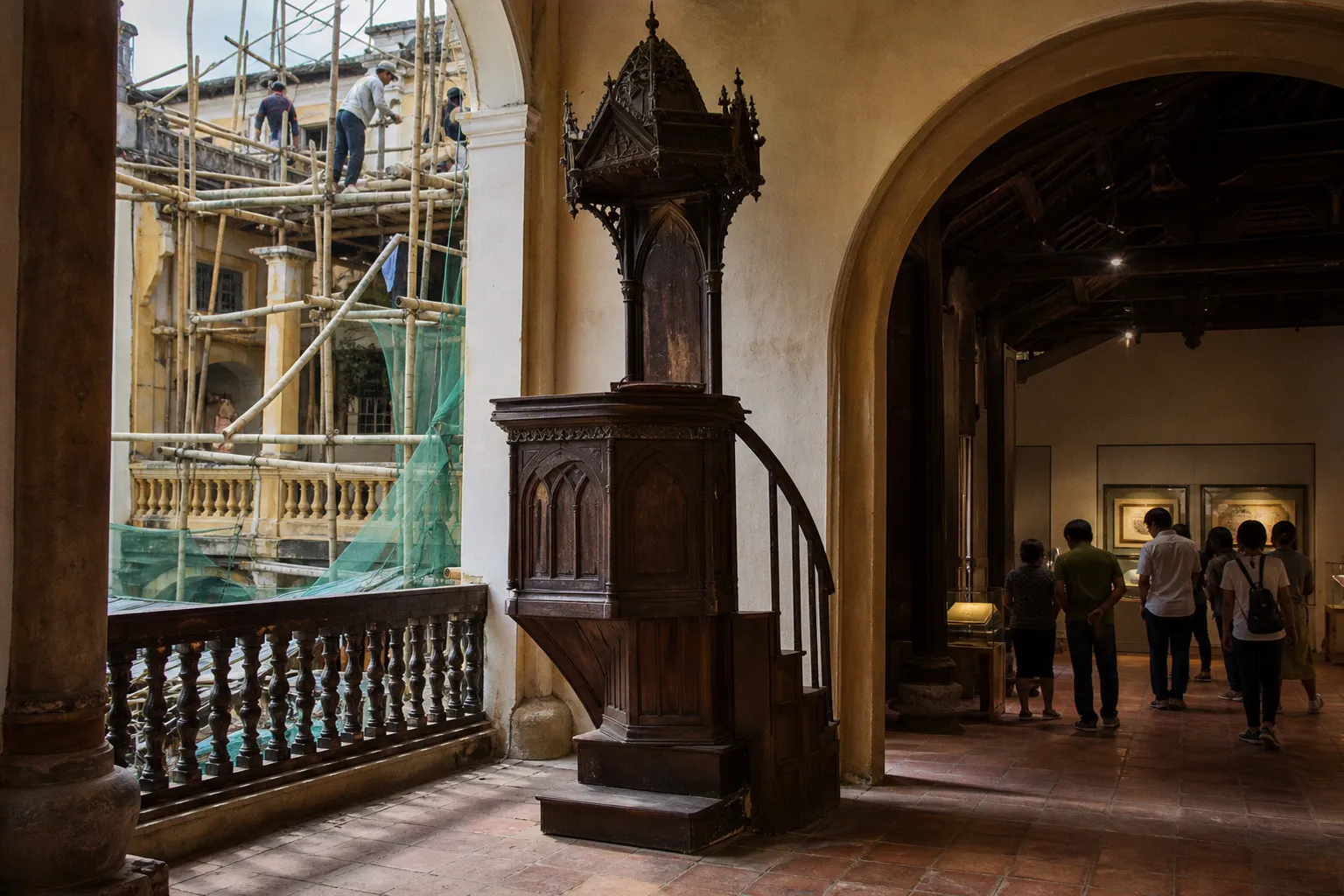
The shift, reported under the headline "Beyond preservation: Unlocking the value of Vietnam's heritage," arrives at a moment when multiple international outlets are running parallel stories on heritage valuation, from Malta to India, suggesting a broader recalibration of how preservation districts are evaluated globally.
The structural argument
For decades, Vietnam's heritage policy has operated on a conservation-first logic: stabilise load-bearing masonry, restore original mortar profiles, maintain spatial hierarchies in quarters like Hội An's old town or Hanoi's 36 streets. TTXVN's framing points toward a second stage — extracting commercial and social value from those structures once physical stabilisation is complete. No specific programme names, funding figures, or timelines appear in the available reporting. What is visible is the rhetorical pivot: the word "unlocking" implies heritage is being treated as a locked asset, not a protected liability.
This distinction matters for anyone navigating these districts on foot. A quarter that has been structurally preserved but economically dormant looks different from one where retrofitting has enabled ground-floor commercial reuse — artisan workshops, market stalls, heritage stays — while maintaining load-bearing integrity. The difference is legible in façade conditions, signage density, and the presence or absence of active ground-floor use.
A wider pattern of revaluation
Vietnam is not operating in isolation. The Malta Independent ran a piece on preserving cultural heritage in the same reporting window, and India's heritage engagement with Southeast Asian sites — Prambanan, Angkor Wat — was documented by organiser.org as a diplomatic and cultural-strengthening exercise. Meanwhile, EIN News announced nominations for the 2026 A' Cultural Heritage and Culture Industry Design Awards, an international programme explicitly linking heritage to culture industry output.
Taken together, the cluster suggests heritage policy worldwide is moving from a preservation-only framework toward one that includes economic modelling, design-sector engagement, and cross-border cultural diplomacy. For Vietnam specifically, the TTXVN headline signals institutional willingness to discuss heritage districts in value terms — a shift that could affect zoning decisions, tourist infrastructure investment, and the balance between residential and commercial use in protected quarters.
What to watch
Without detailed programme disclosures, the practical takeaways remain directional rather than specific. Travellers and researchers should monitor whether Vietnam's heritage towns begin publishing visitor-capacity data, ground-floor-use audits, or retrofitting guidelines that explicitly balance structural conservation with commercial activation. Any of those would confirm that "unlocking value" is more than editorial framing.
For now, the reporting confirms one thing: the conversation inside Vietnam's preservation institutions has moved past the question of whether to protect old quarters. The unresolved question is what those quarters are for — and who benefits once the mortar is repointed and the spatial hierarchy is intact.