Historic hotels: how to verify authenticity before booking
A hotel can call itself “historic” after fifty years in the United States, but age alone does not make a heritage stay.
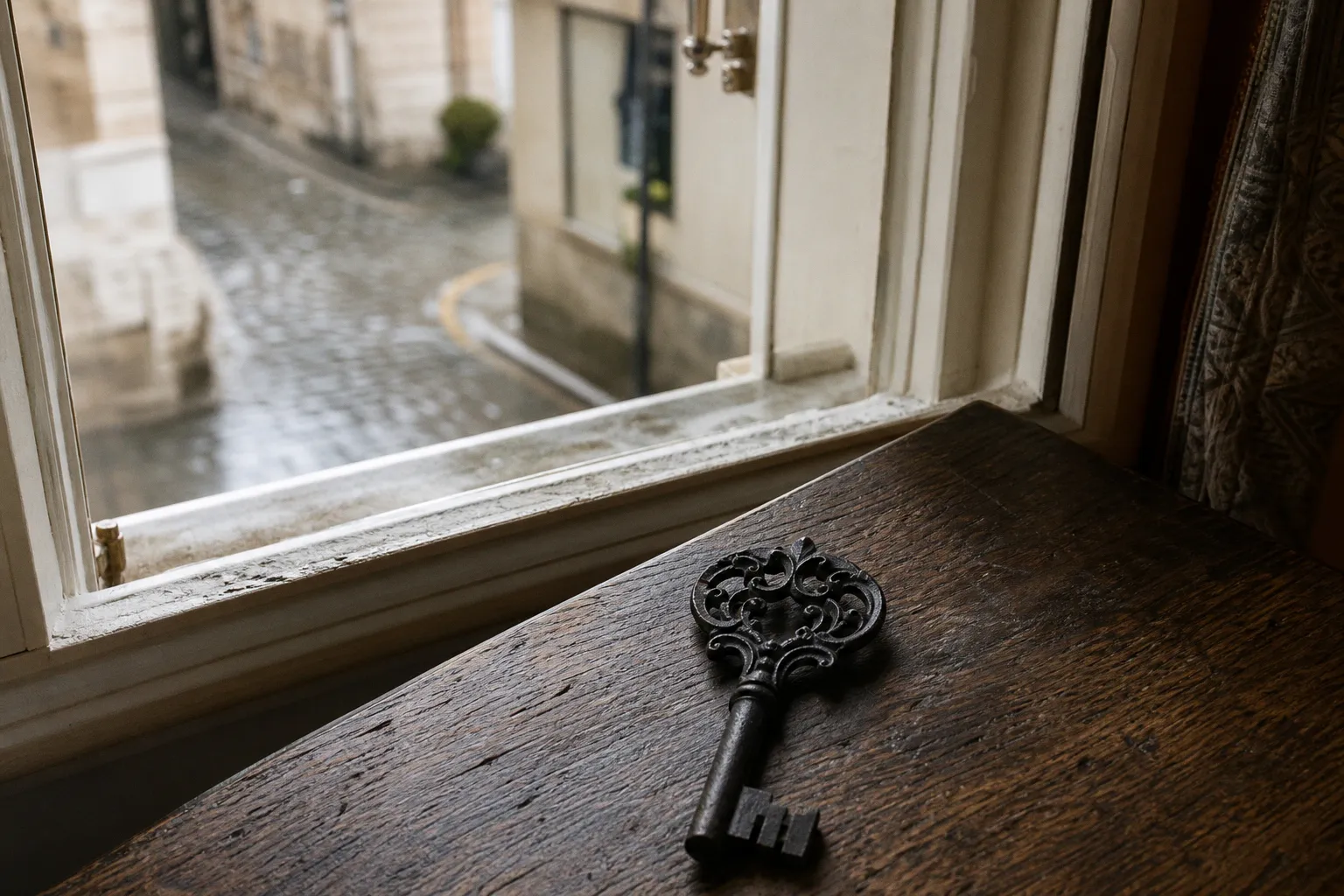
A converted warehouse from the 1970s may be old enough for the adjective; a carefully designed new hotel in a medieval quarter may look older than its foundations. Neither necessarily offers what most of us mean when we book historic hotels: a building whose fabric, layout, and local story have survived long enough to shape the stay.
That distinction matters because historic lodging is not a decorative category. A real former convent, coaching inn, merchant’s house, palace, fort, or town residence comes with constraints as surely as it comes with carved stair rails and uneven flagstones. Its walls were built around old trade routes, seasonal storage, household labour, defence, worship, or the movement of horses and goods. Those original purposes often remain legible in the rooms. Before paying heritage-hotel rates, we should establish whether we are reserving a building with a documented past or a modern operation dressed in period furniture.
Start with the designation, not the marketing copy
The most useful word in a hotel description is rarely “historic.” It is the name of a register, a preservation authority, or a recognised heritage programme. These terms can be checked, and that changes the conversation from atmosphere to evidence.
In the United States, a property seeking membership in Historic Hotels of America must be at least 50 years old, recognised for historic significance, and designated as a National Historic Landmark or listed in—or eligible for—the National Register of Historic Places. That does not tell us that every bedroom is unchanged, nor should it. Hotels are working businesses, and bathrooms, fire systems, kitchens, and plumbing must evolve. It does mean the building’s historical standing has passed beyond the hotel’s own brochure.
Historic Hotels Worldwide applies a different threshold: member properties must be at least 75 years old, use historic accommodation, and stand in or near a historic district, landmark, or UNESCO World Heritage site. Again, membership is not a substitute for looking closely at an individual property, but it provides a useful first sieve when booking historic hotels across borders.
Europe has a further layer of private networks and national protections. Historic Hotels of Europe, founded in 1998, brings together roughly 400 properties in 24 countries, including castles, manor houses, palaces, and old inns. Its membership is by invitation. That is not the same thing as statutory listing, but an invitation-only network has more at stake than a booking-platform filter that can be applied with a click.
The practical question is simple: does the hotel name a designation that exists outside its own website? If it does, search for that designation independently. If it does not, treat every date and every tale of aristocrats, merchants, monks, or royal visitors as a claim still awaiting proof.
Heritage is not the wallpaper, the suit of armour by reception, or the word “manor” in a hotel name. It is the surviving relationship between a building, its records, and the place around it.
Learn the local rules before you compare properties
There is no universal legal definition of a historic hotel. This is why a traveller can make a bad comparison so easily: a 19th-century urban townhouse in England, a restored fort in Rajasthan, and a plantation-era lodge in another country may all be sold as heritage accommodation while operating under entirely different standards.
In England, the strongest starting point is whether the building appears on the National Heritage List for England. The register records protected structures, including Grade I and Grade II listed buildings. A listed status does not guarantee graceful service or an excellent night’s sleep, but it confirms that the building itself has recognised architectural or historic value. It also explains some features a guest may otherwise mistake for neglect: retained windows, narrow stairs, altered room proportions, and limitations on major structural changes can be part of the conservation bargain.
India’s official framework is more explicit about the kinds of buildings involved. The Ministry of Tourism divides heritage hotels into Heritage, Heritage Classic, and Heritage Grand categories. To qualify, a property must operate in a palace, castle, fort, or historic home built before 1950. The date is useful, but the building type matters just as much. A genuine haveli or fort was designed around courtyards, water storage, shade, domestic service, defence, and the grain of local stone. Its hospitality may now be polished, but the architecture should still disclose those original functions.
Sri Lanka sets a stricter chronological and legal test for its registered Heritage Tourist Hotels. Such properties must either occupy buildings declared under the Antiquities Ordinance of 1940 or have been constructed before 1920—at least a century old. This is a reminder that “heritage” can be rooted in a national conservation system rather than merely in a hotel’s preferred branding.
| What you find | What it usually tells you | What it does not tell you |
|---|---|---|
| A statutory listing or national heritage register entry | The building has independently recognised historic or architectural significance | That every interior detail is original, or that the hotel suits your comfort needs |
| Membership in a specialist historic-hotel programme | The property has met that programme’s age and heritage criteria | That every room has the same character or standard |
| A precise construction date, former use, and named restoration | The hotel has supplied claims that can be cross-checked | That the restoration was sensitive unless records and images support it |
| “Heritage-inspired,” “old-world,” or “historic-style” wording | The hotel is selling an aesthetic | Almost nothing about the age or protected status of the structure |
We need not become archivists before every weekend away. But five minutes spent locating the relevant national register can prevent a much more expensive misunderstanding. It also helps us choose honestly. A contemporary hotel in a historic quarter can be an excellent base; it simply should not be confused with a surviving historic property.
Follow the building’s supply chain of evidence
Food traditions teach a useful lesson here. A dish becomes credible when we can trace its ingredients: where the grain was milled, how the olives were cured, which season supplied the beans, why a family preserved meat in salt rather than eating it fresh. Historic hotel authenticity works in much the same way. We follow the chain.
Start with the address. Does the building sit where the hotel says it does? A reverse image search can reveal whether a grand façade belongs to the listed property, a nearby museum, or an entirely different hotel. Street View is equally useful. It will not explain a building’s history, but it can show whether the entrance, roofline, courtyard, and surrounding street correspond with the polished photography.
Then examine the date. “Established 1784” can mean several things:
1. The building was completed in 1784. This is the strongest and clearest claim, particularly if the hotel identifies the original owner or use.
2. An inn, tavern, or lodging business began in 1784. The enterprise may be old while the present building is later, rebuilt, or substantially expanded.
3. The site has been occupied since 1784. This can be historically interesting, but it says nothing certain about the hotel structure.
4. The brand draws on a date associated with a local event or family. Here, the date may be part of a story rather than evidence of the property’s age.
A serious hotel usually makes this distinction possible. Its history page may identify the architect, the building’s former role, a restoration period, or the local family, civic body, religious order, or estate that owned it. The language tends to be specific because specificity is easy when records exist. Vague claims—“steeped in centuries of history,” “where the past meets luxury,” “a timeless retreat”—are not proof of deception, but they do not feed a traveller’s research.
Look, too, for the continuity between the building and the hotel’s food service. This is not a requirement for historic hotel authenticity, but it is often revealing. A former country estate that serves local preserves, estate-grown produce, regional cheeses, or dishes rooted in the area’s agricultural calendar may be doing more than applying heritage as a visual theme. A former coaching inn that explains its old stable yard, cellar, bakehouse, or market connection is providing a more complete account of how people and goods once moved through the property.
We should be cautious, however, about turning local ingredients into a purity test. Historic places have always depended on trade. Sugar, spices, tea, wine, salt fish, citrus, coffee, and grain moved along routes that shaped ports and old towns. The question is not whether a hotel serves only food grown within walking distance. It is whether it understands the material history of its setting rather than borrowing a generic “rustic” vocabulary.
Read guest reviews for the inconvenient details
Hotel reviews are imperfect witnesses. One guest calls a creaking floor romantic; another hears every footstep as a personal insult. Yet the recurring inconveniences in reviews can be more valuable than the adjectives.
Authentic old buildings retain physical habits. Thick masonry holds temperature differently from modern insulated construction. Staircases turn tightly because they were built for domestic staff, family members, or travellers with light luggage rather than wheeled suitcases. Floors dip after generations of settlement and repair. A room may have an awkwardly placed fireplace because it was once heated by coal or wood, not designed around bedside charging points.
These are not automatic virtues. A heritage stay should be safe, clean, and competently managed. But when several reviewers mention original timber floors, narrow stairways, no lift, low beams, heavy doors, deep window embrasures, or stone walls, they are describing the sort of friction that a modern replica usually works hard to eliminate.
Search within reviews for concrete terms rather than overall ratings:
- “Stairs,” “lift,” or “elevator” can reveal whether upper floors are accessible and whether the building’s vertical circulation remains historic.
- “Noise,” “street,” “bells,” or “floorboards” indicates the degree to which old fabric and an old-town location affect sleep.
- “Heating,” “air conditioning,” or “windows” helps establish how the property has balanced comfort with preservation.
- “Courtyard,” “cellar,” “stables,” “chapel,” “gatehouse,” or “old kitchen” may confirm that original service spaces and circulation patterns survive.
- “Renovated” is worth reading in context. A careful renovation can be exactly what saves a building; a total remodelling may leave only the façade carrying the historic claim.
The phrase “no elevator” deserves special attention. It is not a moral badge of authenticity, and hotels should state it plainly before booking. But it is often a structural clue. Retrofitting a lift into a protected building can require interventions that conservation rules restrict, particularly where there is no suitable service shaft or where historic floors and stair halls must remain intact.
The most trustworthy review is often the one complaining about a narrow staircase. It has noticed the building rather than merely its branding.
Distinguish restoration from theatrical reconstruction
Historic buildings have always been altered. Kitchens migrate. Roofs are repaired. Windows are replaced. Grand houses acquire bathrooms, then wireless networks, then fire doors and accessibility measures. We should not demand a frozen interior, because a building preserved without use is often a building left without the income needed to endure.
The question is whether restoration has retained legible fabric and proportion, or whether a modern hotel has used a historical shell as a stage set.
A thoughtful restoration usually gives us clues. Public rooms may retain original ceiling heights, masonry, panelling, floorboards, chimney breasts, internal shutters, courtyards, or staircases. Bedrooms may be newly furnished, but their peculiar shape will often remain: a room tucked under old rafters, a window set in a thick wall, a suite spanning what were once separate chambers. Materials tend to feel structurally necessary rather than decorative. Stone is a wall, not a veneer behind the bar. Timber bears weight rather than appearing only as distressed beams above a newly open-plan lobby.
A theatrical reconstruction tends to flatten those distinctions. It may use antiques, reproduction textiles, faux-aged plaster, and deliberately rustic furniture, while every room has identical dimensions, perfect soundproofing, uniform windows, and an architecture that makes no concessions to the building’s supposed era. That may still be comfortable and well designed. It is simply a different product.
Photographs deserve slow reading. Look beyond the four-poster bed and the polished copper bath. Does the exterior match the purported period? Are the public spaces connected in a way that makes sense for a former palace, convent, town house, or inn? Does the hotel explain what was retained and what was rebuilt? One carefully captioned archival photograph can be more useful than twenty images arranged around a vintage trunk.
For converted castles, this becomes especially important. “Castle hotel” can describe a genuine fortified residence, a later country house built in castellated style, or a modern resort with turrets. A real defensive structure commonly retains signs of defensive logic: an elevated position, thick enclosing walls, controlled gateways, irregular room sizes, small original openings, a courtyard, remnants of towers, or difficult approaches. Not every castle has all these features, and later domestic alterations can be extensive, but a castle with no relationship to terrain, walls, or historical layout deserves a closer look.
Accept that preservation changes the comfort equation
Choosing historic hotels means choosing buildings made for another climate, economy, and way of moving through the day. That can be richly rewarding, especially in an old town where the lodging itself continues the story we read in streets, markets, churches, quays, and workshops. It can also be tiring if we expect a 17th-century merchant’s house to behave like a new urban tower.
Preservation laws often limit the changes an owner can make to protected structures. Central air conditioning may be difficult to install without disturbing façades, windows, or historic interiors. Modern soundproofing can be constrained by original floors and walls. Wide, step-free circulation may be impossible in some buildings, even where staff make thoughtful accommodations. Bathrooms may be compact because they have been fitted into spaces never intended for private bathing.
This is where careful selection matters more than righteous endurance. We should contact the hotel before booking if any of the following will determine the success of the stay:
- step-free access from street to room;
- lift access to the booked floor, not merely to part of the building;
- air conditioning during hot months;
- room location away from a bell tower, market square, or late-night street;
- shower access rather than a high-sided tub;
- luggage assistance on stair-only routes;
- the extent to which a room is in the original building rather than a newer annexe.
The best historic lodging does not conceal these trade-offs. It explains them with precision and offers alternatives: a ground-floor room, a quieter courtyard-facing chamber, a newer wing for guests who need a lift, or a room where preserved features have been balanced with practical insulation. That candour is part of good stewardship. It respects both the guest and the building.
Book the history you actually want to inhabit
There is no shame in choosing a modern hotel beside a historic town wall, especially if you need reliable cooling, a lift, or a quiet workspace. Nor is there virtue in booking the oldest property available if its history is vague and its maintenance poor. The point is to know what is being sold.
When we choose historic hotels well, the building becomes more than accommodation. It gives scale to the town’s history. A former inn tells us where roads converged and where horses were fed. A merchant’s house shows how storage, trade, and domestic life shared the same narrow urban plot. A converted palace records land, labour, taxation, and hierarchy in its staircases and kitchens as much as in its ceremonial rooms.
That is why verification is worth the small effort. Check the register. Read the date closely. Match the photographs to the street. Let reviews disclose the stubborn facts of stairs, floors, walls, and weather. Then book with clear eyes.
A historic hotel does not need to be flawless to be authentic. In fact, the surviving irregularities are often the evidence that it has not been polished into a fiction.