Preserving Historic Sites While Managing Modern Tourism Demands
The roundtable held in Jinzhong, Shanxi province, on July 16, 2026, framed heritage conservation not as a problem of aesthetics, but as a structural challenge of managing access and transmission.
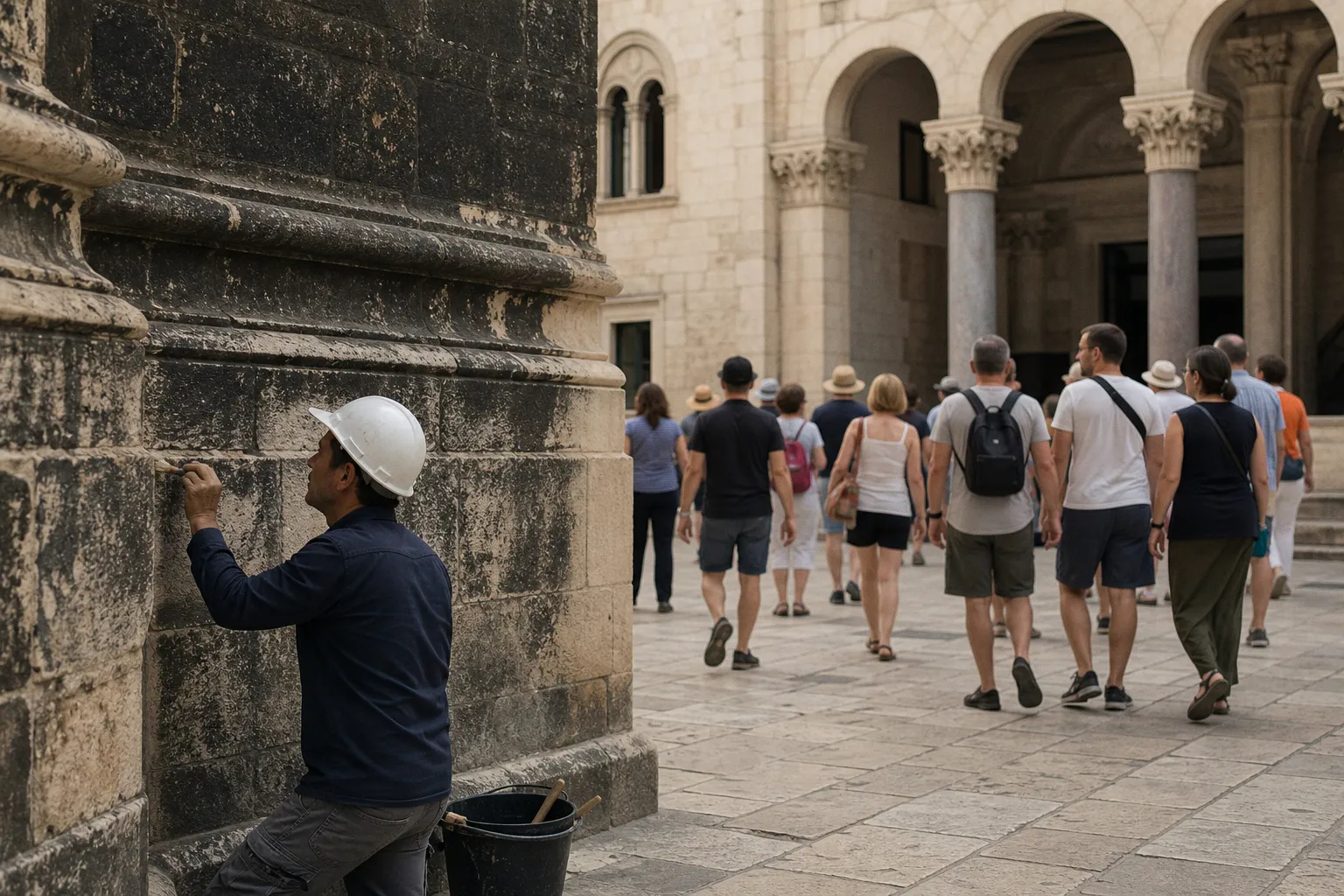
This assembly, part of an International Cultural Heritage Protection Week, shifted the discourse from admiration of historical fabric to the operational risks posed by its very popularity.
The Visitor Load on Institutional Memory
Back Istvan, representing Hungary's National Museum, observed that Chinese museums now consistently operate at high occupancy. His concern, however, was not crowd control but informational saturation. The stated risk is that commercial and technological overlays might distort or obscure the core historical narrative artifacts carry. His metric for success is not visitor volume but narrative fidelity upon exit—a preservation issue of the intangible kind, where the primary material under threat is accurate public understanding.
Integrating Conservation into the Local Settlement Pattern
Research presented by Gao Jun of Sun Yat-sen University examined villages within the Honghe Hani Rice Terraces UNESCO site. The intervention model there involved establishing a tourism revenue-sharing mechanism, effectively retrofitting the economic structure of the community to support conservation. This aligns heritage integrity directly with household income, transforming preservation from an external mandate into an integrated component of the village's spatial and economic hierarchy. The related case of an entrepreneur training 1,700 rural women in traditional handicrafts presents a parallel solution: creating a localised craft economy to anchor cultural practices within contemporary livelihoods.
Material and Digital Restoration Trajectories
Separately, accounts from Odisha, India, detail a two-decade engagement with art conservation through the INTACH Art Conservation Centre. This work involved the physical restoration of archival photographs, letters, and documents tied to regional historical figures. The process triggered a community response, with undocumented materials surfacing from private collections—a secondary effect of active conservation revealing hidden primary sources. The evolution noted here is the integration of digital restoration techniques alongside traditional methods, addressing both material degradation and archival accessibility. Vietnam's concurrent proposal for strengthened international cooperation on world heritage conservation underscores a parallel trend toward systemic, rather than isolated, preservation frameworks.