How $25.7 Million in Preservation Grants Impacts Historic Town Tourism
According to the National Park Service, the U.S. Department of the Interior has awarded $25.7 million for historic-preservation projects.
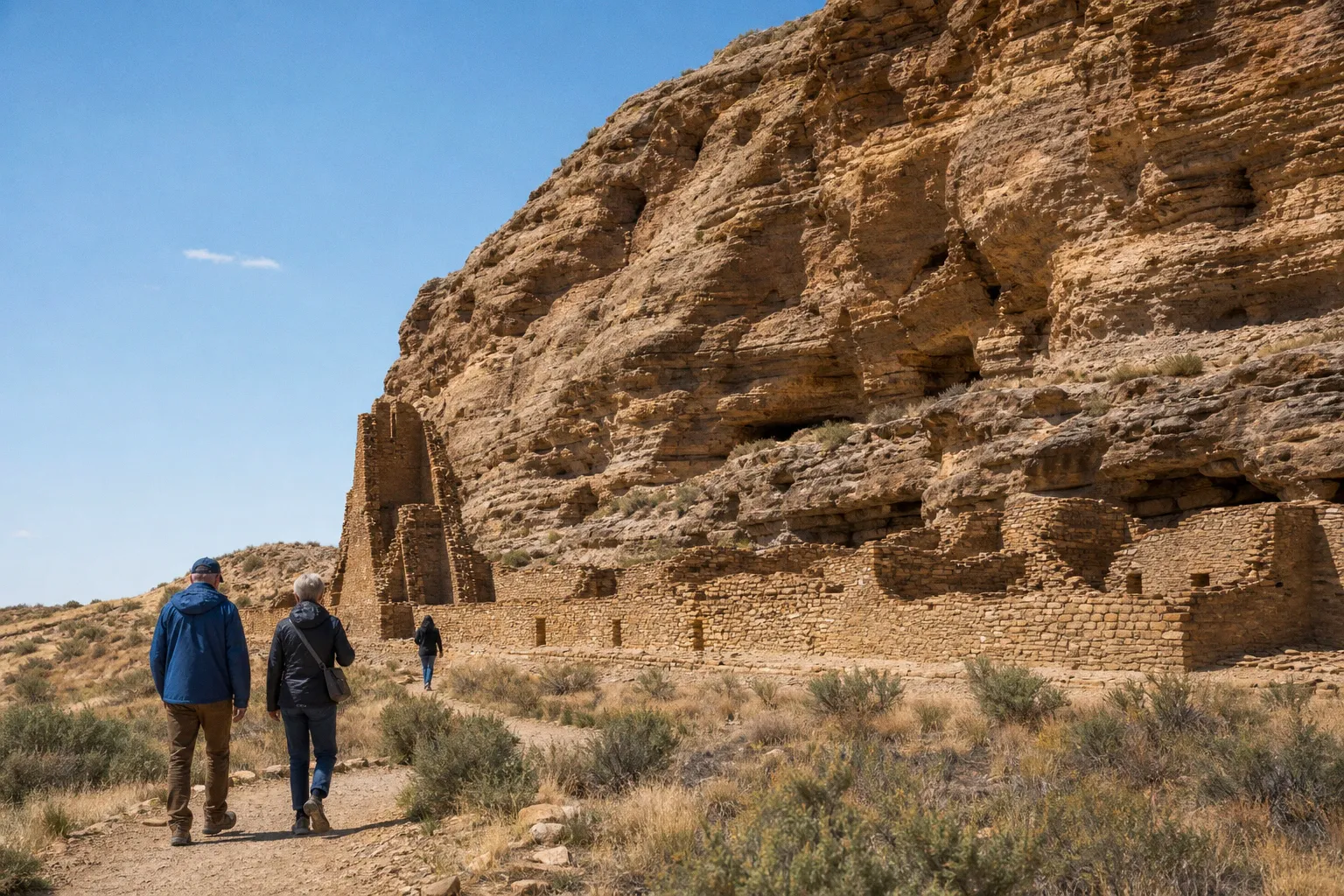
The announcement is directed at state and local preservation work, including landmarks associated with underrepresented communities and civil-rights history. For historic-town visitors, the figure is less a guarantee of immediate physical change than a signal to distinguish funded conservation from proposed interpretation or routine maintenance.
Funding is not a finished restoration
The available announcement identifies the programme’s purpose, not a project-by-project scope of works. It confirms support for state and local efforts, but does not specify which buildings, districts, masonry campaigns, accessibility alterations, or interpretive installations will proceed under the $25.7 million allocation.
That distinction matters in an old-town setting. A grant may fund documentation, planning, archaeological assessment, conservation treatment, or a limited repair phase rather than wholesale rehabilitation. Visitors should not infer that an announced award means unrestricted access, a reopened monument, or a completed streetscape. Construction sequencing, temporary closures, and restricted circulation can remain part of a site’s normal preservation condition.
The language on underrepresented community landmarks and civil-rights locations also broadens the frame beyond the familiar hierarchy of civic monuments, churches, and commercial façades. A preservation map is not merely a catalogue of visually prominent structures. Its evidentiary value depends on whether it records the social and political histories embedded in less conspicuous buildings and sites.
Read the district, not only the façade
For travellers, the practical question is whether an individual stop is being interpreted within its larger urban fabric. A historic structure can retain a visible elevation while its setting, access pattern, adjoining lots, or historical use remains inadequately explained. Conversely, a modest building may carry the principal historical evidence of a neighbourhood.
The National Park Service announcement provides no local itinerary or conservation timetable. It therefore warrants restraint in trip planning. Check the responsible state or local preservation body before treating the funding news as a confirmation that a building is open, that interiors can be visited, or that works will be visible on a given date.
This is also a useful test for heritage coverage more generally. The funding headline is measurable; the eventual preservation outcome is not yet described in the material available. Attention should remain on the proposed scope, the treatment of original fabric, and the relationship between a designated site and its surrounding district—not on a simplified assumption that money automatically produces a restored attraction.
What the announcement leaves to be tracked
The most consequential details will be local: which sites receive support, what conditions are documented before work begins, and whether the programme addresses buildings as isolated objects or as elements of a spatial hierarchy. Those details determine whether repair preserves material evidence or merely renews an exterior surface.
The contrast with institutional Layer-2 infrastructure funding is instructive only at the level of disclosure: a funding total is an initial data point, not an account of final performance. In preservation, the relevant record is the subsequent one—approved scope, conservation method, public access arrangements, and the treatment of the site’s historical context.