Preserving Historic Districts: New Engineering Standards for Fragile Heritage
As of late July 2026, multiple international outlets have converged on a single preservation theme: the structural and environmental fragility of heritage districts worldwide now demands methodological revision.
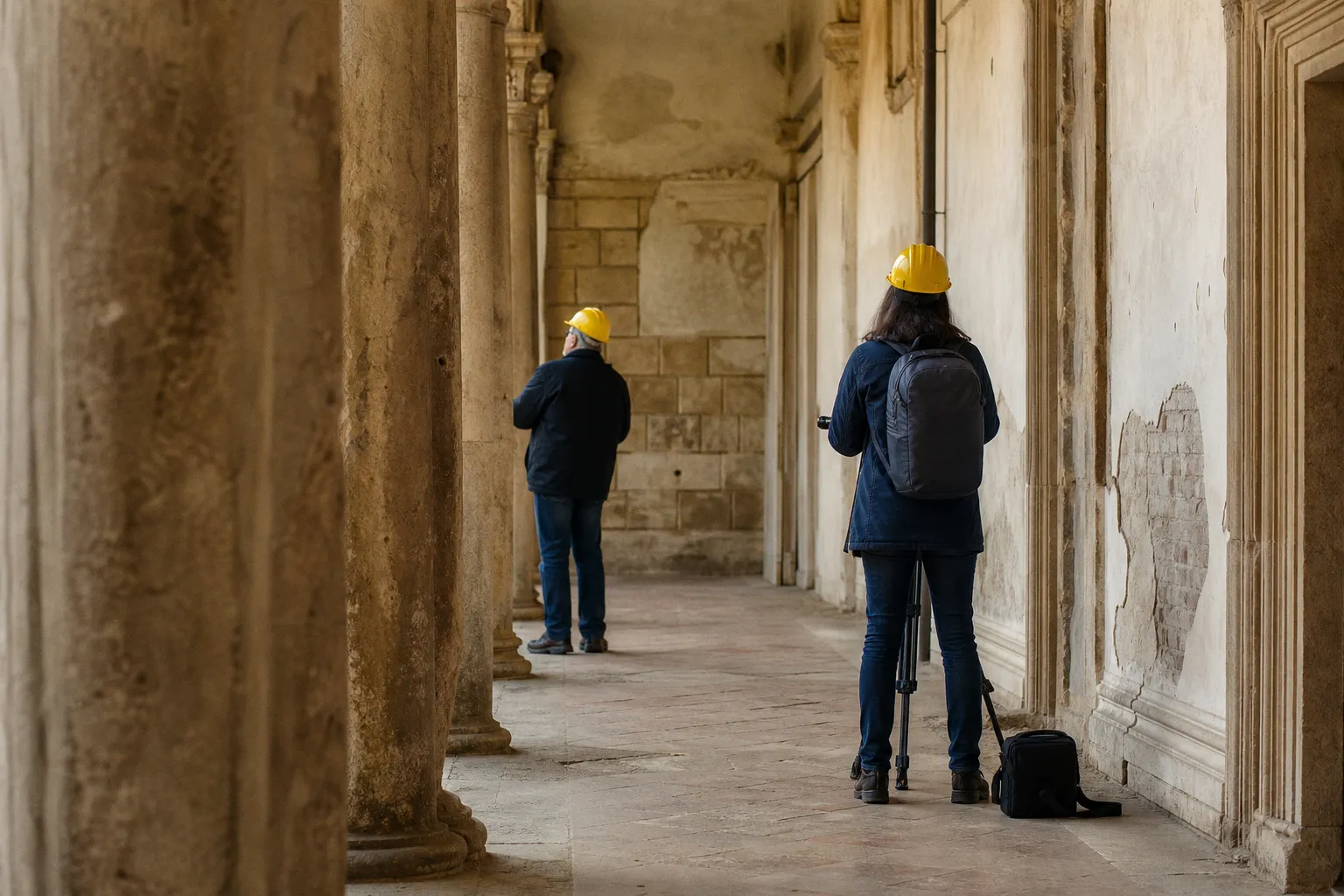
The most concrete institutional signal comes from UNESCO, which has adopted the Busan Declaration for global heritage preservation, according to The Korea Times. The declaration, paired with parallel reporting on conservation advances from outlets across Europe and Africa, suggests that the current framework for protecting historic built environments is under active reassessment — not as sentiment, but as engineering.
What the Busan Declaration signals for preservation practice
UNESCO's adoption of the Busan Declaration, reported on 20 July, represents a formal institutional acknowledgement that heritage preservation strategies require updating. The declaration targets global heritage preservation broadly, but its implications for historic town fabric are specific: masonry walls, load-bearing timber frames, and lime-mortar joints in pre-industrial districts degrade along timelines that current retrofit protocols do not always accommodate. The Korea Times reported the adoption, though the full text and implementation schedule have not yet circulated in the sources reviewed here. What is clear is that the declaration frames preservation not as a static act of locking a structure in time, but as an ongoing technical process — one that increasingly intersects with environmental policy.
Multiple regions, one pressure point
The pattern extends beyond a single declaration. The Malta Independent Online reported on cultural heritage preservation challenges on the island, where limestone construction — highly porous, vulnerable to salt crystallisation and acid rain — requires continuous monitoring cycles rather than periodic intervention. In Zimbabwe, the Herald reported a renewed national commitment to cultural heritage, described as receiving a "major boost." Meanwhile, Asia Research News highlighted "smarter, greener ways" to protect fragile heritage. No source text is available for these reports beyond headlines, so the specific technologies, funding figures, or policy mechanisms remain unconfirmed. But the geographic spread — Southern Europe, Sub-Saharan Africa, East Asia — indicates that the preservation problem is not regional. It is structural, in every sense.
What this means for those who walk these districts
For anyone visiting or studying historic old towns, the emerging preservation consensus carries practical weight. A declared shift toward greener conservation methods implies that materials traditionally used in heritage repair — Portland cement patches, synthetic sealants, non-breathable coatings — may face increased regulatory scrutiny in favour of breathable lime plasters, compatible mortars, and passive climate-control strategies. Districts that have been "restored" with hard cement pointing over soft brick, for instance, accelerate spalling rather than preventing it; a move toward greener standards could redirect funding toward correct material specification. The Busan Declaration does not, from available reporting, mandate specific technical standards. But when institutional bodies formalise a direction, local planning authorities tend to follow — sometimes within years, sometimes within decades. The structural facts on the ground do not wait for either timeline.