London food tours: what historic markets actually offer
The phrase "food tour London" returns roughly a dozen operators. Their websites share a vocabulary: "authentic," "hidden gems," "centuries of culinary heritage," "where locals actually eat." Most of…
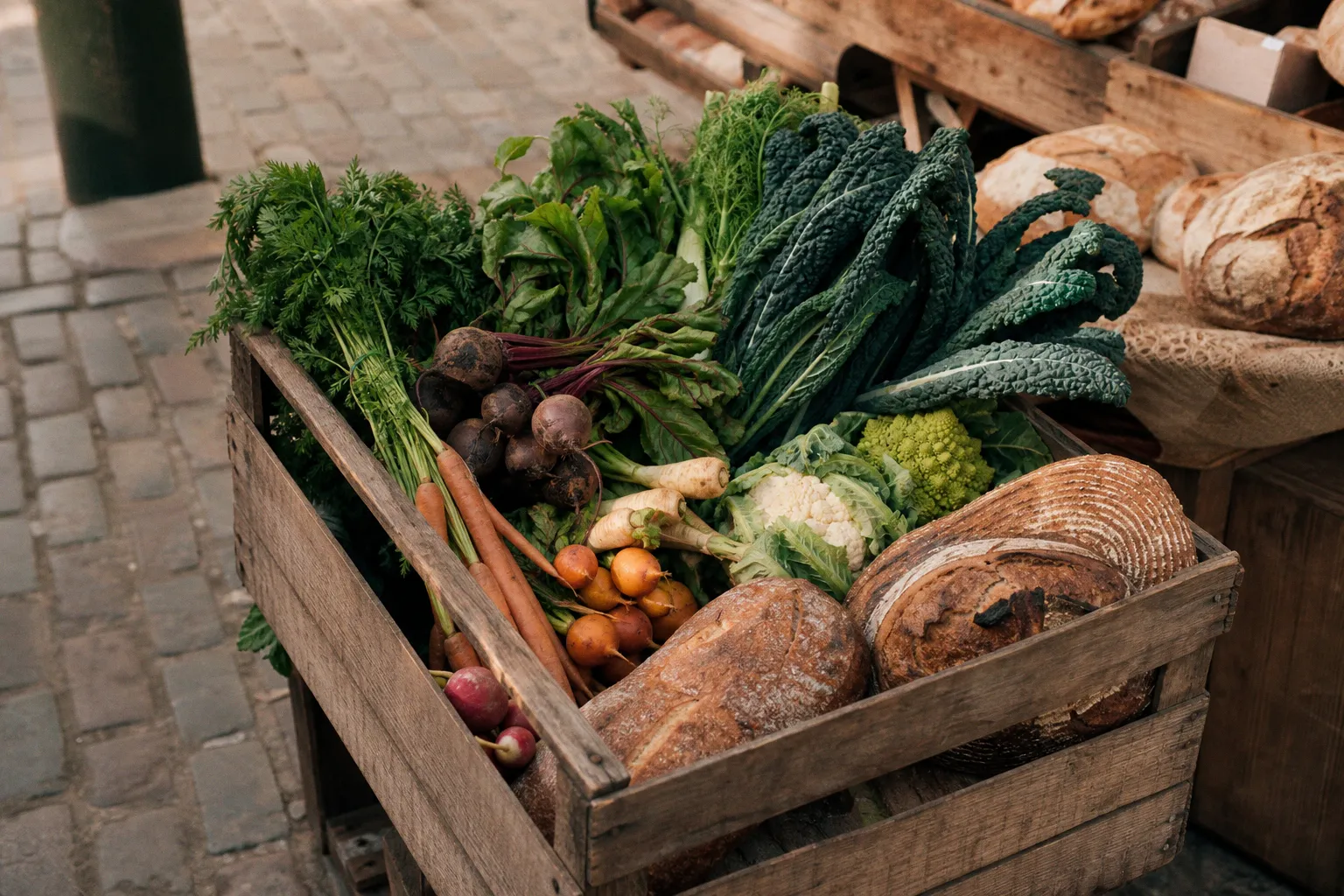
The phrase "food tour London" returns roughly a dozen operators. Their websites share a vocabulary: "authentic," "hidden gems," "centuries of culinary heritage," "where locals actually eat." Most of them, however, resolve to the same 3.5-hour circuit — Borough Market, perhaps Leadenhall, six samples, twelve guests, and a tasting card. I have spent the past several weeks auditing what these operators actually deliver, what their licenses permit, and where the brochure and the physical product diverge. What follows is not a buyer's guide. It is the unvarnished version.
The Evolution of London's Market Landscape: From 1014 to Today
London's market heritage is genuinely ancient, which is precisely why the modern tour pitch works. Borough Market's trading history reaches back to 1014, when merchants clustered near London Bridge — though the current Southwark site dates only to 1756, when the market was officially established there. Leadenhall Market, a Victorian covered arcade that sits inside what was the historic center of Roman London, was founded in 1321 and celebrated its 700th anniversary in 2021. These dates anchor the storytelling. They also do most of the heavy lifting.
A millennium of trading history does not automatically translate into a walkable tour route. The operators who promise itineraries through "where Romans, medieval merchants, and Victorian butchers all once traded" are leaning on geography rather than physical continuity. Leadenhall's ornate Victorian ironwork has been restored multiple times; the current paint scheme is the third or fourth in living memory. Borough's glass-and-iron sheds replaced earlier structures. The thread is documentary, not architectural. Still, for a tour that bills itself on heritage rather than substance, the dates carry weight — and the operators know it.
Heritage in London is less a continuous fabric than a series of sites, each with its own paper trail, license agreement, and quota for visiting groups.
Decoding the Commercial Tour Model: What 3.5 Hours Actually Delivers
The standard commercial product is a remarkably uniform package. Most combined Borough-and-Leadenhall tours run 3.5 hours, cap groups at twelve guests, and feature approximately six food tastings — typically a British breakfast bap, a sausage roll, fish and chips, a cheese pairing, a fruit crumble, and a glass of something. The price point tends to land in the same band regardless of operator, which suggests these itineraries have been reverse-engineered from each other rather than independently curated. Bespoke, in this market, means a slightly different walking order through the same market hall.
Here is what 3.5 hours and six samples actually means on the ground. The bap is a portable, hand-held item designed to be eaten while walking. The sausage roll is similar. Fish and chips, despite its symbolic weight in any British food narrative, is routinely served as a two-bite portion in paper. The cheese pairing is often a single wedge with a brief note from the cheesemonger. The crumble is frequently pre-portioned in a plastic cup. None of this is criticism of the food itself; it is criticism of the format. A tasting that takes ninety seconds to consume is not a meal — it is a sample. Six of them across 210 minutes leaves generous time for transit, briefing, and the queueing that defines any Borough Market weekday.
| Standard tour element | Marketing framing | Physical reality |
|---|---|---|
| "British breakfast bap" | Heritage staple | Single hand-held item, eaten standing |
| "Sausage roll" | Artisanal revival | Pre-warmed from a counter |
| "Fish and chips" | Iconic London dish | Two-bite portion, paper wrapping |
| "Cheese & wine pairing" | Sommelier-led | Single wedge, one glass |
| "Fruit crumble" | Traditional pudding | Pre-portioned cup |
| "Hidden gem" trader stop | Off-the-beaten-path | Permanent stall, regular opening hours |
The uniformity is the actual story here. Every operator's site uses roughly the same vocabulary, the same six-item structure, and the same Leadenhall endpoint. Where the brochures promise "small-batch producers," the reality is a fixed list of high-volume stalls that have built their businesses around tour-group footfall. I am not suggesting these producers are not worth visiting. I am suggesting they are not what the marketing copy implies.
Behind the Scenes: The Licensing Reality at Borough Market
The single most consequential detail that most tour listings bury in their fine print — or omit entirely — is the licensing question. Totally Tailored is the only tour company officially licensed to guide inside Borough Market. Every other operator working the Southwark circuit is, by definition, guiding outside the perimeter, stopping at the entrance, or partnering with a third-party host. The distinction is not pedantic. It shapes what a guest actually sees.
Borough Market has its own rules about who walks its lanes during trading hours, and the inside-the-market experience — the trader talks, the oyster shucker, the charcuterie counter, the pour of English sparkling wine — is what most brochures are quietly selling. When an unlicensed operator advertises "behind-the-scenes access at Borough Market," the reader is entitled to ask what "behind-the-scenes" means at a market where the operator cannot legally step behind a stall. The phrase survives because it sounds like exclusivity, and exclusivity is what justifies the premium.
Most "exclusive" Borough Market tours are, in licensing terms, street-level affairs with a Borough-branded logo on the confirmation email.
For travelers who genuinely want the trader access — the people, the provenance, the in-hall tastings — the licensed route is the only one that delivers the brochure. For everyone else, the question becomes whether the perimeter walk, the entrance photo, and the brief indoor stop justify the price differential against visiting Borough Market independently with a paper list and a tolerance for queues. On my last visit, the queue at the cheese stall was twenty minutes regardless of which tour was meant to skip it.
East End Culinary Heritage: Mapping the Multicultural Shift
The most honest food tour in London, in my view, is not the one that markets itself hardest. It is the East End route that begins at Old Spitalfields Market and threads through the multicultural layers that actually shaped the city's eating habits over the last century. The standard East End itinerary includes a salt beef bagel from Beigel Bake, a Bangladeshi curry stop on Brick Lane, a Chinese custard tart, and dumplings — usually threaded together with a brief narrative about the Huguenot weavers, the Jewish tailoring trade, and the successive waves of Bengali and Chinese settlement. The tours that follow this route are typically smaller, less polished, and more candid about what they are: a contemporary immigration story told through lunch.
This is heritage, but it is not the heritage the Borough Market brochures are selling. It is the heritage that arrived after 1880, written in brick and brine and spice rather than charters and parishes. For a reader who wants to understand how London actually eats, this is closer to the source — albeit a younger source than the marketing suggests.
| East End stop | Heritage layer | What you are tasting |
|---|---|---|
| Beigel Bake, Brick Lane | Jewish East End, post-1880 | Salt beef bagel, dense and unadorned |
| Bangladeshi restaurant, Brick Lane | Post-1971 settlement | Curry, traditionally served with naan or rice |
| Chinese custard tart | Hong Kong diaspora, 1960s onward | Buttery pastry, set egg custard |
| Dumpling house | Continuous Chinese presence | Pork or vegetable dumplings, steamed or fried |
| Old Spitalfields Market | Huguenot weavers, 17th c. onward | Market hall context, vendor history |
The contrast with Borough is instructive. Borough markets itself on the medieval and Victorian registers; the East End markets itself on the contemporary and migratory registers. Neither is more "authentic" than the other, but they are not the same product — and the brochures rarely admit it. Several of the larger Borough-anchored operators will, on request, substitute an East End route. The substitution is usually priced identically, which tells you everything about the cost structure underneath.
One operational caveat worth recording: the standard East End tour, like the standard Borough tour, is not designed for restricted diets. Vegan, gluten-free, and dairy-free travelers will find most advertised itineraries explicitly disrecommend participation. This is not a moral failing; it is a format constraint. Six samples in 3.5 hours does not survive translation into multiple parallel menus.
Wholesale vs. Retail: Why Smithfield and Billingsgate Remain Off-Limits
Two of London's most storied food sites — Smithfield Market and Billingsgate Market — are conspicuously absent from standard daytime tour itineraries, and the reason is structural rather than promotional. Both are wholesale operations. Both run in the small hours. Neither operates as a retail food hall during the hours a tour group would visit.
Smithfield is the headline case. Its trading history runs more than 800 years, and the Bartholomew Fair was held on the surrounding ground for over 700 years — from 1133 until it was shut down in 1855. The current market still functions as London's principal wholesale meat hub, which means a daytime visit delivers cold concrete, closed shutters, and the occasional loading bay. The romance is bibliographic; the daylight reality is industrial. Operators occasionally run pre-dawn Smithfield tours, but these are specialist products, marketed to culinary professionals and serious enthusiasts rather than to the heritage-curious day-tripper.
Billingsgate, London's historic fish market, was already a bustling waterfront hub when John Stow surveyed London in 1603. It is currently managed by the City of London Corporation and is, by all accounts I have been able to verify, in the late stages of its operational tenure at the present site. I cannot confirm a precise closure or relocation date from any source I would stand behind, though the current trajectory suggests the window for any future visitor access is narrowing. What I can confirm is that no operator currently offers a standard daytime tasting tour at Billingsgate equivalent to the Borough format — the market's hours, its wholesale character, and its licensing simply do not permit it.
The most famous food sites in London are not the ones a tour can visit. They are the ones a tour has to talk about from a distance.
This is, in some ways, the central contradiction of the London food tour market. The sites with the deepest heritage are wholesale. The sites with the tour-friendly retail footprint are comparatively recent. Operators navigate this gap by narrating Smithfield and Billingsgate from outside their walls while routing groups through Borough, Leadenhall, and Old Spitalfields — markets that are accessible, walkable, and stocked for daytime visitors. It is a defensible compromise, but it is worth naming plainly. The brochure is, in places, a substitute for the building.
What the Audit Actually Concludes
A consumer-facing summary, since the question underneath this article is essentially a consumer question: if you want the licensed, in-hall, trader-talk experience at Borough Market, the field of operators is narrower than the search results suggest, and the price premium is the cost of actual access rather than brand positioning. If you want the most candid story of how London eats, the East End route — Beigel Bake, Brick Lane, the custard tarts — delivers more cultural substance per pound than the Borough circuit, even if it markets itself less aggressively. If you want Smithfield or Billingsgate, you want a wholesale tour or a book, not a tasting.
The deeper point is structural. London has the heritage. What it does not have, in most cases, is a tour product that is licensed to stand inside that heritage while it is happening. The gap between "centuries of culinary history" and a 3.5-hour, twelve-guest, six-sample circuit is not dishonesty on the part of any single operator. It is the shape of the market. Auditors like me do not get excited about either extreme — the breathless recommendation or the cynical dismissal. We get interested when a reader understands what they are actually buying, and why the brochure is written the way it is. That understanding is what the next search should be for.